The Palos of Flamenco: A Guide to the Styles and Forms
Newcomers often speak of flamenco as if it were a single dance. In truth, flamenco is a whole family of related styles, and the flamenco palos are what give the art its extraordinary range — from grave, grief-laden laments to bright, celebratory rhythms that end a night in joy. If you have ever wondered why one flamenco piece feels like mourning and another feels like a party, the answer lies in the palo. This guide explains what a palo is, how the palos are organized, and what distinguishes the essential forms every listener and dancer should know.
Flamenco is a living art from Andalusia in southern Spain, inscribed by UNESCO in 2010 on the Representative List of the Intangible Cultural Heritage of Humanity. If you are entirely new to it, our overview of what flamenco is is a good place to start. This article goes one level deeper, into the styles themselves.
What Is a Palo? The Building Blocks of Flamenco Palos
A palo (Spanish for 'branch' or 'stem') is a flamenco style or form. Each palo has its own compás — the rhythmic cycle that organizes it — along with its own characteristic tempo and its own emotional register. When flamenco artists say they are going to dance por soleá or por bulerías, they are naming the palo, and with it a whole set of expectations about rhythm, feeling, and structure.
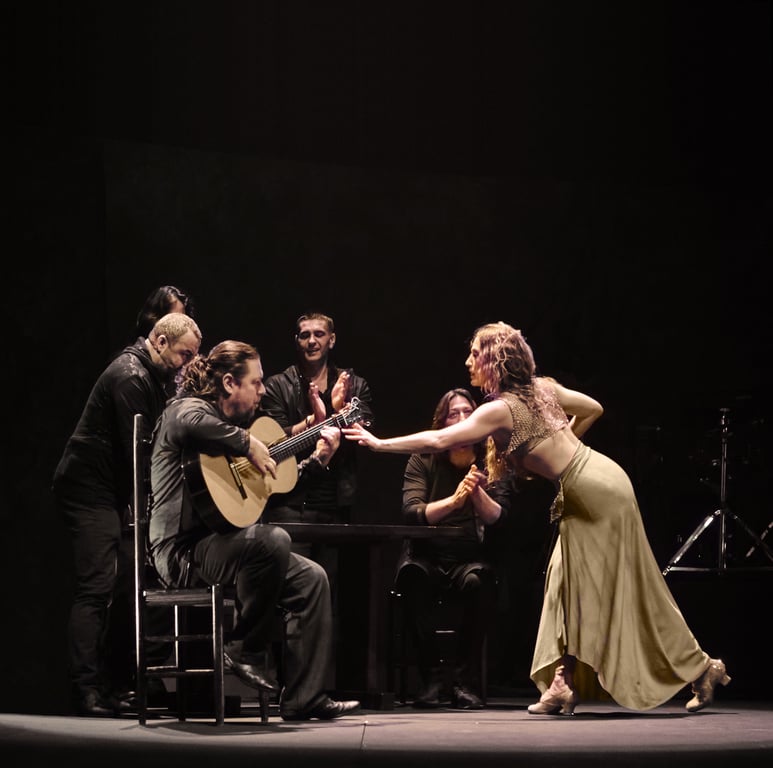
Understanding the flamenco palos matters because flamenco is largely improvised within a framework rather than choreographed from beginning to end. The palo is that framework. It tells the singer, the guitarist, and the dancer how to move together — which is why learning to recognize the palos is one of the most rewarding steps in coming to understand the art. The three interwoven elements of flamenco — cante (song), toque (guitar), and baile (dance) — all organize themselves around the chosen palo.
How the Flamenco Palos Are Organized
There is no single official list of palos, and the total count is debated (more on that below). But two lenses make the whole landscape far easier to navigate: how a palo is built rhythmically, and where it sits emotionally.
By Compás: The Rhythmic Families
The clearest way to group the palos is by their compás, the repeating rhythmic cycle at their core. Broadly, the styles fall into two great rhythmic families.
- The twelve-beat family. Many palos share a distinctive twelve-beat cycle and differ from one another mainly in tempo, accent, and mood rather than in the count itself. Among them are soleá, alegrías, bulerías, and siguiriyas. This family contains some of the most iconic flamenco styles, and the twelve-beat feel is one of the signatures of the art.
- The binary, four-count family. Other palos sit in a simpler four-count feel closer to the rhythms most listeners already know. This family includes tangos, tientos, tanguillos, and the festive, more modern rumba flamenca. Because the count is more intuitive, styles in this family — tangos especially — are often where beginning dancers start.
The exact accent patterns within each palo vary from school to school and singer to singer, so it is best to hear the compás rather than to memorize a rigid diagram of accented beats. Clapping the rhythm with palmas is the traditional way to learn it.
By Mood: Cante Jondo and Cante Chico
The second lens is emotional. Flamenco has long distinguished between cante jondo — 'deep song,' the most serious and profound styles — and cante chico — 'light song,' the brighter and more festive ones.
Cante jondo carries flamenco's gravity: styles such as soleá and siguiriyas express solitude, grief, and a sense of the tragic. Cante chico, by contrast, is where flamenco celebrates — alegrías and tangos live closer to this pole. The distinction is about depth and mood rather than a strict technical rule, and many palos sit somewhere in between the two. Together with the rhythmic families, this emotional map lets you place almost any palo you encounter.
A Survey of the Essential Flamenco Palos
With those two frameworks in hand, here is a closer look at the palos most worth knowing. Each links, where available, to a fuller guide.
Soleá
Soleá is one of the pillars of flamenco, so central that it is often called a 'mother' form from which other styles draw. It is slow, solemn, and majestic, and its name is linked to soledad, meaning solitude. Built on the twelve-beat cycle, soleá is a cornerstone of cante jondo and a form every serious student eventually studies. Learn more in our guide to what soleá is.
Siguiriyas
Siguiriyas is among the most grave and tragic of all the palos, a summit of cante jondo. It, too, uses a twelve-beat cycle, but with a distinct accent pattern — a rhythmic amalgama that sets it apart from soleá — which gives it its heavy, aching character. Siguiriyas is demanding for singer and dancer alike and is treated with great seriousness. Our guide to seguiriyas goes deeper.
Ready to put this into practice?
Train with Siudy Garrido through our On-Demand Flamenco Courses — structured, professional flamenco instruction you can start today.
Alegrías
Alegrías are joyful and bright — the name itself comes from alegría, meaning joy — and they hail from the coastal city of Cádiz. Like soleá, alegrías rest on the twelve-beat cycle, but the mood could hardly be more different: where soleá is solemn, alegrías lift and sparkle. They are a favorite showcase for dancers and a classic of the cante chico tradition. Read more in our guide to alegrías.
Bulerías
Bulerías are the fastest and most festive of the twelve-beat palos — quick, syncopated, and full of play. Phrases in bulerías often begin on beat twelve, giving the style its characteristic sense of catching the rhythm mid-air. Bulerías frequently close a flamenco gathering or performance, when artists trade short, virtuosic turns in a spirit of celebration. Our guide covers what bulerías are in detail.
Tangos
Tangos (the flamenco form, not the Argentine ballroom dance) sit in the binary, four-count family. Their straightforward rhythm makes them warm, grounded, and accessible, which is why tangos are one of the most common entry points for students learning to dance in compás. They belong firmly to flamenco's festive, cante chico side. Learn more about flamenco tangos.
Tientos
Tientos are closely related to tangos — essentially a slower, more deliberate and solemn relative within the same four-count family. Where tangos are quick and buoyant, tientos are weighty and measured, often carrying a more serious emotional charge. In performance the two are frequently paired, moving from the gravity of tientos into the release of tangos.
Fandango
Fandango is one of flamenco's most widespread forms, with many regional variations across Andalusia and beyond. As a family it spans a great emotional range and has given rise to numerous local styles, making it one of the richest branches of the flamenco tree. Explore it further in our guide to the fandango.
Tarantos
Tarantos belong to flamenco's mining-song heritage, associated with the mining regions of southeastern Spain. The style carries a dark, dramatic intensity and is a favorite for expressive solo dance, prized for the brooding atmosphere it creates on stage.
A Common Confusion: Sevillanas Is Not a Flamenco Palo
One of the most persistent misunderstandings deserves its own section. Sevillanas is not a flamenco palo. It is a folkloric dance and song from Seville, derived from the Castilian seguidilla, set in a lilting three-count time and built on a fixed structure of four coplas (verses).
The difference is not just technical, it is cultural. Sevillanas is social and participatory — danced by couples and crowds alike at the feria, the Andalusian fair — while flamenco is watched and improvised at a tablao and organized by palos. The two share a common ancestor in the seguidilla and diverged over the 18th and 19th centuries. Today flamenco artists often perform sevillanas 'with a flamenco touch,' which is exactly why the confusion persists, but the forms remain distinct. We untangle it fully in flamenco versus sevillanas.
How Many Palos Are There?
It is natural to want a number, but flamenco resists one. There is no official register of palos, and estimates vary widely depending on how finely you distinguish between a full palo and a regional variant. A figure often cited is that flamenco has more than fifty palos — but treat that as a rough indication rather than a settled fact, because experts genuinely disagree on where to draw the lines. Guajiras, cantiñas, farrucas, tanguillos, and many more all extend the family beyond the essential styles surveyed here.
Far more useful than counting is learning to listen. Once you can feel whether a piece rides the twelve-beat cycle or a four-count pulse, and whether it leans toward the depth of cante jondo or the lift of cante chico, you can place almost any palo you hear — even one you have never encountered before.
Where to Go From Here
The flamenco palos are the vocabulary of the art. Learn a handful well and you begin to understand what flamenco is really saying — not one message, but a whole spectrum of human feeling, each with its own rhythm and name. The best way to internalize them is to dance them: to feel a soleá slow you down and a bulerías carry you away.
When you are ready to move from listening to dancing, explore Siudy Garrido's on-demand flamenco classes, which teach you to move within the compás of the essential palos step by step, and browse more guides on our flamenco blog. Each palo is a door — and every one of them opens.
Frequently asked questions
How many palos are there in flamenco?
What is the most popular flamenco palo?
Is sevillanas a flamenco palo?
What is the difference between cante jondo and cante chico?
Do all flamenco palos share the same rhythm?
Start dancing flamenco with Siudy Garrido
On-Demand Flamenco Courses — professional instruction, at your pace.
Explore Courses →