Flamenco Dance Moves: The Vocabulary of Movement Explained
 Part of our guide
How to Learn Flamenco: A Complete Guide for Beginners →
Part of our guide
How to Learn Flamenco: A Complete Guide for Beginners →
Watch a flamenco dancer for the first time and the movement can seem like a single, overwhelming rush of feeling. Learn the names of the individual flamenco dance moves, however, and that rush resolves into a clear, readable language — a vocabulary of footwork, arms, calls, and accents that a dancer assembles in real time. This guide names and defines each of those core elements, then shows how they combine within rhythm into a complete danced piece.
It is a companion to our broader guide on how to learn flamenco. Think of what follows as the dancer's dictionary: once you can recognize these flamenco moves by name, you will begin to see the structure beneath the intensity.
Flamenco Dance Moves: A Vocabulary of Elements
The most useful way to understand flamenco dance moves names is to group them by what they do. Some are the raw materials of movement — the footwork, the arms, the hands. Others are structural: figures that signal, build, punctuate, or close a section. A dancer draws on both kinds continuously, weaving material and structure together over the rhythm.
Before naming them, one principle governs everything below. No move exists for its own sake; each lives inside compás, the rhythmic cycle of the style being danced. A movement placed correctly within the count is flamenco; the identical movement placed carelessly is not. Keep that in mind as we work through the vocabulary.
The Raw Materials: Footwork, Arms, and Hands
Three families of movement supply the physical substance of flamenco. Master these and you have the alphabet from which every phrase is built.
Zapateado is the percussive footwork flamenco is famous for — the storm of rhythm struck from the floor. It is not a single action but a set of distinct strikes, each producing a different sound. The planta is a strike with the ball of the foot; the tacón is the heel; the golpe is the whole flat foot landing at once; and the punta is the tip of the toe. Combining these strikes in different orders and accents is how a dancer builds intricate rhythmic patterns. The goal, always, is clarity and compás rather than speed for its own sake — a slower passage struck cleanly carries far more than a fast one that blurs. We treat this in depth in our guide to flamenco footwork for beginners.
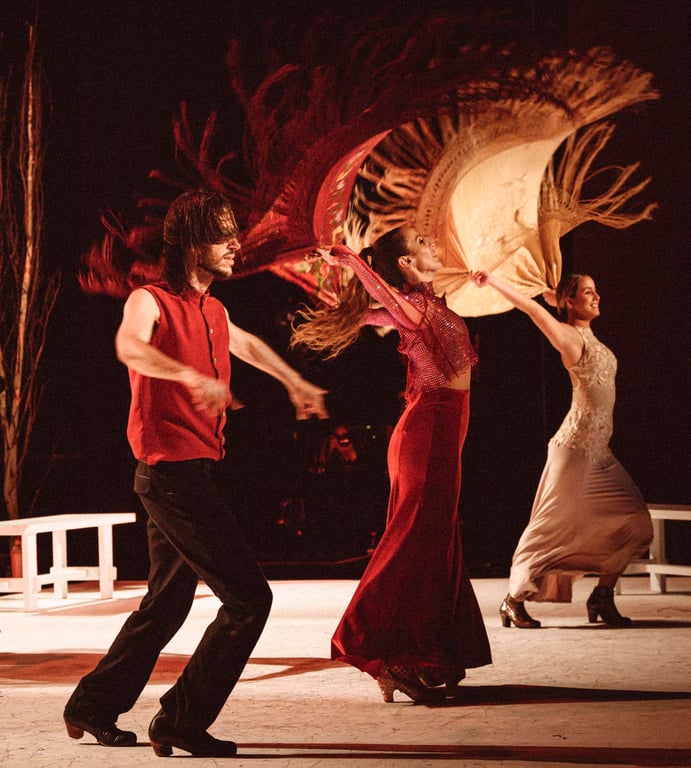
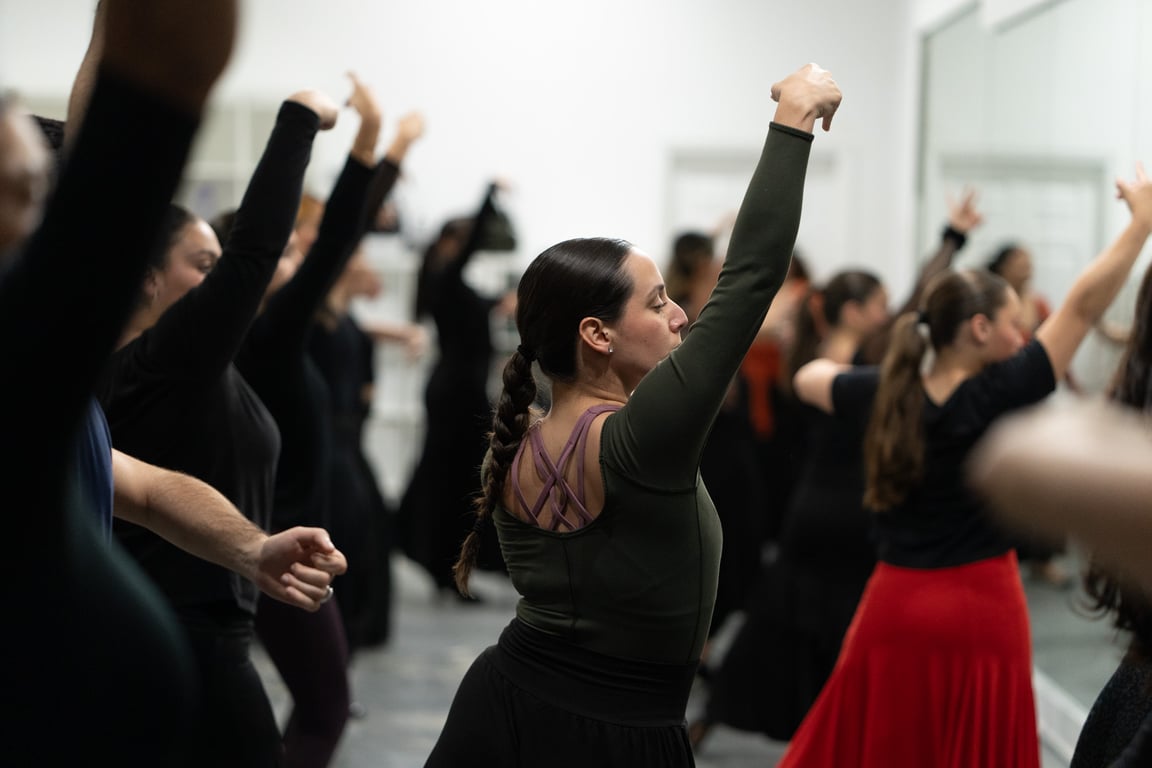
Braceo is the movement of the arms: slow, circular, and continuous, tracing unbroken curves through the air above and around the body. Where the feet are percussive and sharp, the arms are sustained and legato, and the contrast between the two is one of flamenco's defining tensions. Floreo completes the upper body — the rotation of the wrists and the articulate movement of the fingers, the small, intricate flourishes that finish each gesture of the arms. Because braceo and floreo demand free hands, the deepest flamenco forms leave the hands empty rather than filling them with props. We explore both in our guide to flamenco arms, braceo and floreo.
Ready to put this into practice?
Train with Siudy Garrido through our On-Demand Flamenco Courses — structured, professional flamenco instruction you can start today.
Structural Moves: Marking, Calling, and Turning
If footwork and arms are the substance, the next group of flamenco moves gives a dance its shape. These are the connective and signaling elements that organize the raw material into readable sections.
- Marcaje — the marking steps: measured, connective movement the dancer performs while the cante unfolds. Marcaje is how a dancer occupies the space between more dramatic passages, staying inside the rhythm and responding to the singer without yet unleashing full footwork.
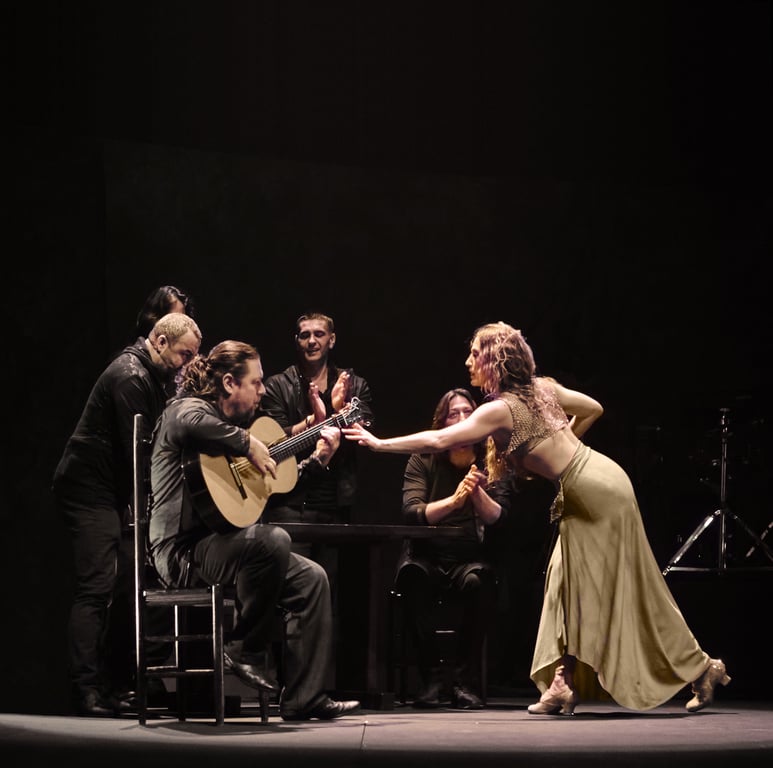
- Llamada — literally a “call.” This is a fixed rhythmic figure the dancer uses to signal a change or an entry, most often to cue the singer and guitarist that a new section is about to begin. The llamada is one of the primary ways a dancer, rather than the music, directs the flow of a piece.
- Vuelta — a turn. Turns are woven throughout flamenco to change direction and add sweep, and they come in several recognizable forms distinguished by how the body rotates. Whatever the form, the head spots a fixed point to preserve balance, leaving last and arriving first.
Accents and Closures: Building and Breaking
The final group of elements are the punctuation marks of flamenco — the moves that build tension, break it, and bring sections to a close. They are what give a danced phrase its sense of arrival.
- Escobilla — the footwork-showcase section of a dance, where zapateado takes center stage. The escobilla is the passage audiences most associate with flamenco's dramatic footwork, and it usually intensifies as it goes.
- Subida — a build in speed or intensity. Subidas most often occur within the escobilla, driving the footwork gradually upward toward a peak before it resolves.
- Desplante — an emphatic closing flourish or break, a decisive gesture that punctuates the end of a passage with force and finality.
- Remate — a short emphatic accent that closes off a phrase. Where a desplante is a larger break, a remate is a quick, sharp full stop placed at the end of a smaller unit of movement.
- Cierre — an ending: the figure that closes a whole section or the dance itself, resolving the accumulated tension cleanly on the rhythm.
How the Moves Combine Within Compás
Naming the elements is only half the picture. The art of flamenco lies in how a dancer assembles them, in the moment, inside compás — the rhythmic cycle that governs the whole. Each palo, or style, carries its own compás, tempo, and character, so the same vocabulary produces very different dances depending on the form. Many palos share a distinctive twelve-beat cycle, among them soleá, alegrías, and bulerías, while others, such as tangos, sit in a simpler four-count feel. Our guide to understanding flamenco compás unpacks the rhythm itself.
While the exact architecture varies from palo to palo and from dancer to dancer, a danced piece often follows a recognizable arc. It tends to open with a salida, the entrance, in which the dancer establishes presence and settles into the rhythm through marcaje. From there the dance moves through its letras — the danced sung verses — where the performer responds to the cante, marking time and phrasing to the singer's lines, using a llamada to signal when it is time to move on.
As the piece develops, it typically arrives at the escobilla, the footwork section, where zapateado comes to the fore and a series of subidas drives the intensity upward. Throughout, desplantes and remates punctuate the phrases — the emphatic breaks and sharp accents that keep the dance from becoming a blur — before a final cierre brings the whole to a resolved close. Because flamenco prizes improvisation, no two performances of the same palo are ever identical; the dancer is choosing, in real time, which elements to deploy and when, always anchored to the count.
This is why learning the vocabulary matters so much. Once you can recognize a llamada or an escobilla as it happens, you stop watching a wall of movement and start following a conversation — between dancer and singer, between tension and release, between one flamenco dance move and the next.
Where to Go From Here
The best way to internalize these flamenco dance moves is to practice them in sequence and in rhythm, the way they actually live in the dance rather than as an isolated list. Explore Siudy Garrido's on-demand flamenco classes to learn how each element is built and then combined within compás, and browse more guides on our flamenco blog to keep deepening your understanding of the art.
Frequently asked questions
What are the basic flamenco dance moves called?
What is the difference between a llamada and a remate?
What is the escobilla in flamenco?
How do flamenco moves combine into a dance?
Start dancing flamenco with Siudy Garrido
On-Demand Flamenco Courses — professional instruction, at your pace.
Explore Courses →