Cantes de Ida y Vuelta: Flamenco's Round-Trip Songs
 Part of our guide
The Palos of Flamenco: A Guide to the Styles and Forms →
Part of our guide
The Palos of Flamenco: A Guide to the Styles and Forms →
Flamenco is often imagined as a purely Andalusian art, sealed within the south of Spain. Yet one whole family of palos tells a more surprising story of oceans crossed and music returned. The cantes de ida y vuelta, literally the round-trip songs, are the flamenco forms that traveled to Latin America, absorbed the sounds they met there, and came home transformed. To understand them is to hear flamenco not as a closed tradition but as an art that has always breathed in from the wider world.
This guide is part of our broader map of the palos of flamenco. Here we look at what the cantes de ida y vuelta are, why they carry such a distinctive lighter mood, and who belongs to the family, from the swaying guajira to the festive rumba.
What Are the Cantes de Ida y Vuelta?
The cantes de ida y vuelta are palos that grew from the long exchange between Spanish and Latin American music, mainly Cuban, and then returned to Spain to be reshaped as flamenco cante. The name says it plainly: ida is the going, vuelta the return. Spanish music sailed west across the Atlantic, mingled with the rhythms it found in the Americas, and came back carrying something new.
This traffic intensified especially after 1898, the year that marked the end of the Spanish–American War and the close of Spain's centuries-long presence in Cuba. In the years around that turning point, returning emigrants known as indianos — Spaniards who had gone to seek their fortunes in the Americas — came home bringing the popular music of the islands with them. Flamenco artists, ever alert to a good melody and a fresh rhythm, absorbed these returning sounds and adapted them into the language of cante.
The result is a group of palos with a character all their own. Where the deep forms of flamenco lean toward gravity and tragedy, the cantes de ida y vuelta tend to be lighter, lilting, and Latin-tinged — sunnier in mood, more melodic, and often more immediately charming to a newcomer's ear.
The Guajira: Cuban Roots and Elegant Sway
The guajira takes its name and its spirit from the guajiros, the country farmers of Cuba, and grew out of the Cuban punto guajiro, a rural song tradition of the island. Carried back to Spain, it became one of the most refined of the round-trip palos.
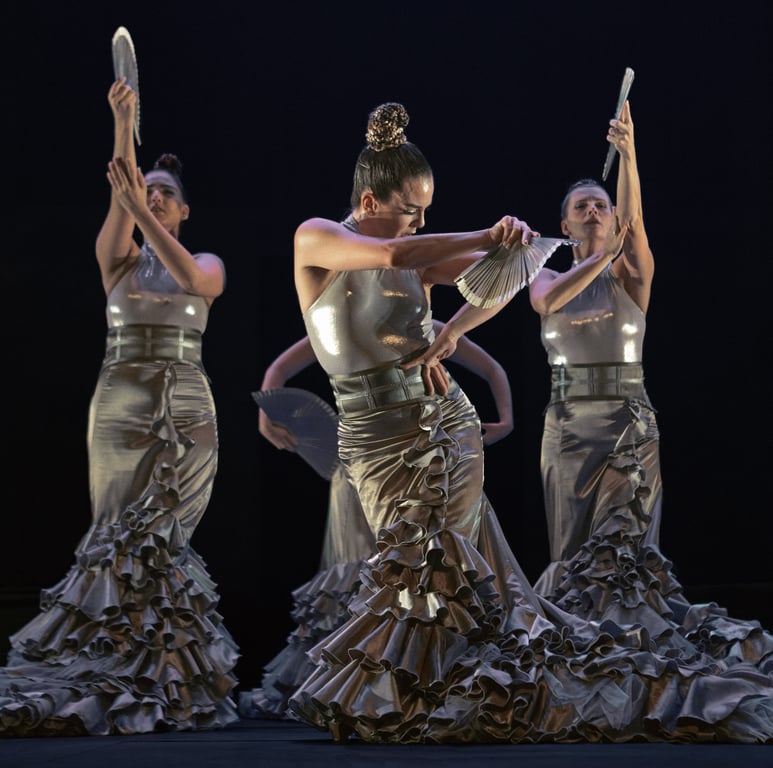
In its traditional staging the guajira is elegant and swaying, feminine in feel, and often danced with a fan, the abanico, whose flutters and accents suit the palo's graceful, unhurried motion. Its compás has a lilting quality that sets it apart from the driving intensity of the deeper forms. We explore this graceful palo more fully in our guide to what guajiras are.
The Rumba: Afro-Cuban Party Rhythm
If the guajira is the elegant member of the family, the rumba flamenca is the celebratory one. Its roots lie in Cuban rumba — a word that itself evokes a party — and behind that in Afro-Cuban rhythm. It sits in a straightforward four-beat feel, which is part of why it has become the most accessible and pop-friendly of all flamenco forms.
Ready to put this into practice?
Train with Siudy Garrido through our On-Demand Flamenco Courses — structured, professional flamenco instruction you can start today.
The rumba's crossover appeal is no accident. It was popularized in the late twentieth century by artists such as the guitarist Paco de Lucía and by groups like the Gipsy Kings, whose infectious, festive sound carried it far beyond flamenco's traditional audiences. For many listeners around the world, a rumba is their first taste of flamenco. We give it a fuller treatment in our piece on rumba flamenca.
The Colombiana: A Name That Misleads
The colombiana carries one of the more surprising stories in flamenco, because despite its name it does not come from Colombia. It was invented by the singer Pepe Marchena and first recorded in 1931 under the title Mi colombiana. Its melodic inspiration came not from Colombian music but from Mexican folk melodies, which makes the name something of a poetic misnomer.
As a relatively modern and deliberately composed form, the colombiana shows that these round-trip songs were not only a nineteenth-century phenomenon of returning indianos. The appetite for Latin-tinged flamenco continued well into the twentieth century, with artists consciously crafting new palos in this round-trip spirit. The colombiana shares the family's lighter, lilting warmth while owing its existence to a single creative act rather than a long folk migration.
The Milonga and Vidalita: Voices from Argentina
Not every round-trip song came from Cuba. Two members of the family carry the accent of Argentina, evidence that the exchange reached across South America as well as the Caribbean.
The milonga is Argentine in origin and sits, like the rumba, in a four-beat feel. Adapted into flamenco cante, it keeps a certain wistful, storytelling quality while fitting comfortably into the palo system. The vidalita, meanwhile, draws on the folklore of northern Argentina, adding another gentle, song-like color to the ida y vuelta palette. Both remind us that flamenco's Latin American conversation was broader than any single island or nation.
Why the Ida y Vuelta Palos Feel Different
Set beside the pillars of the tradition — the grave soleá, the tragic siguiriyas, the anvil-struck martinete — the cantes de ida y vuelta can sound almost like a different art. That contrast is exactly the point. Where the deep song, the cante jondo, reaches into grief and anguish, the round-trip forms breathe a lighter air: sunlit, swaying, tinged with the melody and lilt of the Americas.
This does not make them lesser. It makes them a vital reminder that flamenco has always been a music of fusion, open to the sounds carried home across the sea. The guajira's elegant sway, the rumba's party pulse, the colombiana's crafted warmth, and the Argentine voices of the milonga and vidalita all widen the emotional range of the tradition. They are proof that a great art form grows not by sealing itself off but by listening — and by welcoming home the voices that return changed.
To see how these round-trip forms sit within the larger family of styles, return to our overview of the palos of flamenco. And if hearing about the guajira's fan or the rumba's rhythm has left you wanting to move, explore on-demand flamenco classes with two-time Latin Grammy–nominated artist Siudy Garrido, or keep reading on our flamenco blog to follow the tradition wherever it travels.
Frequently asked questions
What are the cantes de ida y vuelta?
Why are they called round-trip songs?
Is the colombiana from Colombia?
Are the ida y vuelta palos easier for beginners?
Start dancing flamenco with Siudy Garrido
On-Demand Flamenco Courses — professional instruction, at your pace.
Explore Courses →