What Are Cantiñas? The Festive Palos of Cádiz Explained
 Part of our guide
The Palos of Flamenco: A Guide to the Styles and Forms →
Part of our guide
The Palos of Flamenco: A Guide to the Styles and Forms →
Among the many styles of flamenco, a handful stand out for sheer joy. If you have ever watched a flamenco show lift into something bright and buoyant, all upward energy and light-footed grace, you may well have been watching a member of the cantiñas family. This guide explains what the cantiñas are, where they come from, how they feel, and which forms belong to the group.
Cantiñas are one branch of the wider world of flamenco styles. For the full map of how the styles relate, see our overview of the palos of flamenco.
What Are Cantiñas? A Family of Festive Palos
The cantiñas are a family of festive palos — flamenco styles — associated above all with Cádiz, on Spain's southern coast, with some members linked to Seville. Rather than a single form, the word names a whole group of closely related styles that share a common spirit: lively, usually in a major mode, and bright and celebratory in character. Where much of flamenco leans toward the grave and the tragic, the cantiñas are flamenco at its most openly joyful.
Their home city matters. Cádiz has long been associated with a sunnier, more good-humored strain of flamenco, and the cantiñas are its signature contribution — the sound of a coastal city's festive temperament translated into song and dance. When people describe flamenco as radiant or celebratory, the cantiñas are very often what they have in mind, even if they do not yet know the name.
The Compás: Shared with the Soleá
One of the most useful facts about the cantiñas is a technical one. Every member of the family shares the twelve-beat compás of the soleá — the rhythmic cycle that sits at the heart of much of flamenco. The compás is the repeating rhythmic pattern that organizes a piece, and a great many flamenco styles are built on this same twelve-beat count, differing not in the number of beats but in tempo, accent, and mood.
That shared foundation is why the cantiñas can feel so different from the soleá while being, at bottom, rhythmic relatives. The soleá is slow, solemn, and majestic — often called a "mother" form of flamenco. The cantiñas take the same underlying cycle and quicken it, brighten it, and lift it into celebration. If you would like to understand that foundational rhythm on its own terms, our guide to what is soleá explains the form and its twelve-beat cycle in depth. The essential point is that the cantiñas borrow the soleá's architecture but fill it with an entirely different emotional light.
The Character: Bright, Major-Key, Celebratory
What truly defines the cantiñas is not the count but the feeling. These are the styles you turn to for exuberance. Cast usually in a major mode — the tonal color our ears tend to hear as bright and uplifting — they carry a buoyancy that sets them apart from the darker, minor-inflected corners of the flamenco repertoire.
Ready to put this into practice?
Train with Siudy Garrido through our On-Demand Flamenco Courses — structured, professional flamenco instruction you can start today.
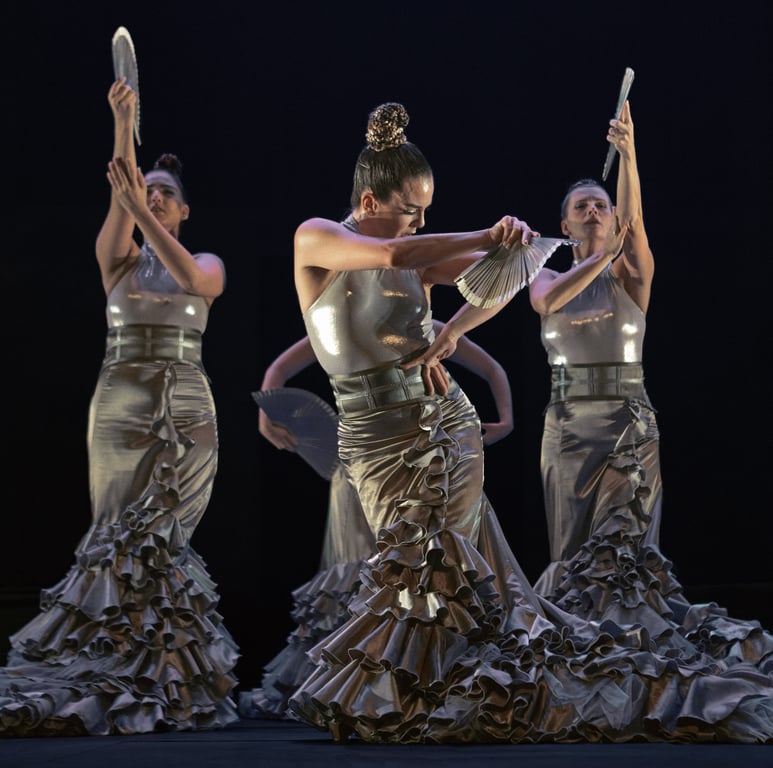
In performance this brightness shows in everything: quicker tempos, an airier carriage, footwork that skips and dazzles rather than pounds, and a general air of festivity that invites the audience in. The cantiñas are frequently danced with grace and lightness, and they reward a dancer's clarity and charm as much as raw power. This is flamenco meant to delight — and it is often where newcomers first fall in love with the art's celebratory side. For the broader context of how joyful and solemn styles sit within the tradition, our guide to the palos places the cantiñas among their neighbors.
The Members of the Cantiñas Family
The cantiñas are best understood as a small constellation of related forms rather than a single style. The group gathers several festive palos that share the same twelve-beat compás and the same bright temperament:
- Alegrías — by far the best known member of the family, and often a listener's first encounter with the cantiñas sound. Joyful and radiant, it is one of the defining festive palos of Cádiz.
- Romeras — a related festive form within the cantiñas group, sharing the family's major-mode brightness and twelve-beat cycle.
- Caracoles — another member of the family, part of the same celebratory Cádiz-and-Seville lineage of cantiñas.
- Mirabrás — a further form in the group, bound to the others by the shared compás and the same bright, festive character.
Together these forms make up the cantiñas: a cluster of styles that speak the same rhythmic and emotional language while each keeps its own particular flavor. To hear the family at its most familiar, start with its most celebrated form.
Cantiñas and Alegrías: How They Relate
Because alegrías is so widely known, it is easy to assume it stands apart from the cantiñas. In fact the opposite is true: alegrías is a member of the cantiñas family, not a separate category. The cantiñas are the broader group of festive palos from Cádiz, and alegrías is simply its most celebrated and most frequently performed form.
Put another way, every alegrías is a cantiña, but the cantiñas family reaches wider — taking in romeras, caracoles, and mirabrás alongside it. If you know and love the bright, buoyant sound of alegrías, you already have an excellent ear for the whole family; the other members are its close relatives, sharing the same twelve-beat cycle and the same sunlit spirit. To explore the most famous of the group in detail, see our guide to what are alegrías.
Bringing the Cantiñas to Life
The cantiñas are, in the end, the joyful heart of the Cádiz repertoire — a family of festive palos that take the soleá's twelve-beat compás and fill it with light. Understanding them is a wonderful window into flamenco's celebratory side, and hearing how alegrías, romeras, caracoles, and mirabrás relate deepens your appreciation of every festive number you watch.
The best way to truly feel the buoyancy of these styles is to move with them. Explore Siudy Garrido's on-demand flamenco classes to experience how compás and character come together in the festive palos, and browse more guides on our flamenco blog to keep exploring the many styles that make up this remarkable art.
Frequently asked questions
What are cantiñas in flamenco?
What palos belong to the cantiñas family?
What is the difference between cantiñas and alegrías?
What compás do cantiñas use?
Start dancing flamenco with Siudy Garrido
On-Demand Flamenco Courses — professional instruction, at your pace.
Explore Courses →