What Is Flamenco? Meaning, Origins, and the Art Explained
If you have ever heard the raw cry of a flamenco singer or watched a dancer's feet erupt into a storm of rhythm, you have probably asked the most natural question of all: what is this art, and where does it come from? This guide answers that clearly, then opens the door to everything that makes flamenco one of the world's most powerful forms of expression.
What Is Flamenco? A Clear Definition
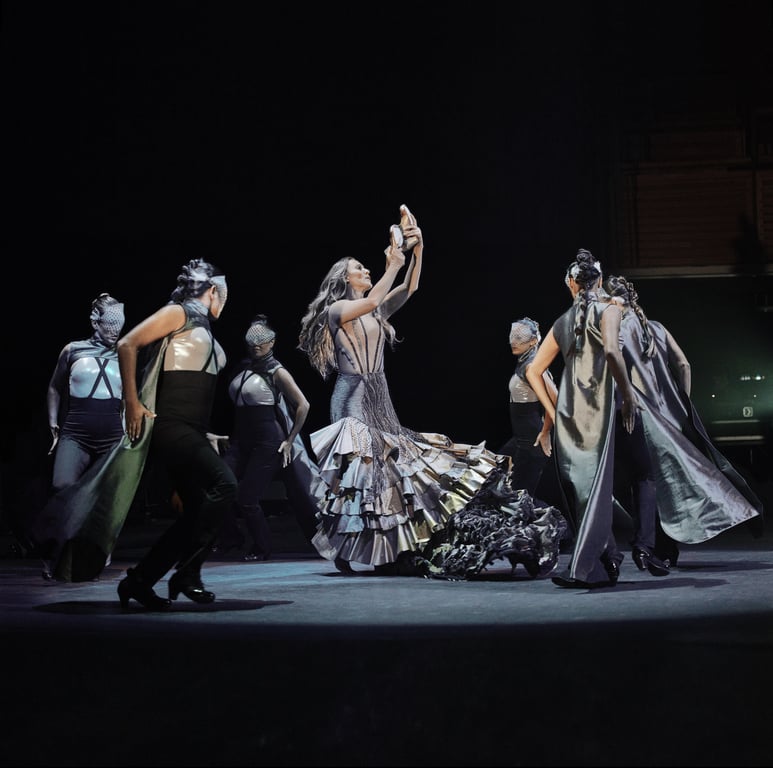
Flamenco is a living art from Andalusia in southern Spain that fuses three intertwined elements: cante (song), toque (guitar and musicianship), and baile (dance). It is not a single dance step but a whole expressive tradition, organized into distinct styles and driven as much by feeling as by technique. When people ask what is flamenco, the honest answer is that it is at once a music, a dance, and a way of channeling deep human emotion.
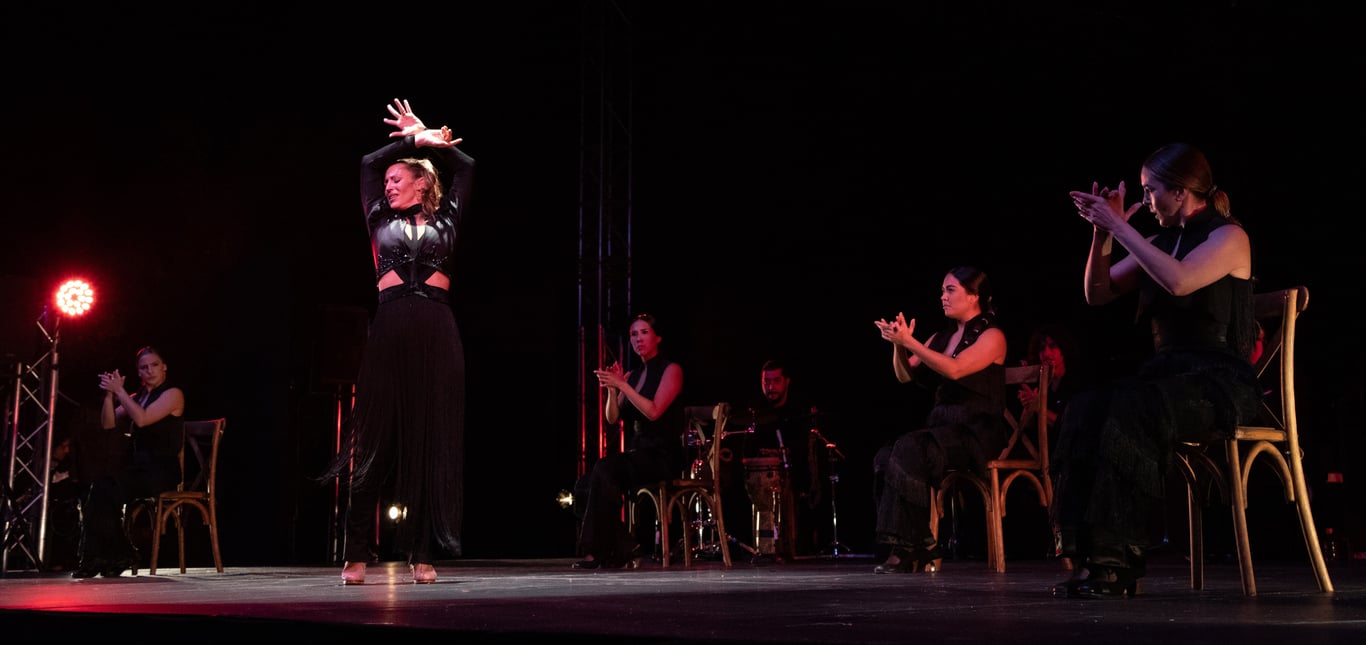
The art is supported by two more elements you will always find close by: palmas, the rhythmic hand-clapping that keeps the pulse, and jaleo, the encouraging shouts of ¡olé!, ¡vamos!, and ¡agua! that rise from performers and audience alike. Together these give flamenco its unmistakable atmosphere of shared, live intensity.
Flamenco as a Living Art
Flamenco is not a museum piece. It is a living tradition that continues to evolve on stages around the world, which is part of why the question what is flamenco has more than one right answer. In recognition of its cultural value, UNESCO inscribed flamenco on the Representative List of the Intangible Cultural Heritage of Humanity in 2010.
Its heartland is Andalusia, the sun-baked region of southern Spain, with roots reaching into Murcia and Extremadura as well. Flamenco did not spring from a single inventor; it grew over centuries as a fusion of Andalusian folklore, Moorish and Arabic melodies, Gitano (Roma) rhythms, and Jewish and Sephardic influence. The Roma communities who reached the Iberian Peninsula in the early 15th century contributed much of its expressiveness, rhythm, and vocal technique.
The word “flamenco” for the genre appears in the mid-19th century, and the first known written reference to the art comes even earlier, in 1774. Flamenco became public and professional for the first time during the era of the cafés cantantes in the late 19th and early 20th centuries, when artists earned fixed pay rather than performing only at private gatherings — a period often remembered as flamenco's “Golden Age.” Later, the tablaos that appeared from the mid-20th century onward became the venues most associated with flamenco today. If you want the full story of how these threads came together, our guide to the history of flamenco traces the journey, and we untangle the common debate over whether it is Spanish or Gypsy in a dedicated piece.
The Three Elements: Cante, Toque, and Baile
At the center of any real understanding of flamenco are its three core elements. Learn to hear them separately and you will never listen to flamenco the same way again.
- Cante — the song. Cante is the heart of flamenco and carries much of its emotion. Traditionally, the dancer responds to the singer rather than the other way around.
- Toque — the guitar and musicianship. The flamenco guitar is lighter than a classical guitar and often fitted with a tap plate to protect the top from percussive finger taps.
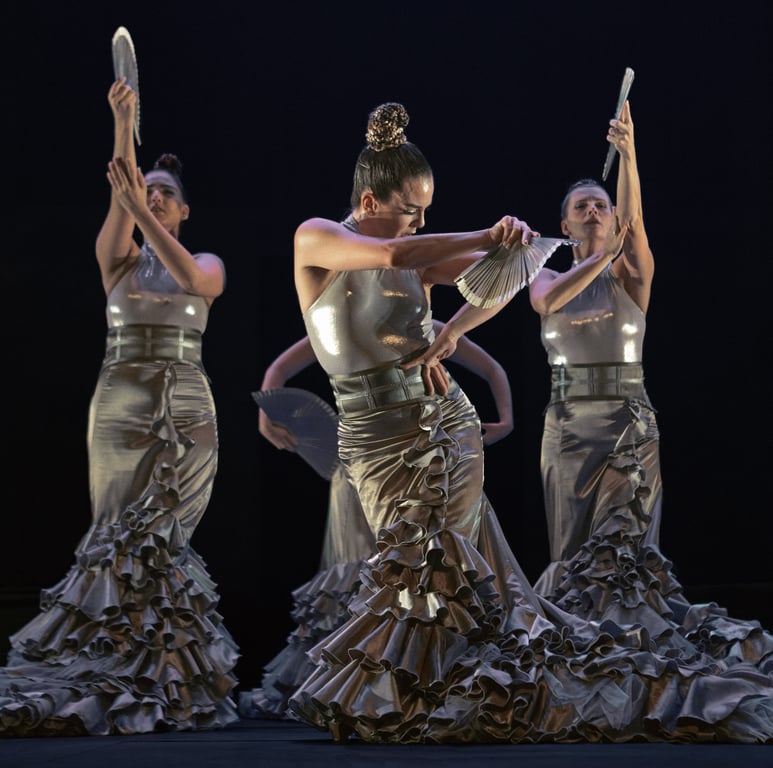
- Baile — the dance, with its sculpted arms, proud posture, and famous percussive footwork.
These three do not simply coexist; they converse. The singer sets an emotional current, the guitarist shapes the harmony and rhythm, and the dancer both responds to and drives the whole. Alongside them you will hear palmas in two flavors — palmas sordas, muffled and deep, and palmas claras, sharp and crisp — and, since Paco de Lucía introduced it to the art in the late 1970s, the cajón, a Peruvian box drum that has since become a standard part of the flamenco ensemble. We break each element down in detail in our guide to the elements of flamenco.
The dance itself has its own rich vocabulary. The percussive footwork flamenco is famous for is called zapateado, built from clear strikes such as the planta (ball of the foot), tacón (heel), and golpe (a strike of the whole flat foot). Above the waist, the arms move in slow, circular braceo while the wrists and fingers articulate in floreo. What ties it all together is postura — the proud, grounded carriage, spine long and chest open, that gives a flamenco dancer such commanding presence.
Ready to put this into practice?
Train with Siudy Garrido through our On-Demand Flamenco Courses — structured, professional flamenco instruction you can start today.
Palos: The Many Styles of Flamenco
Flamenco is not one uniform sound. It is organized into palos — styles or forms, each with its own compás (rhythmic cycle), tempo, and emotional character. Understanding palos is the key that turns flamenco from a blur into a language.
Many palos share a distinctive twelve-beat cycle — among them soleá, alegrías, and bulerías — differing less in the count itself than in tempo and mood. Soleá is slow, solemn, and majestic, its name linked to soledad (solitude), and it is often called a “mother” form of flamenco. Alegrías, from Cádiz, are bright and joyful. Bulerías are the fastest, most syncopated, and festive. Siguiriyas, also in a twelve-beat family, are grave and tragic in character.
Other palos sit in a simpler binary, four-count feel — most notably tangos, which is why they are often where beginners start, along with related forms like tientos (slow tangos) and the festive, more modern rumba flamenca. There are dozens of palos in all, each a distinct emotional world, and our overview of the palos of flamenco maps the main families. This variety is one of the reasons the question what is flamenco resists a one-line answer: the word covers an entire family of related but different forms.
Flamenco vs. Sevillanas: A Common Confusion
One of the most frequent mix-ups deserves a plain answer: sevillanas are a folk dance and music of Seville, not a flamenco palo. They are often performed at Spanish festivities and can look flamenco-like to a newcomer, but they belong to a different category.
Sevillanas derive from the Castilian seguidilla, follow a fixed structure of four coplas in 3/4 time, and are social and participatory — danced by everyone at the feria, or fair. Flamenco, by contrast, is improvisatory, organized by palos, and traditionally watched at a tablao. The two forms share a common ancestor in the seguidilla and diverged centuries ago; today flamenco artists often perform sevillanas “with a flamenco touch,” but the forms remain distinct. We explain the difference fully in flamenco vs. sevillanas.
Duende: The Soul of Flamenco
Ask any flamenco artist what truly separates a great performance from a merely correct one, and sooner or later you will hear the word duende. Duende is the heightened emotional authenticity, the soul, that lifts flamenco beyond technique into something that can move an entire room to silence or to shouts.
The idea was famously explored by the poet Federico García Lorca in his 1933 lecture on the subject. Duende is not a step you can drill or a chord you can learn; it is a felt quality that arrives only when the artist gives everything to the moment. It is why two dancers can perform the same palo with identical technique, yet only one leaves you changed. Understanding it is central to understanding what flamenco is really about — the difference between reproducing a form and inhabiting it. We go deeper in our exploration of duende in flamenco.
How to Experience and Learn Flamenco
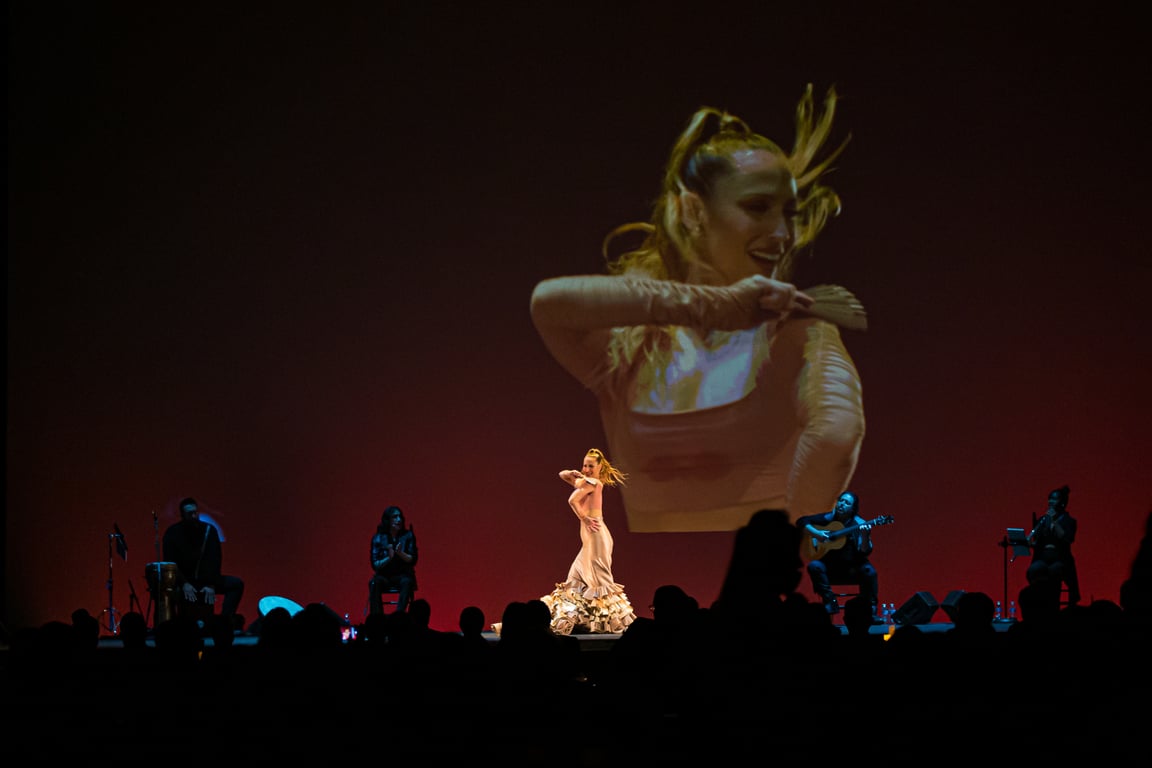
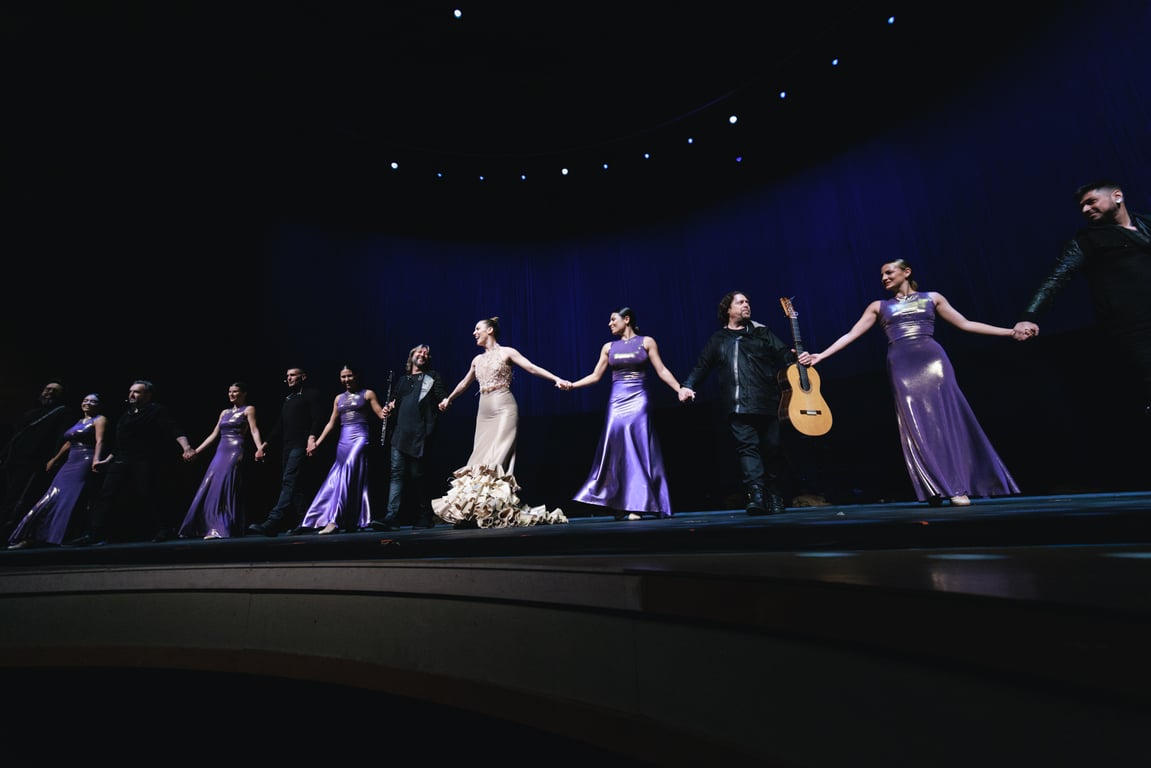
The best way to grasp flamenco is to feel it — ideally live, where palmas, jaleo, cante, toque, and baile come together in one charged moment. In its traditional home, flamenco is watched at a tablao, where the improvisation and the exchange between artists happen in real time and no two nights are ever quite the same. If you can attend a live performance, arrive ready to listen as much as to watch: notice how the dancer waits on the singer, how the guitarist answers a phrase, how the whole room leans in when duende takes hold.
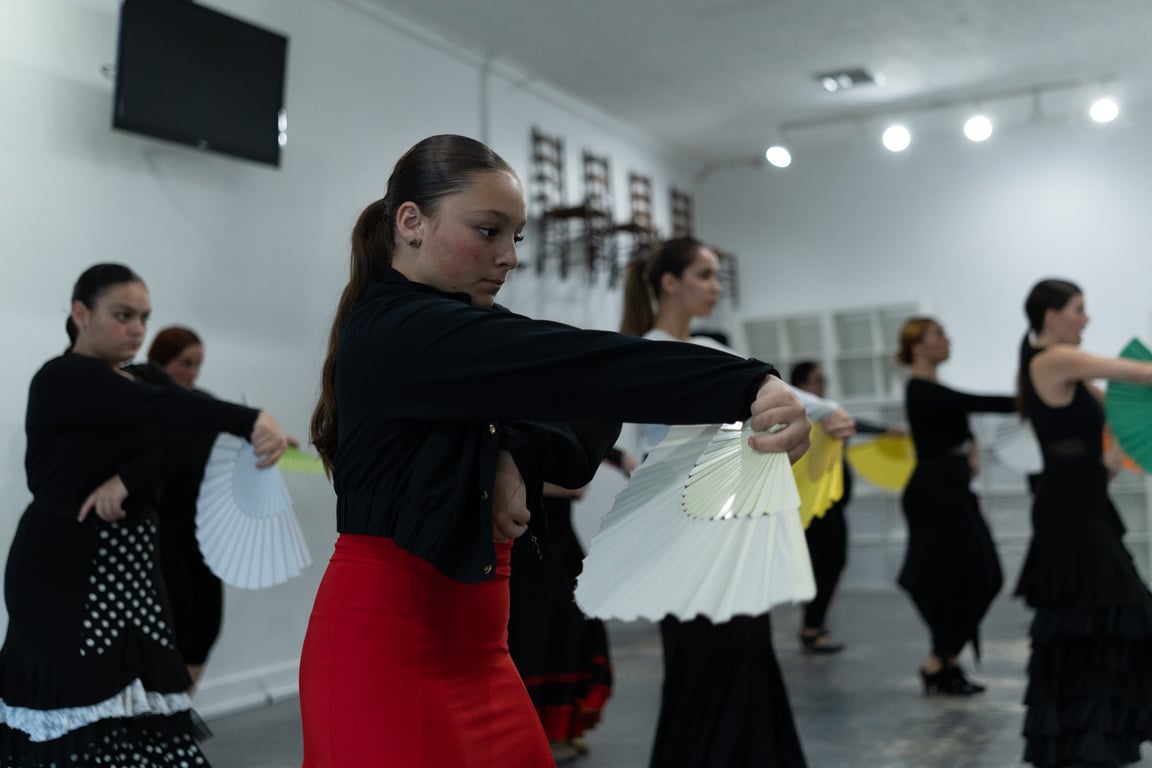
But you do not need to travel to Seville to begin. Structured video instruction now makes it possible to study the art properly from anywhere, at your own pace — slowing demonstrations down, rewatching difficult passages, and building the daily habit that real progress requires. The key is sequence: rhythm and compás first, then posture and arms, then footwork, in the order a serious program teaches them.
If watching flamenco has left you wanting to move, the next step is a real teacher and a real path. Explore on-demand flamenco classes with two-time Latin Grammy–nominated artist Siudy Garrido, or read our beginner-friendly guide on how to learn flamenco to understand the journey from your first compás onward. For more on the culture, technique, and history behind the art, browse the full flamenco blog. However you come to it, flamenco rewards curiosity — the more you understand, the more it moves you.
Frequently asked questions
What does flamenco mean?
Where is flamenco from?
Is flamenco Spanish or Gypsy?
Is flamenco the same as sevillanas?
What is duende in flamenco?
Start dancing flamenco with Siudy Garrido
On-Demand Flamenco Courses — professional instruction, at your pace.
Explore Courses →