Flamenco vs. Sevillanas: What's the Real Difference?
 Part of our guide
What Is Flamenco? Meaning, Origins, and the Art Explained →
Part of our guide
What Is Flamenco? Meaning, Origins, and the Art Explained →
Anyone new to Spanish dance runs into the same puzzle sooner or later. You see couples dancing in pairs at a Seville fair, arms raised and skirts swirling, and you assume you are watching flamenco. Then someone tells you it is something called sevillanas. So which is it? The short, honest answer sets the whole thing straight.
Flamenco vs. Sevillanas: The Short Answer
Sevillanas are a folk dance and music of Seville, not a flamenco palo. That single fact is the key to the entire flamenco vs. sevillanas question. Sevillanas can look flamenco-like to a newcomer, and the two do share deep roots, but they belong to different categories of Spanish dance. One is participatory folklore you join in with; the other is an art form you perform and watch.
If you are still working out what flamenco itself is, our pillar guide to what flamenco is lays out the full picture. Here we focus on drawing the line clearly between the two forms so you never mix them up again.
A Shared Ancestor: The Seguidilla
The confusion is not baseless. Sevillanas and flamenco genuinely are related. Both trace back, at least in part, to the Castilian seguidilla, an older Spanish folk form. Sevillanas evolved directly from the seguidilla, while flamenco drew on it as one thread among many, alongside Andalusian folklore, Moorish and Arabic melodies, Gitano (Roma) rhythms, and Jewish and Sephardic influence.
Over the 18th and 19th centuries these paths diverged. Sevillanas settled into the social, seasonal dance of Seville, while flamenco grew into the improvised, professional art that would later be inscribed by UNESCO on the Representative List of the Intangible Cultural Heritage of Humanity. So when people sense a family resemblance, they are not wrong. The two are cousins who grew up to lead very different lives.
What Sevillanas Actually Are
Sevillanas have a fixed, recognizable shape, and that fixedness is the first big clue in the flamenco vs. sevillanas comparison. They are danced in 3/4 time and built on a set structure of four coplas, four short sections that follow one after another in the same order every time. Once you learn the four, you can dance sevillanas anywhere in Spain with anyone, because everyone knows the same sequence.
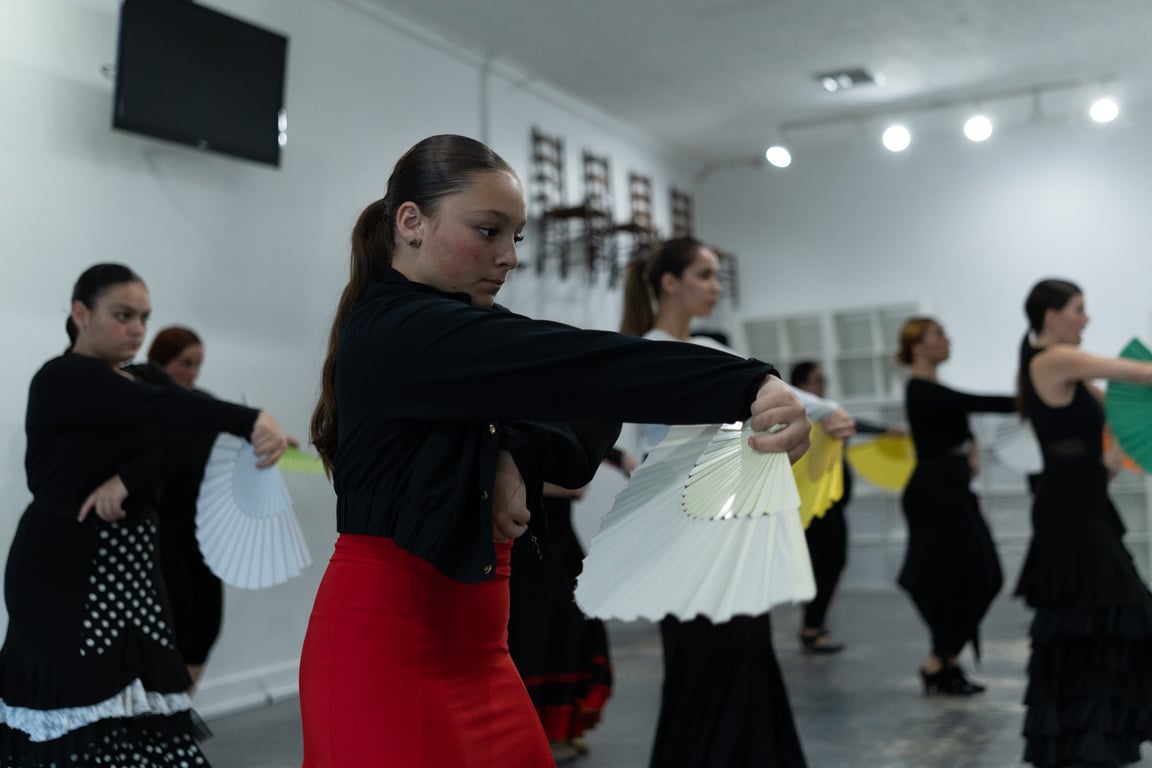
That predictability is the point. Sevillanas are social and participatory above all. At the feria, the great Andalusian fair, they are danced by everyone, in pairs, from children to grandparents, in the streets and the casetas. Nobody is auditioning. The dance is a shared celebration, a way for a whole community to move together to the same familiar coplas. You do not watch sevillanas so much as take part in them.
What Flamenco Is by Contrast
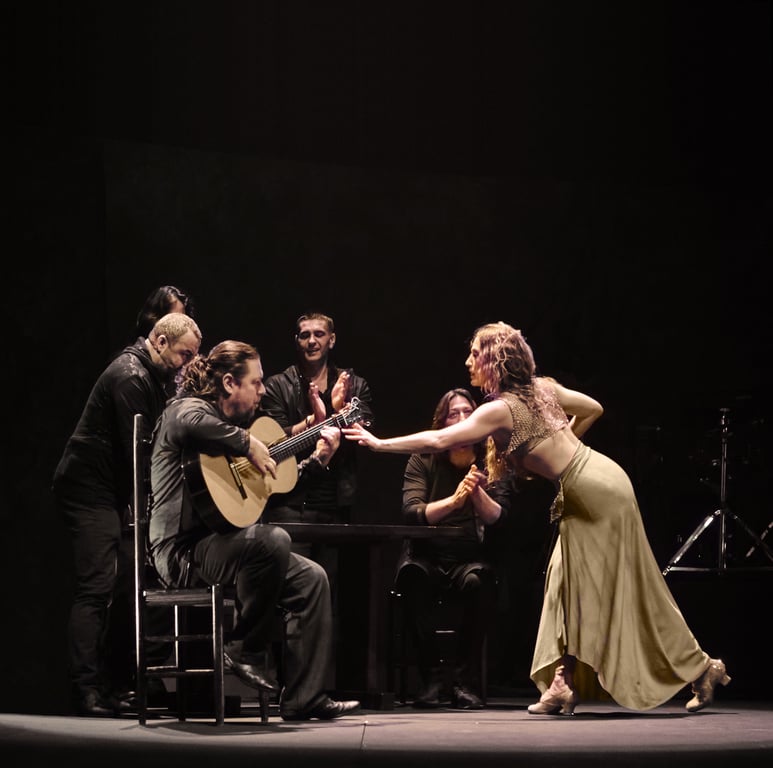
Flamenco could hardly be more different in spirit. Rather than one fixed structure, flamenco is organized into many palos, styles or forms, each with its own compás, or rhythmic cycle, its own tempo, and its own emotional character. Some palos share a twelve-beat cycle, among them soleá, alegrías, and bulerías, while others, such as tangos, sit in a simpler four-count feel. Our guide to the palos of flamenco maps out these families in full.
Ready to put this into practice?
Train with Siudy Garrido through our On-Demand Flamenco Courses — structured, professional flamenco instruction you can start today.
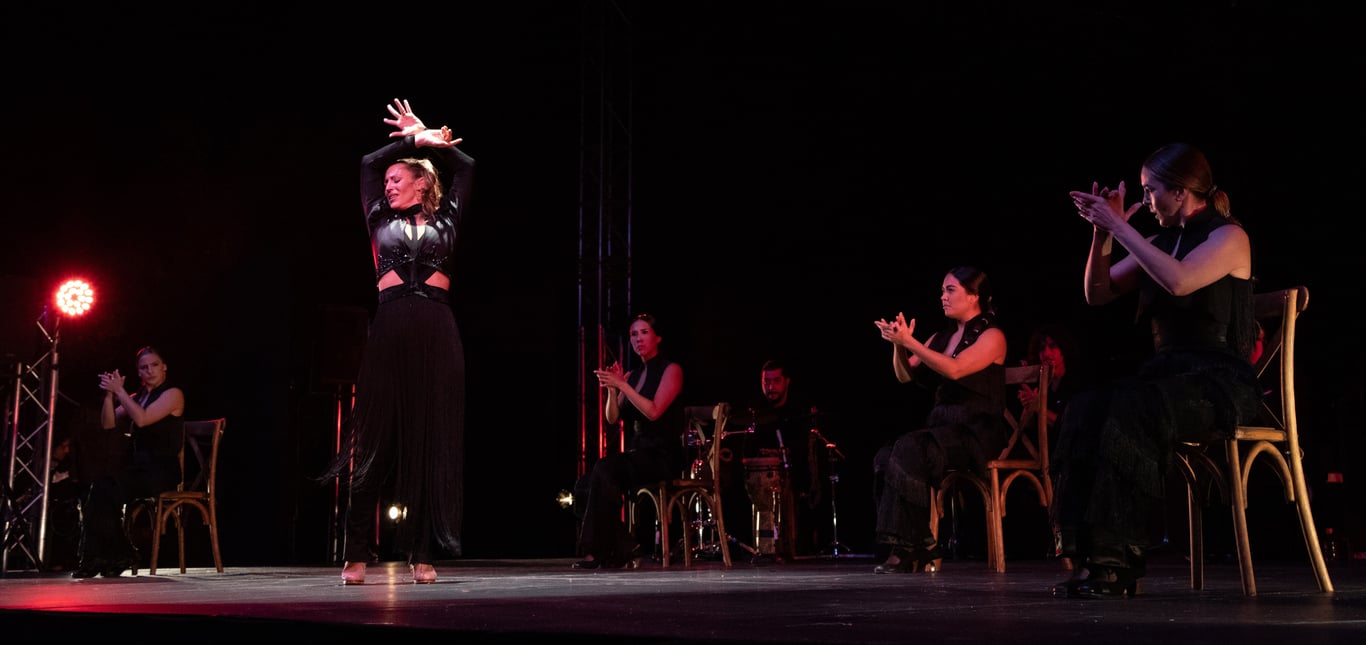
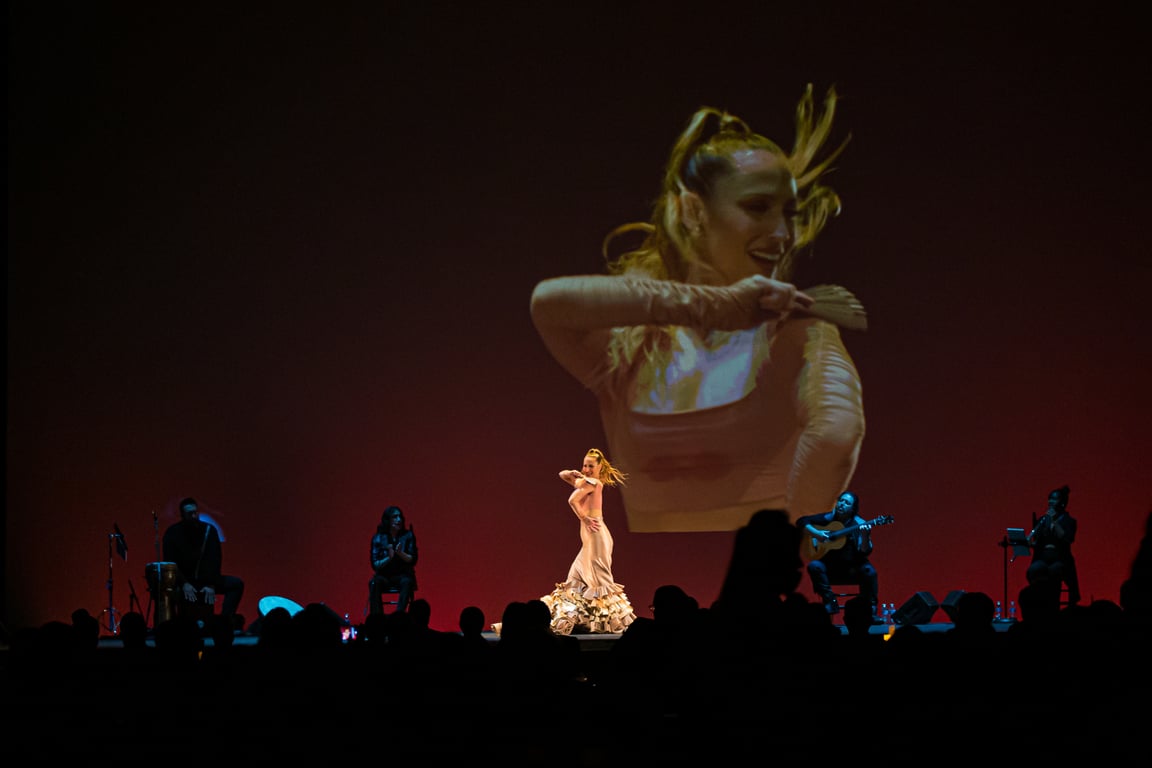
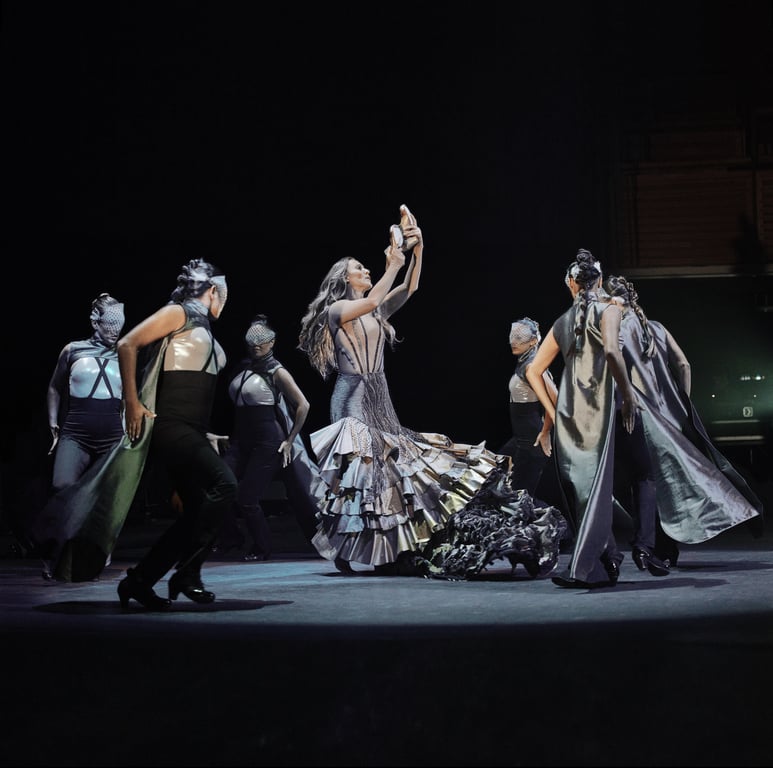
Where sevillanas are fixed, flamenco is improvised. The dancer responds in real time to the singer and guitarist, and no two performances unfold the same way. And where sevillanas belong to the crowd at the feria, flamenco is traditionally watched at a tablao, a venue built for the exchange between artists to happen live in front of an audience. Flamenco is something a trained artist performs; sevillanas are something everyone joins.
Flamenco vs. Sevillanas: A Side-by-Side Comparison
To make the difference between flamenco and sevillanas concrete, here is a direct comparison of the two forms:
- Category — Sevillanas are a folk dance of Seville. Flamenco is an art form organized into palos. Sevillanas are not a flamenco palo.
- Structure — Sevillanas follow a fixed sequence of four coplas. Flamenco is improvised within the framework of each palo.
- Rhythm — Sevillanas are in 3/4 time throughout. Flamenco spans many different compás cycles, from twelve-beat forms to four-count feels, depending on the palo.
- Who dances — Sevillanas are social and participatory, danced by everyone in pairs. Flamenco is performed by trained artists and watched by an audience.
- Where — Sevillanas belong to the feria, the fair. Flamenco is traditionally seen at a tablao.
Read the list top to bottom and the pattern is clear. Sevillanas are fixed, social, and singular in rhythm; flamenco is improvised, performed, and rhythmically diverse. That is the heart of the distinction.
The Nuance: Sevillanas "with a Flamenco Touch"
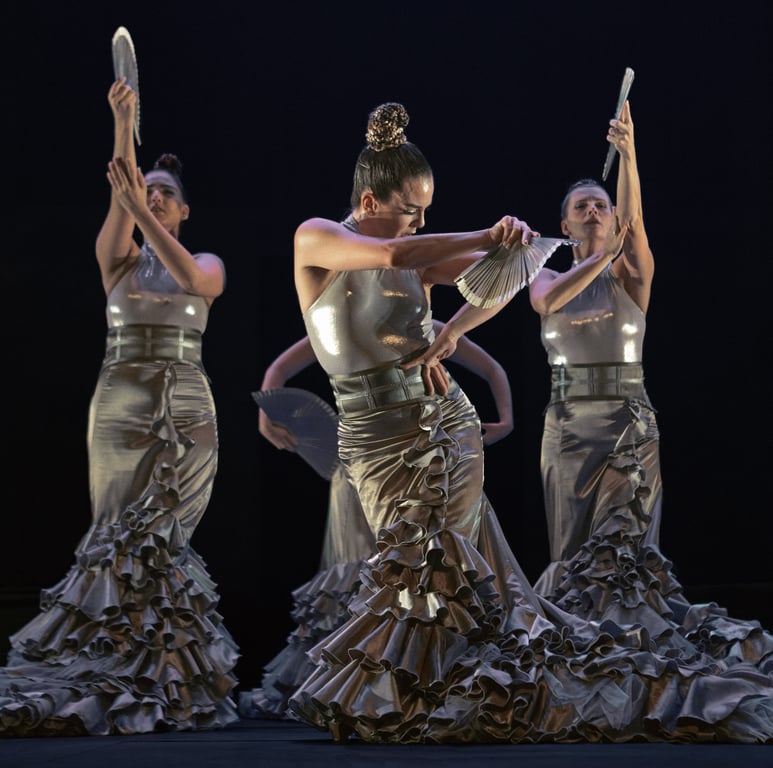
There is one wrinkle that keeps the confusion alive, and it is worth understanding rather than ignoring. Today, flamenco artists often perform sevillanas “with a flamenco touch.” A trained flamenco dancer can take the familiar four coplas and infuse them with flamenco's posture, arm work, and intensity, dressing up a folk dance in flamenco's expressive language.
When that happens, the sevillanas can look, to an untrained eye, indistinguishable from flamenco proper. But the underlying form has not changed. It is still sevillanas, still four coplas in 3/4 time, still rooted in social folklore. What has changed is the flavor a flamenco artist brings to it. Recognizing this nuance is what separates a casual observer from someone who truly understands the flamenco vs. sevillanas distinction: the styling can borrow across the line, but the two forms remain their own things.
Why the Distinction Matters
Getting this right is not pedantry. Understanding that sevillanas are folklore and flamenco is art changes how you experience each one. At a feria, you can let go and learn the four coplas yourself, because sevillanas are made to be shared. At a tablao, you settle in to witness something improvised and singular, where the value lies precisely in what only that artist, on that night, can create.
It also reframes the question are sevillanas flamenco in a way that honors both traditions. Sevillanas do not need to be flamenco to be beautiful and meaningful; they are a proud form in their own right. And flamenco does not lose anything by being distinguished from a social dance. If anything, seeing the two side by side sharpens your appreciation of what makes flamenco's improvisation and its palos so remarkable.
If this comparison has drawn you toward flamenco itself, there are good next steps. Deepen your grounding with our pillar on what flamenco is, explore the rhythmic worlds of the palos of flamenco, or begin moving with on-demand flamenco classes led by two-time Latin Grammy–nominated artist Siudy Garrido. You can also browse the full flamenco blog for more on the culture, technique, and history behind the art.
Frequently asked questions
Are sevillanas flamenco?
What is the difference between flamenco and sevillanas?
Where do sevillanas come from?
Why do people confuse sevillanas with flamenco?
Start dancing flamenco with Siudy Garrido
On-Demand Flamenco Courses — professional instruction, at your pace.
Explore Courses →