What Are Alegrías? Flamenco's Bright, Sunny Palo
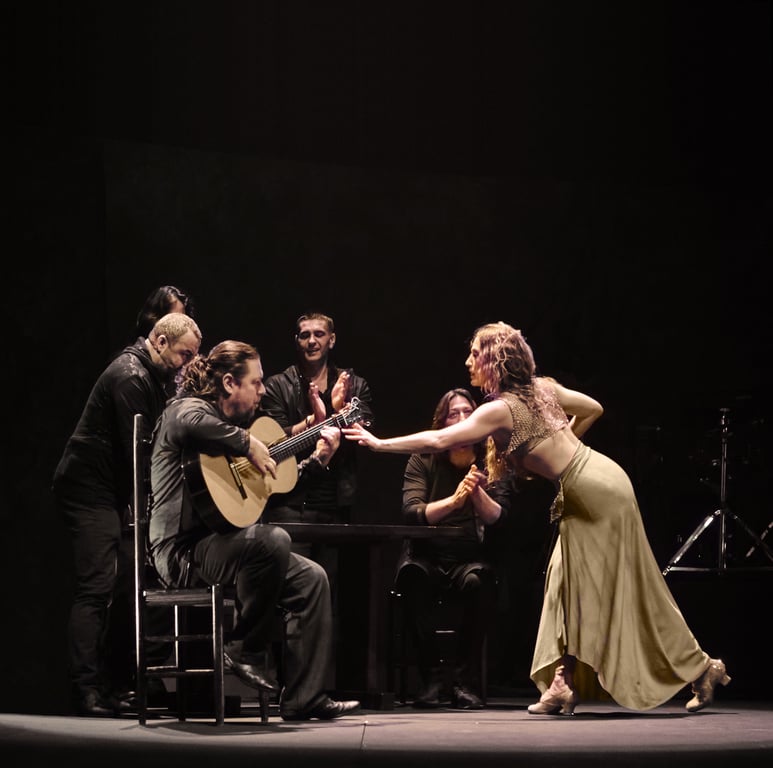 Part of our guide
The Palos of Flamenco: A Guide to the Styles and Forms →
Part of our guide
The Palos of Flamenco: A Guide to the Styles and Forms →
If you have ever watched a flamenco dancer light up the stage with something that felt like pure sunshine — quick, buoyant, almost teasing in its brightness — there is a good chance you were watching alegrías. Among all the styles of flamenco, alegrías are one of the most joyful and luminous, a form so identified with celebration that its very name announces its mood. This guide explains what alegrías are, where they come from, and what gives this palo its unmistakable sparkle.
Alegrías are one branch of a much larger family. Flamenco is not a single dance but a whole collection of related styles called palos, each with its own rhythm and emotional register — a landscape we map in our guide to the palos of flamenco. This article zooms in on one of the sunniest branches of that tree.
What Are Alegrías? The Joy of the Cádiz Coast
The word alegrías comes directly from the Spanish alegría, meaning joy — and that is exactly what the style is built to express. Alegrías are bright, festive, and celebratory in intention, and they are strongly associated with the seaside city of Cádiz, on the Atlantic coast of Andalusia in southern Spain. It is hard not to hear that coastal, sunlit origin in the music: there is an openness and a lift to alegrías that feels like light on water.
What makes alegrías especially interesting is that this joy is not loose or shapeless. Beneath the sparkle sits one of flamenco's most sophisticated rhythmic frameworks. Understanding that framework is the key to understanding why alegrías feel the way they do.
Alegrías and the Twelve-Beat Compás
Every flamenco palo is organized around a compás — a repeating rhythmic cycle that gives it structure and holds the singer, guitarist, and dancer together. Alegrías belong to flamenco's great twelve-beat family, the same rhythmic cycle shared by several of the art's most iconic styles.
This is where a lovely contrast appears. Soleá, the slow, solemn, majestic form often called a 'mother' of flamenco, rides that same twelve-beat cycle — yet soleá and alegrías could hardly feel more different. Where soleá is grave and inward, alegrías are quick, bright, and outward-facing. The count is shared; the tempo, accent, and above all the intention are worlds apart. If you would like to hear that contrast for yourself, our guide to what soleá is makes a perfect companion to this one — the two palos are the clearest illustration of how a single rhythmic cycle can hold both mourning and celebration.
It is worth adding a note of humility here: the precise accent patterns within the twelve-beat cycle vary from school to school and singer to singer. Rather than memorizing a rigid diagram of which beats are stressed, flamenco is learned by feeling the compás — traditionally by clapping it out with palmas, the rhythmic hand-clapping that underpins the whole art. The best way to know alegrías is to hear them.
Ready to put this into practice?
Train with Siudy Garrido through our On-Demand Flamenco Courses — structured, professional flamenco instruction you can start today.
The Cantiñas Family
Alegrías do not stand entirely alone. They belong to a broader group of flamenco styles known as the cantiñas — a family of festive, Cádiz-rooted forms that share alegrías' bright, celebratory spirit. Alegrías are the best known member of this group and, for many listeners, the gateway to it. When you learn to recognize alegrías, you are also learning to recognize the sunny, coastal feeling that runs through the whole cantiñas family.
This branching structure is typical of flamenco. Styles cluster into families that share a mood and a rhythmic feel, then differentiate through subtle shifts of tempo, melody, and regional flavor. Alegrías and their cantiñas relatives are the festive counterweight to the grave, cante jondo styles at the other end of the flamenco spectrum.
The Shape of an Alegrías Dance
One reason alegrías are such a favorite showcase for dancers is that a traditional alegrías dance tends to unfold through recognizable sections that flow into one another, giving the piece a satisfying arc from restraint to release.
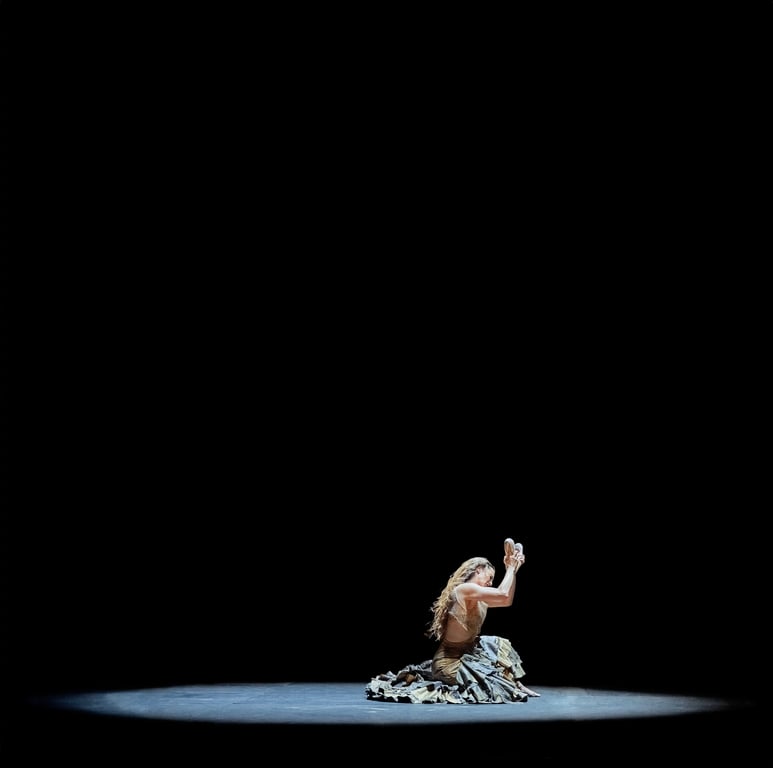
Among these are a quieter, more restrained passage sometimes called the silencio — a moment of poise and stillness within the brightness — and a footwork showcase known as the escobilla, where the dancer's zapateado (percussive footwork) takes center stage. It is important not to over-formalize this: the exact structure varies from dancer to dancer and from school to school, and a great deal is shaped in the moment. Think of these sections as recognizable landmarks rather than a fixed recipe. The joy of watching alegrías live is precisely in how an artist personalizes that journey.
Because alegrías balance festive lightness with genuine technical demand — clean footwork, controlled dynamics, and command of a challenging compás — they occupy a special place in a dancer's development. They ask you to be joyful and precise at the same time, which is harder than it sounds.
Why Alegrías Matter
Alegrías are, in a sense, flamenco smiling. In an art form often associated with anguish and gravity, they are a reminder that flamenco holds the full range of human feeling — that the same tradition capable of the deepest lament is equally capable of pure, sunlit celebration. That breadth is part of what makes flamenco so endlessly rich.
They also make a wonderful entry point for anyone drawn to flamenco's brighter side. The mood is welcoming, the energy is generous, and the compás — while sophisticated — rewards the patient student with one of the most satisfying feelings in all of dance: catching the rhythm and riding it.
Where to Go From Here
To truly understand alegrías, you have to feel them move through you — the lift, the pauses, the sudden bright bursts of footwork. Reading about the joy of Cádiz is one thing; dancing it is another. When you are ready to take that step, explore Siudy Garrido's on-demand flamenco classes, which teach you to move within the compás of the essential palos step by step, and continue exploring the wider world of flamenco styles on our flamenco blog. Alegrías are one of the most joyful doors in flamenco — and it is always open.
Frequently asked questions
What are alegrías in flamenco?
Where do alegrías come from?
Is alegrías a happy or sad flamenco style?
Does an alegrías dance have different sections?
Start dancing flamenco with Siudy Garrido
On-Demand Flamenco Courses — professional instruction, at your pace.
Explore Courses →