What Are Seguiriyas? Flamenco's Deepest, Most Tragic Song
 Part of our guide
The Palos of Flamenco: A Guide to the Styles and Forms →
Part of our guide
The Palos of Flamenco: A Guide to the Styles and Forms →
Among all the styles of flamenco, few carry the weight of the seguiriya. Also spelled siguiriya, it is widely regarded as one of the deepest and most tragic forms in the entire art — a summit of what flamenco calls cante jondo, or 'deep song.' Where some palos celebrate and others sparkle, the seguiriya mourns. To hear one performed well is to sit inside grief itself, held and shaped by rhythm. This guide explains what the seguiriya is, what gives it its grave character, and why it stands among the pinnacles of flamenco's most serious expression.
The seguiriya is one of many palos of flamenco — the family of styles, each with its own rhythm and mood, that together make up the art. If the palos are branches of one tree, the seguiriya is among its oldest and most solemn limbs.
What Is a Seguiriya?
A seguiriya is a flamenco palo, or style, defined above all by its emotional gravity. It belongs to cante jondo — the most profound and serious strand of flamenco, as opposed to the brighter, more festive cante chico. Within that deep tradition, the siguiriya is often placed at the very summit: the form flamenco reaches for when it wants to express the tragic, the wounded, and the inconsolable.
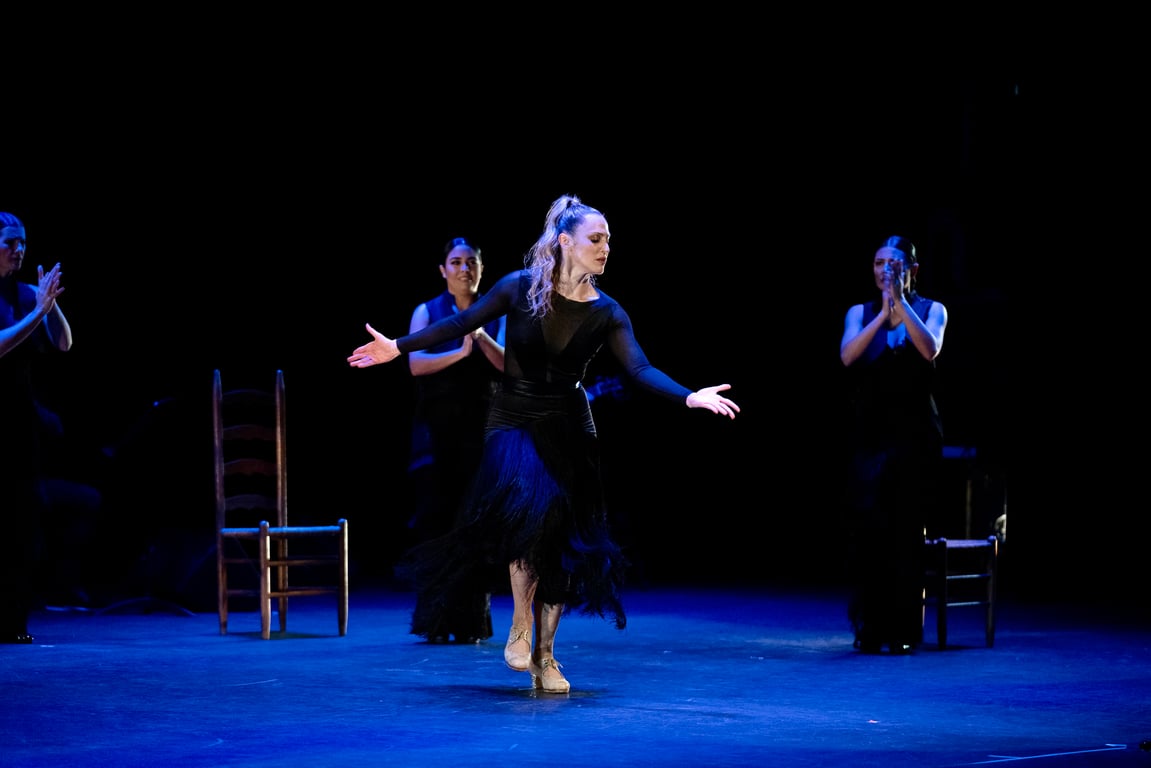
The character of the seguiriya is grave, profound, and sorrowful. Its verses have traditionally given voice to grief, loss, betrayal, and despair, and the whole apparatus of the palo — the singer's cry, the guitar's dark tones, the dancer's restrained intensity — bends toward that feeling. Nothing about a seguiriya is decorative. It is flamenco stripped to its emotional bone.
The Grave Character of Cante Jondo
To understand the seguiriya, it helps to understand cante jondo, the 'deep song' at the heart of flamenco. Flamenco has long distinguished between its deepest, most serious styles and its lighter, more celebratory ones. Cante jondo is the domain of solitude, mourning, and the tragic sense of life; the soleá and the seguiriya are its twin pillars.
Where the soleá is slow, solemn, and majestic — its name linked to soledad, meaning solitude — the seguiriya pushes even further into anguish. Many listeners describe the siguiriya as the most tragic of all the palos, the one that comes closest to raw lament. This is why singers and dancers treat it with such reverence: it asks for a depth of feeling that cannot be faked.
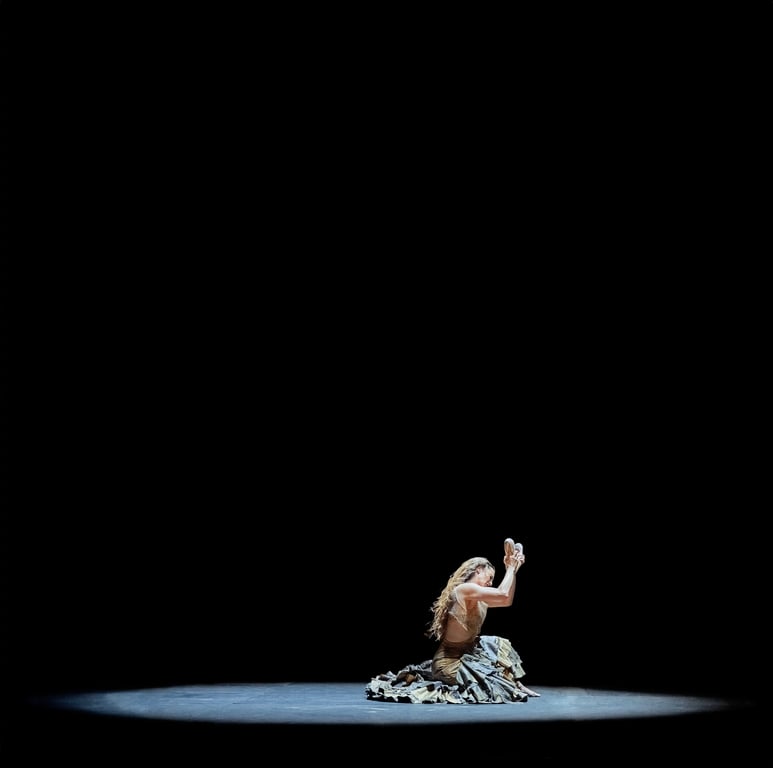
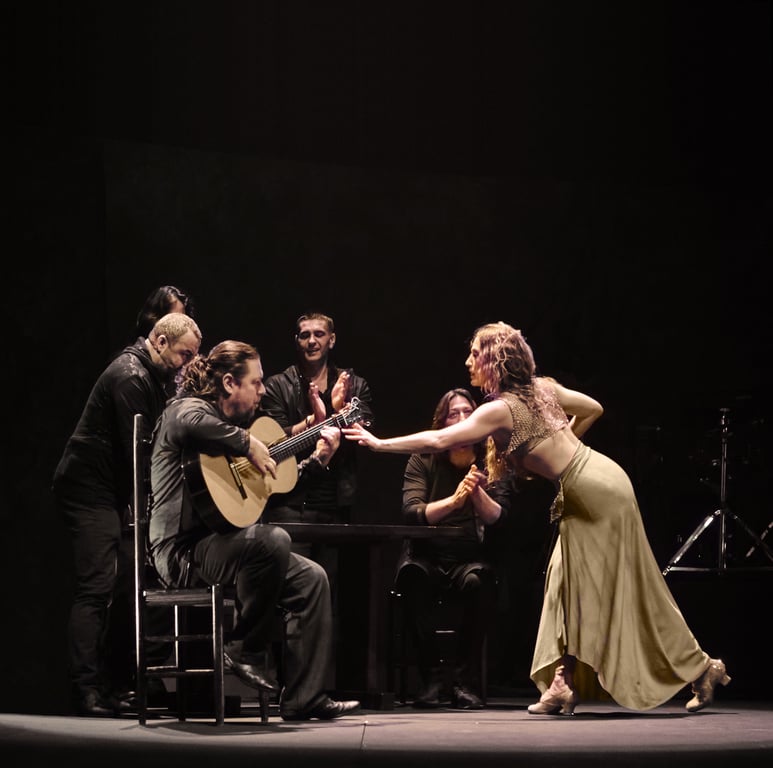
In flamenco, the cante, or song, carries much of the emotion, and the dancer traditionally responds to the singer rather than leading. In a seguiriya this relationship is at its most intense. The dancer's role is not to dazzle but to embody the grief the singer pours out — through weighted stillness, contained gesture, and footwork that lands like a heartbeat rather than a flourish.
Ready to put this into practice?
Train with Siudy Garrido through our On-Demand Flamenco Courses — structured, professional flamenco instruction you can start today.
The Compás of the Seguiriya
Rhythmically, the seguiriya belongs to flamenco's great twelve-beat family — the same broad group that includes the soleá, the alegrías, and the bulerías. These palos share a distinctive twelve-count cycle, or compás, but differ from one another in tempo, accent, and mood. What sets the siguiriya apart is where the emphasis falls.
The seguiriya's compás is often described as an amalgama — a mix of measures, an amalgam of longer and shorter groupings rather than an even, marching count. This uneven, off-balance feel is one of the reasons the palo sounds so heavy and aching: the rhythm itself seems to lurch and pull, mirroring the emotional turbulence of the song. It is a very different sensation from the steady lift of a tango or the buoyant snap of a bulería.
It is worth being careful here. The exact placement of the accents varies from school to school and from singer to singer, and it is best learned by ear rather than memorized as a rigid diagram. The traditional way to internalize any flamenco rhythm is through palmas — the rhythmic hand-clapping that keeps the compás alive — and the seguiriya's amalgama is something that reveals itself far more clearly in the hearing than on the page. For our purposes, it is enough to know that the siguiriya takes the twelve-beat cycle and arranges it into an uneven, distinctive accent pattern all its own.
Why the Seguiriya Matters
The seguiriya endures as one of flamenco's most revered forms precisely because it refuses to be easy. It is demanding for everyone involved. The singer must summon a cry that carries real anguish; the guitarist must build a dark, tolling accompaniment that never rushes; the dancer must hold enormous feeling in a body that stays grounded and contained. There is no hiding in a seguiriya, and no shortcut through it.
For students of flamenco, the siguiriya is often approached only after a foundation has been laid in other palos. Its grave mood and unusual compás reward patience, and dancers frequently spend years growing into it. But that is also what makes it so meaningful: to dance a seguiriya is to test how deeply you can feel and how honestly you can express it. It is one of the truest measures of an artist's maturity.
A Pinnacle of Deep Song
The seguiriya sits at the far, serious end of flamenco's emotional spectrum — the place the art goes to speak about sorrow without flinching. Alongside the soleá, it anchors cante jondo and reminds us that flamenco is not only celebration and fire, but also grief, gravity, and the courage to face them. Understanding the siguiriya is understanding flamenco at its most profound.
To hear how the seguiriya relates to the other styles, return to our guide to the palos of flamenco, and compare it with its solemn sibling, the soleá. And when you are ready to feel these rhythms in your own body, explore Siudy Garrido's on-demand flamenco classes, which teach you to move within the compás of the essential palos, or browse more guides on our flamenco blog. The deepest songs are the ones worth learning slowly.
Frequently asked questions
What is a seguiriya in flamenco?
What is the difference between a seguiriya and a soleá?
Why is the seguiriya considered so difficult?
Is siguiriya the correct spelling, or seguiriya?
Start dancing flamenco with Siudy Garrido
On-Demand Flamenco Courses — professional instruction, at your pace.
Explore Courses →