Flamenco Palmas: The Hand Percussion That Keeps Compás
 Part of our guide
Flamenco Music and Instruments: The Sound Behind the Dance →
Part of our guide
Flamenco Music and Instruments: The Sound Behind the Dance →
At a genuine flamenco performance, listen past the guitar and the voice and you will hear something almost hidden in plain sight: hands, clapping. Not the loose applause of an audience, but a tight, driving rhythm laid down by the performers themselves — sometimes soft and pulsing, sometimes cracking like a whip. This is the sound of flamenco palmas, and it is far more than decoration. Palmas are flamenco's hand percussion, the living pulse that keeps and marks the rhythm every other element depends on.
Palmas belong to the wider world of flamenco sound, alongside the voice, the guitar, and the cajón. For the full picture of how these pieces fit together, see our pillar guide to flamenco music and instruments. Here we focus on the clapping itself — the two sounds it produces, how it holds the compás, the people who provide it, and why learning it is the smartest first step a beginner can take.
What Flamenco Palmas Actually Are
Flamenco palmas are rhythmic hand-clapping used as percussion. Long before any drum entered the ensemble, flamenco kept its rhythm with the body — the hands, the feet, and the voice — and palmas remain the purest expression of that. A skilled clapper does not simply keep time; they shape the intensity of a piece, pushing the energy forward, holding it back, and marking the moments that matter.
Clapping the rhythm well is a genuine skill, not a warm-up. Good palmas are precise, even, and unhurried, and they lock so tightly to the music that they feel like a second heartbeat under the guitar and voice. Because flamenco clapping asks so much of your sense of timing, it is one of the clearest windows into how the art is organized rhythmically.
The Two Sounds: Palmas Sordas and Palmas Claras
Palmas produce two broad kinds of sound, and knowing them is the first thing to listen for.
- Palmas sordas — muffled and deep. Played with cupped hands, they make a soft, low, rounded sound that sits underneath the music rather than on top of it. Palmeros reach for sordas when they want to keep the rhythm present without competing with the singer or drawing attention.
- Palmas claras — sharp and crisp. Struck to produce a bright, cutting crack, claras slice through the texture and make accents unmistakable. When a performance lifts and the energy rises, you will usually hear the claras take over.
Palmeros move between the two constantly, choosing sordas or claras to match the moment, the palo, and how much they want the clapping to stand out. That contrast — soft and deep against sharp and crisp — is part of what gives flamenco clapping its shape and drama.
How Palmas Keep and Mark the Compás
To understand why palmas matter so much, you have to understand compás. Compás is the rhythmic cycle at the heart of flamenco — the repeating framework that every voice, string, and clap locks into. Each palo, or flamenco style, has its own compás, its own tempo, and its own emotional character. It is the shared clock that lets a singer, a guitarist, and a dancer improvise together and still land as one. For a deeper look at how these cycles work, read our guide to understanding flamenco compás.
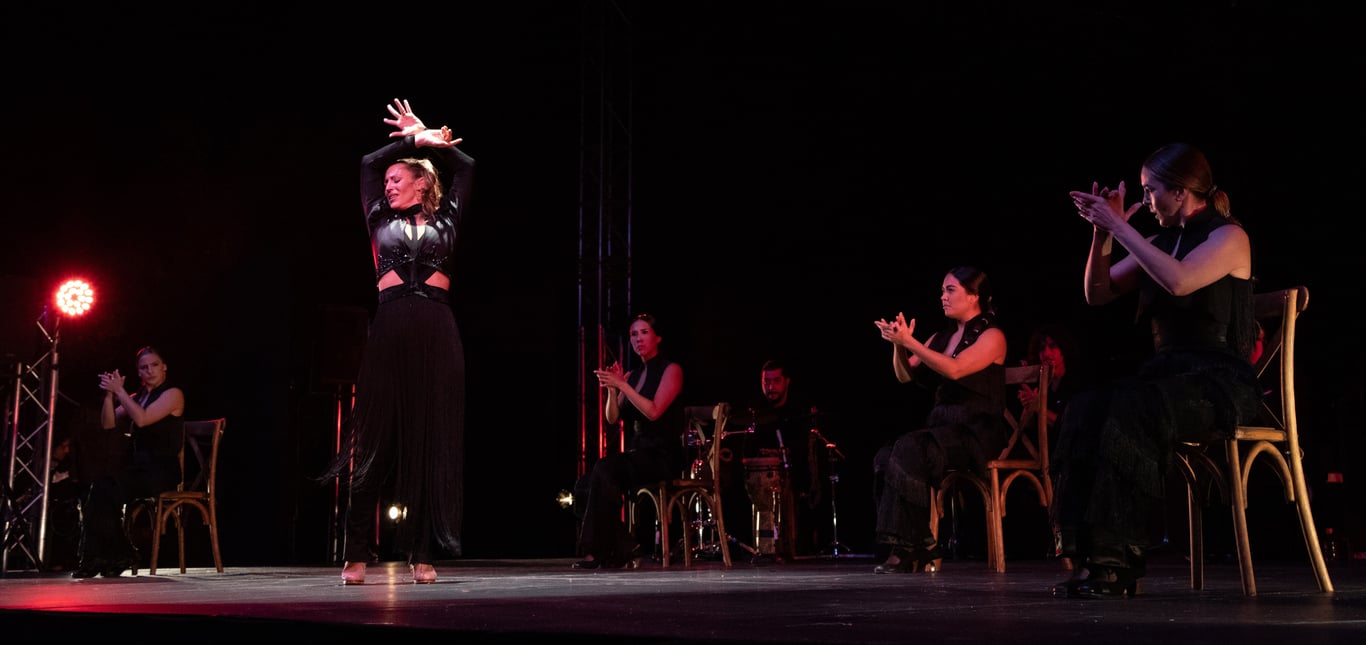
Flamenco palmas serve compás in two connected ways. First, they keep it — laying down a steady, reliable pulse so everyone on stage has a common foundation to build on. Second, they mark it — landing on the accented beats that give a palo its particular feel, so the rhythm is not just present but clearly articulated. In practice, several palmeros often work at once: some keeping the basic pulse steady, others marking accents or clapping busier, contrasting patterns on top.
Ready to put this into practice?
Train with Siudy Garrido through our On-Demand Flamenco Courses — structured, professional flamenco instruction you can start today.
Because accent patterns vary by palo and by school, there is no single "correct" way to clap every rhythm. Many palos share a distinctive twelve-beat cycle — among them soleá, alegrías, and bulerías — differing less in the count than in tempo and character. Others, such as tangos, sit in a simpler four-count feel. The palmero's job is to know where the accents fall for the palo being played and to place the claps so the whole ensemble feels grounded. That sensitivity, more than raw speed, is what separates a fine clapper from a beginner.
The Palmeros: Flamenco's Rhythmic Backbone
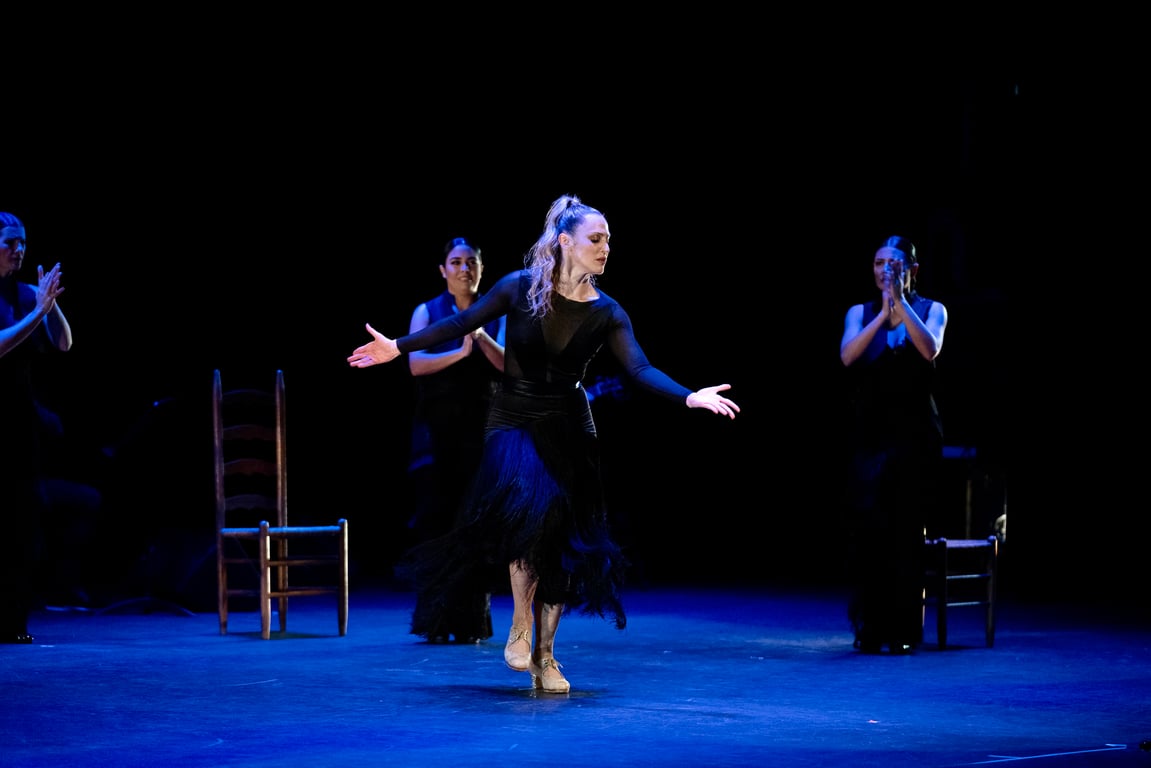
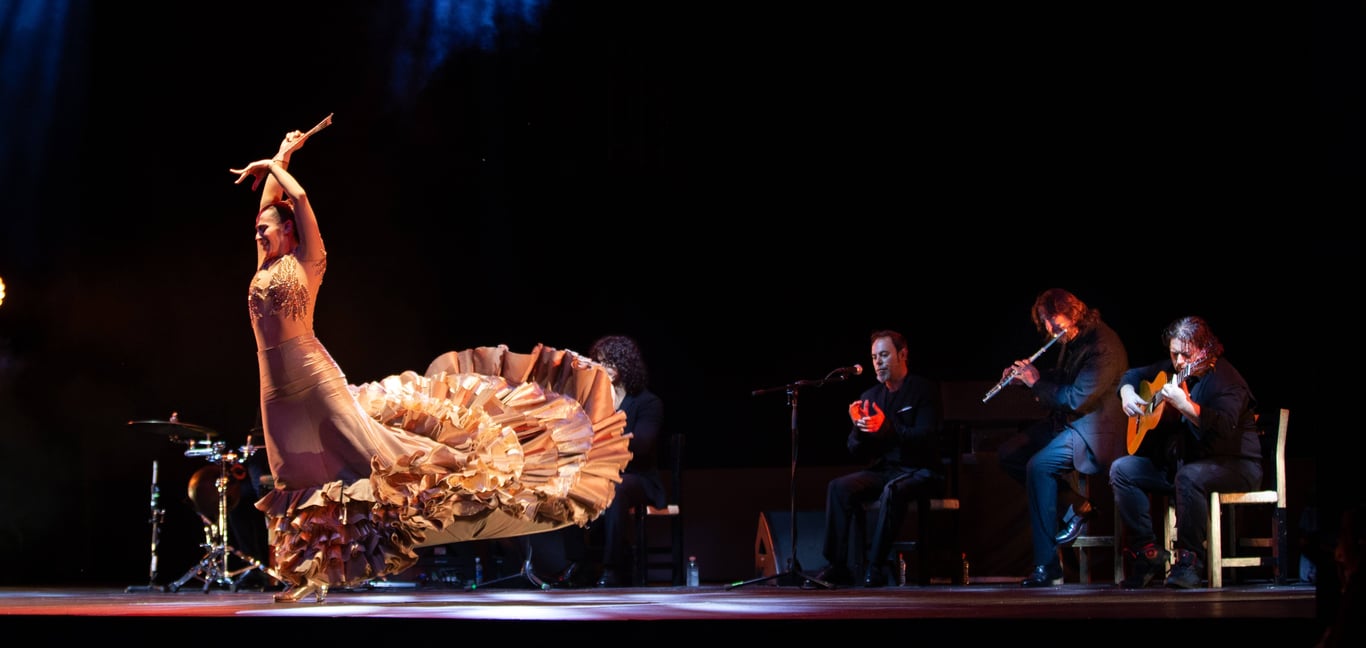
The clapping is provided by dedicated performers called palmeros (or palmeras). In a full flamenco group they are not an afterthought — they are the rhythmic backbone, holding the compás steady so the singer can stretch a phrase, the guitarist can spin a falseta, and the dancer can push against the beat without the whole thing falling apart. Guitarists, singers, and dancers also clap when their hands are free, so palmas ripple through the entire ensemble rather than belonging to one person.
Jaleo: The Shouts That Lift the Room
Woven through the palmas is jaleo — the encouraging shouts that lift the performers and mark the intensity of a moment: ¡olé!, ¡vamos!, ¡agua!. Jaleo is not scripted applause; it is a real-time response from people who know the art, calling out at exactly the right instant to spur a singer or dancer on. Together, palmas and jaleo turn a flamenco performance into a conversation, one in which the people keeping the rhythm are also cheering it forward.
Why Beginners Should Start With Palmas
If you are new to flamenco, palmas are the best possible entry point — and here is why. Compás can feel abstract when you first meet it, especially in a twelve-beat palo where the accents do not fall where a newcomer expects. Clapping the cycle turns that abstraction into something physical. You feel the pulse in your hands, feel where the accents land, and start to internalize the rhythm before you ever add the complexity of footwork, guitar, or the full flamenco music ensemble.
Palmas also ask for nothing but your own two hands, which means you can practice the rhythm anywhere — waiting in line, sitting at a desk, listening to a recording. Many teachers have students clap a palo long before they dance a single step, precisely because the compás has to live in the body first. Get palmas into your bones and everything that follows — the footwork, the marking, the escobilla — has a steady frame to hang on.
Start slow and even rather than fast and rough. Aim for clean, consistent claps that stay locked to the pulse, and only then layer in the contrast between sordas and claras. Clarity and steadiness always matter more than speed — the same principle that governs flamenco footwork governs the hands.
Listening With New Hands
Once you know what palmas are doing, a flamenco performance sounds different. You start to hear the palmeros keeping the compás steady, the shift from muffled sordas to cracking claras as the energy builds, the shouts of jaleo landing at the peaks, and the whole group breathing together on a single shared rhythm. The clapping stops being background and becomes what it always was — the pulse the entire art rests on.
The best way to feel this for yourself is to clap along. Explore Siudy Garrido's on-demand flamenco classes to learn compás and palmas from your very first cycle, and browse more guides on our flamenco blog to keep going deeper into the rhythm behind the dance.
Frequently asked questions
What are flamenco palmas?
What is the difference between palmas sordas and palmas claras?
Why should beginners learn palmas first?
Who provides the palmas in a flamenco performance?
Start dancing flamenco with Siudy Garrido
On-Demand Flamenco Courses — professional instruction, at your pace.
Explore Courses →