How to Learn Flamenco: A Complete Guide for Beginners
If you have ever watched a flamenco dancer take command of a stage — the percussive drive of the feet, the sculpted arms, the concentrated intensity of the gaze — you may have wondered how anyone learns to do that. The encouraging truth is that learning how to learn flamenco is more approachable than it looks, provided you build the right foundations in the right order. This guide walks you through exactly that: what flamenco really is, the core techniques every beginner must develop, and a practical path from your first lesson toward genuine expression.
Flamenco is a living art from Andalucía in southern Spain, inscribed by UNESCO in 2010 on the Representative List of the Intangible Cultural Heritage of Humanity. It is not simply choreography set to music; it is a conversation. To learn it well, you first need to understand who is speaking.
The Three Pillars of Flamenco: Cante, Toque, and Baile
Every flamenco performance rests on three interwoven elements. Understanding them early will change how you hear the music and how you move within it.
- Cante — the song. Cante is the heart of flamenco. The cantaor or cantaora (singer) carries much of the emotion and, in traditional baile, often guides the structure the dancer responds to.
- Toque — the guitar. The tocaor or tocaora (guitarist) holds the harmony and rhythm, weaving between voice and movement.
- Baile — the dance. The bailaor or bailaora both responds to and drives the cante and toque with body, arms, and feet.
As a beginning dancer, you are learning baile — but you are never dancing alone. Flamenco asks you to listen constantly. That is why the very first skill you build is not a step. It is rhythm.
Compás: The Rhythmic Heartbeat You Must Master First
Compás is the rhythmic cycle that organizes flamenco. Each style, or palo, has its own compás — a repeating pattern in which certain counts are accented and others fall silent. Get the compás right and everything else has a home; lose it and even beautiful movement comes apart.
Many palos share a distinctive twelve-beat cycle — among them soleá, bulerías, and alegrías — which differ less in the count itself than in tempo and character: the solemn weight of soleá, the bright lift of alegrías, the quick syncopation of bulerías. Others, such as tangos (and the festive, more modern rumba flamenca), sit in a straightforward binary, four-count feel, which is why they are often where beginners start.
How Beginners Build Compás
The traditional — and most effective — way to internalize compás is through palmas, the rhythmic hand clapping that accompanies flamenco. Before you worry about your feet, spend real time clapping the accents of a palo until the pattern lives in your body. Count aloud, mark the strong beats, and practice with recordings. This one habit separates dancers who merely execute steps from those who truly dance in the music.
Técnica: The Physical Foundations of Flamenco
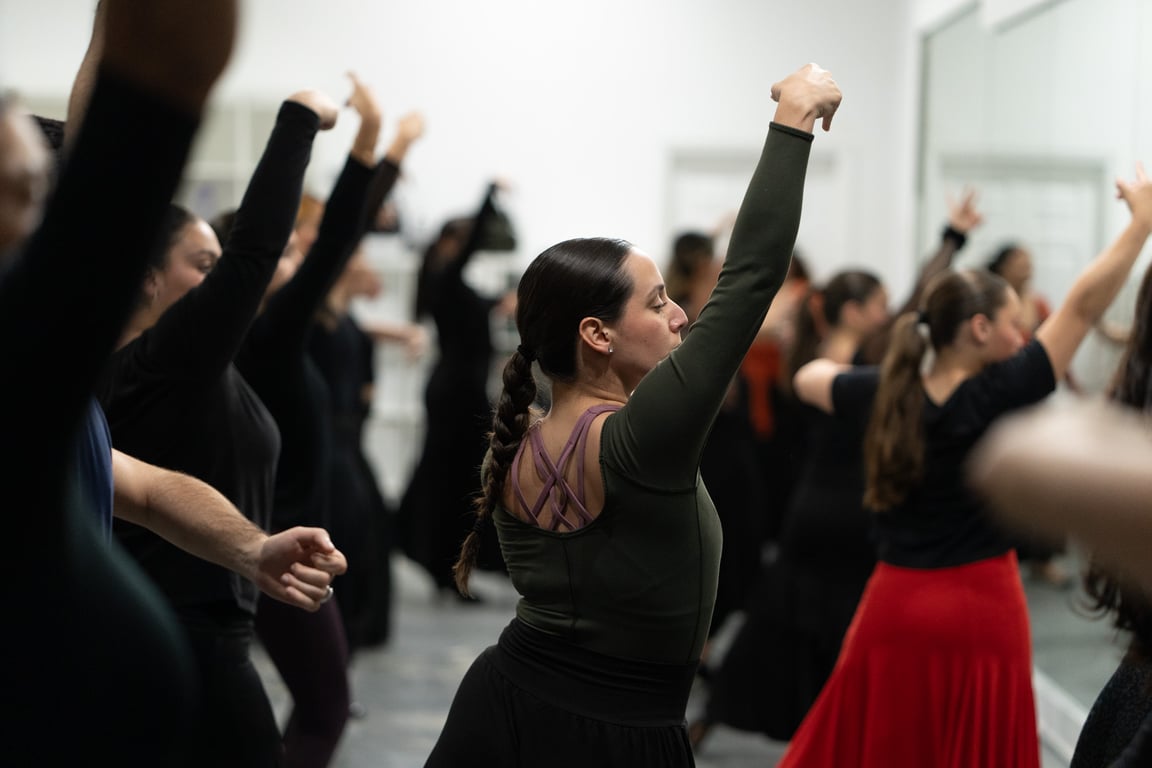
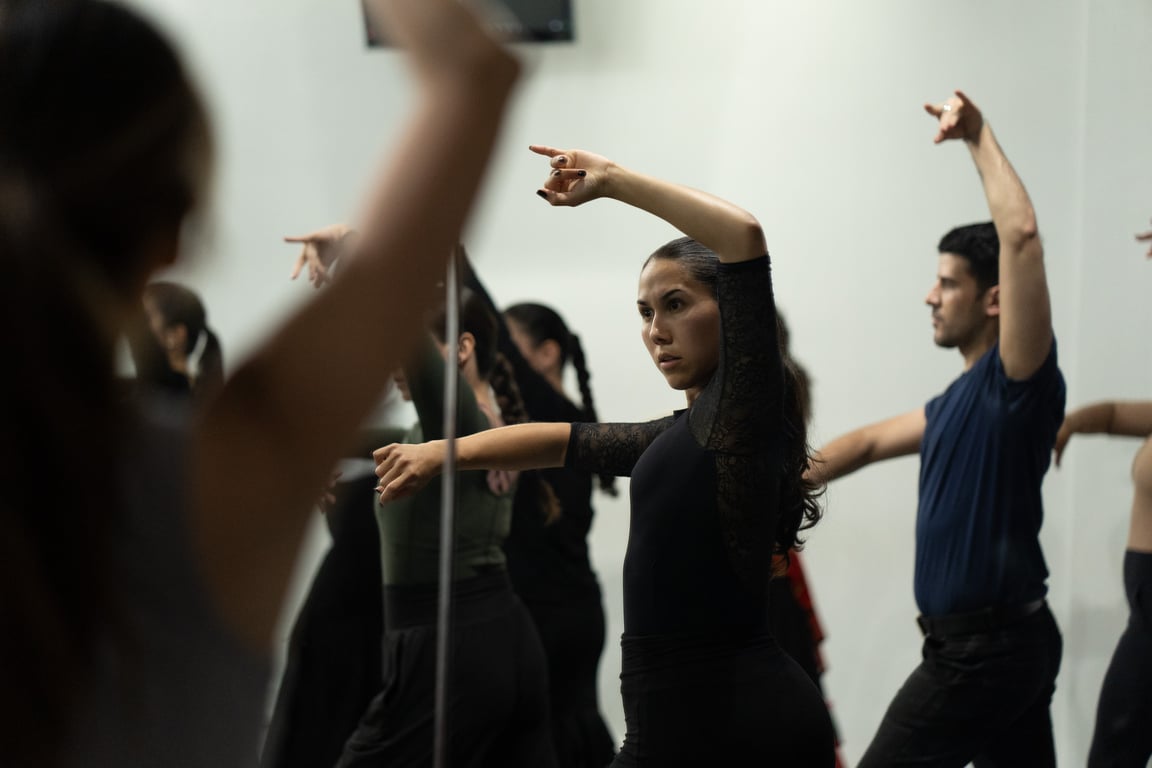
Flamenco technique, or técnica, begins with posture. The flamenco body is proud and grounded: spine long, chest open, weight rooted through the floor, yet never stiff. From this center, three areas develop — arms, hands, and feet.
Ready to put this into practice?
Train with Siudy Garrido through our On-Demand Flamenco Courses — structured, professional flamenco instruction you can start today.
Braceo and Floreo: The Language of the Arms and Hands
Braceo is the movement of the arms — slow, circular, and continuous, framing the body as if shaping the air around it. Floreo refers to the delicate rotations of the wrists and the opening and closing of the fingers. Together they carry much of flamenco's line and feeling. Beginners often rush the feet and neglect the arms, but experienced instructors will tell you the reverse is wiser: elegant braceo makes even simple footwork look accomplished.
Zapateado: The Footwork
Zapateado is the percussive footwork flamenco is known for. It is built from a small set of clear sounds — the planta (ball of the foot), tacón (heel), golpe (a strike of the whole, flat foot), and punta (toe) — combined into rhythmic patterns that lock into the compás. The goal is never speed for its own sake; it is clarity and rhythm. Clean, well-timed footwork always sounds better than fast, muddy footwork. Build slowly, keep each strike distinct, and always stay inside the compás.
Marcaje and Remate
Two more terms will appear early in your journey. Marcaje refers to the marking steps a dancer uses to move gracefully while the cante unfolds — the connective tissue of a dance. A remate is a short, emphatic phrase that closes a section, like a well-placed punctuation mark. Learning to marcar and to rematar teaches you flamenco's phrasing, not just its steps.
A Practical Path: How to Learn Flamenco Step by Step
Here is the order a strong beginner program follows — and the order we recommend you respect, even when it is tempting to jump ahead to dramatic footwork.
- Listen and clap. Learn to recognize and clap the compás of one or two beginner-friendly palos.
- Build posture and braceo. Train your carriage and arm movement in front of a mirror.
- Add basic zapateado. Learn the fundamental strikes slowly, prioritizing clean sound over speed.
- Combine into marcaje. Link arms, posture, and footwork into simple marking sequences in compás.
- Dance a short palo. Put it together into a complete, simple sequence with feeling — your first real flamenco.
- Layer expression. Refine dynamics, the powerful pauses and silences, and your own duende — that hard-to-name emotional depth.
Progressing in this order keeps you musical, injury-free, and genuinely expressive rather than mechanical.
Learning at Home vs. In the Studio
You do not need to be in Seville or Madrid to begin. Structured on-demand video courses have made it possible to learn flamenco properly from anywhere — to slow demonstrations down, rewatch difficult passages, and build a consistent daily practice. The key is structure: a beginner-to-advanced path taught in the right sequence, not a scattered playlist of unrelated clips.
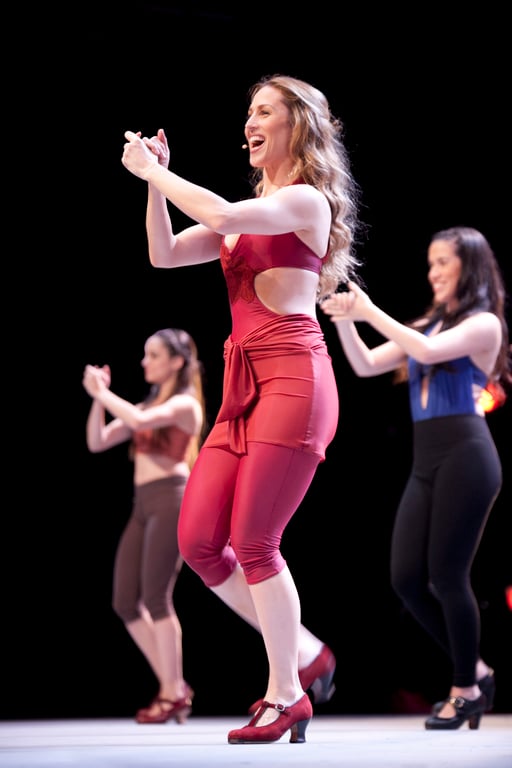
This is exactly why we built Siudy Garrido's on-demand flamenco classes. Led by two-time Latin Grammy–nominated artist Siudy Garrido, the courses guide you from your first compás through advanced técnica, so you always know what to practice next. Many dancers pair on-demand study with occasional in-person classes for live feedback — a powerful combination.
Common Beginner Mistakes to Avoid
- Chasing fast footwork too soon. Speed without compás and clarity is noise, not flamenco.
- Ignoring the arms. Braceo and posture are what make you look like a dancer.
- Not counting the compás. If you cannot clap it, you cannot yet dance it.
- Skipping the music. Practice with cante and toque whenever you can, rather than in silence alone.
- Comparing your day one to someone's year ten. Flamenco is a lifelong path — patience is part of the art.
Your Next Step
Flamenco is demanding, and that is exactly what makes learning it so rewarding. Start with rhythm, honor the compás, build técnica in order, and never stop listening to the cante. With patient, structured practice, the presence and drive you once admired from the audience will begin to live in your own body.
When you are ready to begin the real work, explore Siudy Garrido's structured on-demand flamenco courses to learn step by step at your own pace, and browse more beginner guides and technique breakdowns on our flamenco blog. Your first compás is waiting.
Frequently asked questions
How long does it take to learn flamenco?
Can I learn flamenco at home as a complete beginner?
Do I need special shoes or a costume to start?
What is compás and why does it matter so much?
Should I learn flamenco online or take in-person classes?
Start dancing flamenco with Siudy Garrido
On-Demand Flamenco Courses — professional instruction, at your pace.
Explore Courses →