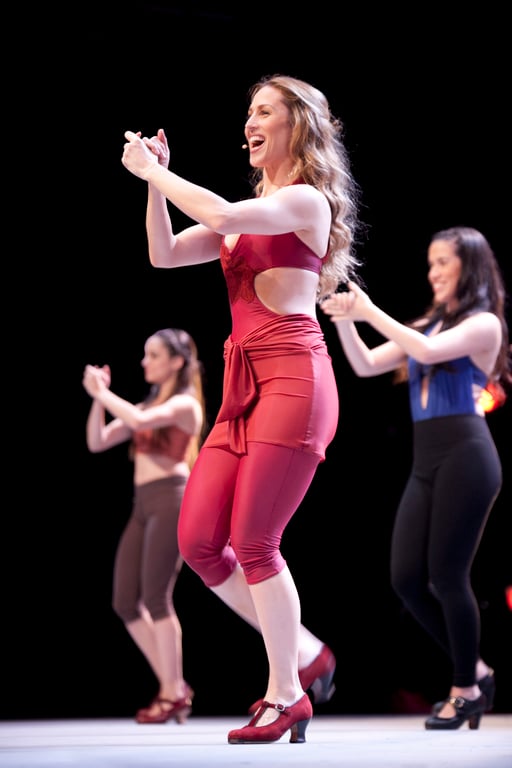
Flamenco Arms: A Beginner's Guide to Braceo and Floreo
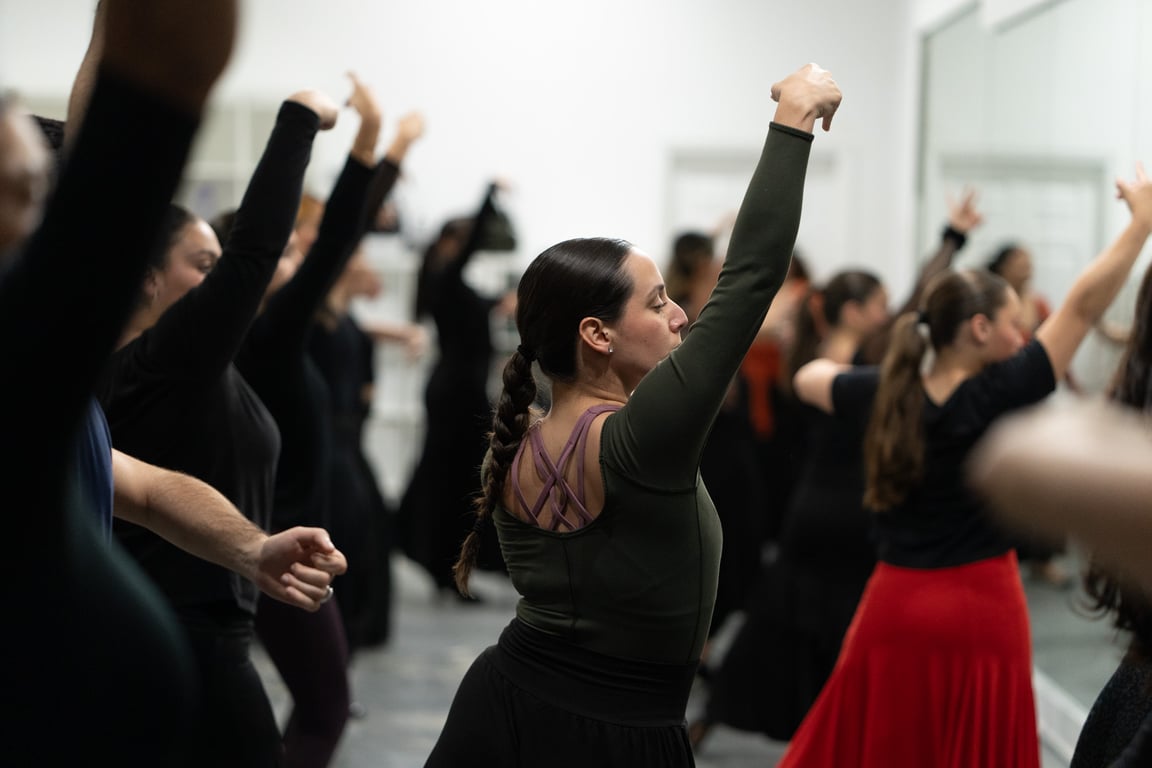 Part of our guide
How to Learn Flamenco: A Complete Guide for Beginners →
Part of our guide
How to Learn Flamenco: A Complete Guide for Beginners →
Watch a flamenco dancer and you may find your eye drawn first to the feet — but it is the arms that give flamenco its unmistakable silhouette. The slow sweep of the arms, the turning wrists, the way the hands seem to draw shapes in the air: this is where much of the art's elegance lives. If you are learning the dance, mastering flamenco arms is not an optional finishing touch. It is one of the foundations, and this guide will show you exactly how it works and how to begin practicing it well.
This article is part of our larger guide on how to learn flamenco, where we lay out the full path from your first compás to genuine expression. Here we zoom in on the arms, wrists, and hands.
Why Flamenco Arms Matter More Than Beginners Think
New dancers almost always gravitate toward the footwork. It is dramatic, it is loud, and it looks like the hard part. But rush straight to the feet and you end up with a common beginner problem: busy footwork attached to stiff, lifeless arms. The result rarely reads as flamenco.
Experienced instructors tend to advise the reverse. Elegant arm movement makes even simple footwork look accomplished, while poor arm movement undermines even skilled feet. In other words, flamenco arms are what make you look like a dancer long before your zapateado becomes impressive. That is why building the arms early is one of the smartest investments a beginner can make.
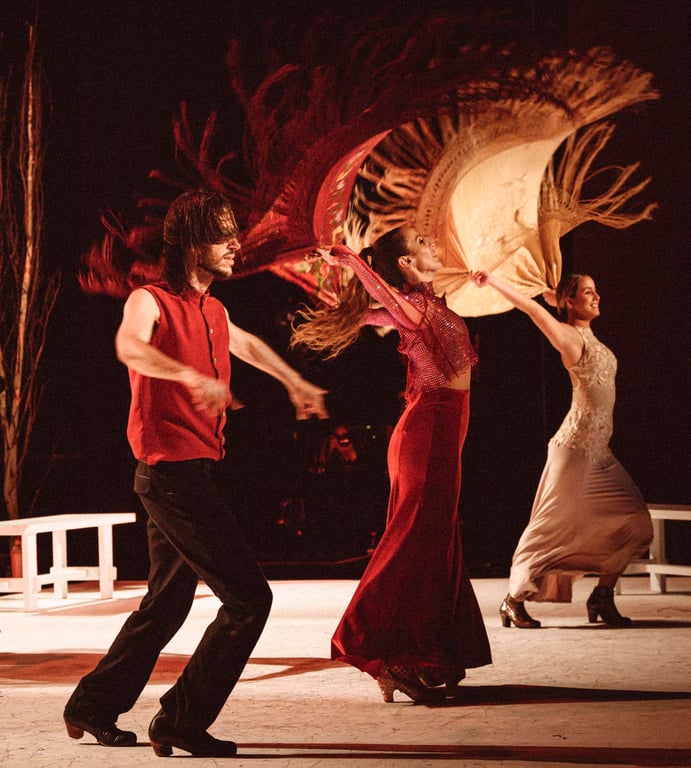
The movement of the arms has two working parts. Braceo is the movement of the arms themselves — slow, circular, and continuous, framing the body as if shaping the air around it. Floreo is the finer articulation at the ends of those arms: the rotations of the wrists and the opening and closing of the fingers. Together they carry much of flamenco's line and feeling.
Posture: The Base Everything Is Built On
Before a single arm rises, there is postura. The flamenco body is proud and grounded: the spine long, the chest open, the weight rooted through the floor — yet never stiff. This is not a minor preliminary. Your arms extend from your torso, and if the torso collapses, slumps, or locks up, no amount of arm movement will look right.
Think of posture as the trunk of a tree and the arms as its branches. A strong, settled trunk lets the branches move freely and expressively. A weak or rigid trunk makes every branch look wrong. Because of how central this is, we treat it in depth in a companion guide on flamenco posture and the flamenco body. Read it alongside this one — the two are inseparable in practice.
A quick self-check before you begin any arm work: are you standing tall without tensing your shoulders? Is your chest open rather than caved? Is your weight settled down into the floor rather than floating up in your heels? Only when the answer is yes should you start moving the arms.
Ready to put this into practice?
Train with Siudy Garrido through our On-Demand Flamenco Courses — structured, professional flamenco instruction you can start today.
Braceo: The Language of the Arms
Braceo is the heart of flamenco arm movement. Its defining qualities are worth memorizing because they are exactly what beginners tend to get wrong:
- Slow. Braceo is unhurried. Where footwork can be quick and percussive, the arms move at a different, more sustained pace.
- Circular. The arms travel in curved, rounded paths rather than sharp angles. Flamenco line favors the arc.
- Continuous. Braceo flows without abrupt stops. One movement melts into the next, giving the dance its sense of unbroken shape.
- Framing. The arms frame the body, defining the space around the dancer and directing the audience's eye.
When you practice braceo, resist the urge to hurry. Move an arm from one position to another as slowly and evenly as you can, keeping the path curved and the motion connected to your breath. If your arm jerks, stops abruptly, or snaps into position, you have lost the quality that makes braceo beautiful. Smoothness comes before range, and range comes before speed — which, in braceo, you rarely need at all.
Floreo: Wrists and Fingers
If braceo is the large gesture, floreo is the detail work at the ends of the arms. Floreo refers to the rotations of the wrists and the articulation of the fingers — the opening and closing, the delicate turning that makes the hands themselves expressive. It is the difference between an arm that simply travels through space and a hand that seems alive.
These flamenco hand movements reward patience. The wrist should rotate smoothly, leading the hand, while the fingers move with control rather than flopping loosely or clamping rigidly. A useful mental image is a flower opening and closing — hence the name, from the Spanish for flowering. Keep the movements clean and deliberate. As with braceo, clarity beats speed: a slow, well-articulated floreo looks far more accomplished than a fast, blurry one.
Men and Women: A Note on Style
Flamenco has long carried broad stylistic tendencies in how the arms are used. In general terms, women's braceo often emphasizes softer, more rounded and flowing lines with more intricate floreo of the wrists and hands, while men's braceo tends toward stronger, more angular and architectural shapes with somewhat less hand ornamentation. These are broad tendencies rather than strict rules, and individual dancers and choreographers vary widely. As a beginner, focus first on the universal fundamentals — posture, slow continuous braceo, clean floreo — which every dancer needs regardless of style.
How to Practice: Drills in Front of a Mirror
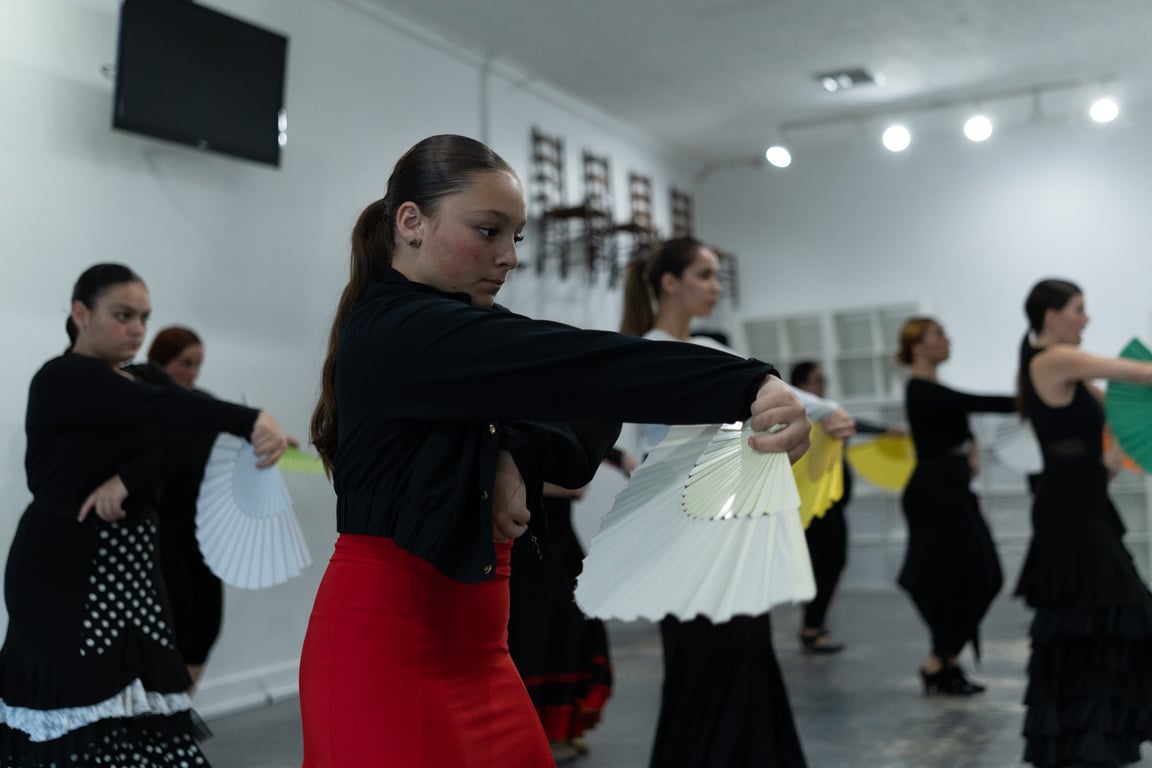
The single most valuable tool for developing your arms is a mirror. Flamenco arms are visual, and you cannot correct what you cannot see. Here is a simple practice sequence to build them:
- Set your posture. Stand tall and grounded, chest open, shoulders down. Watch yourself in the mirror and hold the shape until it feels natural.
- Isolate one arm. Raise a single arm slowly through a curved path, watching the line it draws. Aim for smooth, continuous, unhurried motion. Lower it the same way.
- Add the second arm. Coordinate both arms in braceo, keeping them framing the body. Check the mirror constantly for symmetry, height, and evenness.
- Layer in floreo. Once the arms move cleanly, add wrist rotations and finger articulation. Slow everything down further so the hands stay precise.
- Check for tension. Watch your shoulders and neck. If they creep up or tighten, reset your posture and begin again. Relaxed strength is the goal.
Practice these slowly and often. A few minutes of focused, mindful arm work each day will do more for your dancing than a long, distracted session. And because posture underlies all of it, it is worth pairing this practice with the footwork fundamentals too — see our guide to flamenco footwork for beginners to understand how the arms and feet eventually come together in the dance.
Bringing It Together
Flamenco arms are not decoration. Braceo and floreo, built on a proud and grounded posture, are what give the dance its line, its elegance, and much of its feeling. Give them the same care you give your feet — arguably more, especially in the beginning — and your dancing will look and feel like flamenco far sooner.
When you are ready to see these movements demonstrated and broken down in sequence, explore Siudy Garrido's on-demand flamenco classes, where you can slow demonstrations down and practice at your own pace. For more technique breakdowns and beginner guides, visit our flamenco blog. Set up your mirror, find your posture, and let your arms begin to speak.
Frequently asked questions
What is braceo in flamenco?
What is the difference between braceo and floreo?
Should flamenco beginners focus on the arms or the feet first?
How do I practice flamenco arms at home?
Start dancing flamenco with Siudy Garrido
On-Demand Flamenco Courses — professional instruction, at your pace.
Explore Courses →