Flamenco Posture and Body: Building the Grounded Flamenco Stance
 Part of our guide
How to Learn Flamenco: A Complete Guide for Beginners →
Part of our guide
How to Learn Flamenco: A Complete Guide for Beginners →
Ask an experienced teacher what makes a beginner suddenly look like a flamenco dancer, and the answer is rarely the feet. It is the body. Before a single step is struck, flamenco posture — postura in Spanish — establishes the proud, grounded carriage that everything else is built upon. Get it right and simple movement looks accomplished; get it wrong and even fast, complicated footwork falls flat. This guide breaks down the flamenco stance in detail: what it is, how to align your body, how good posture powers your arms and feet, and the common errors that quietly hold dancers back.
If you are just beginning, it helps to see where posture fits in the bigger picture. Our pillar guide on how to learn flamenco lays out the full beginner path, and posture sits right at its foundation — trained before, and alongside, everything else.
What Flamenco Posture Really Is
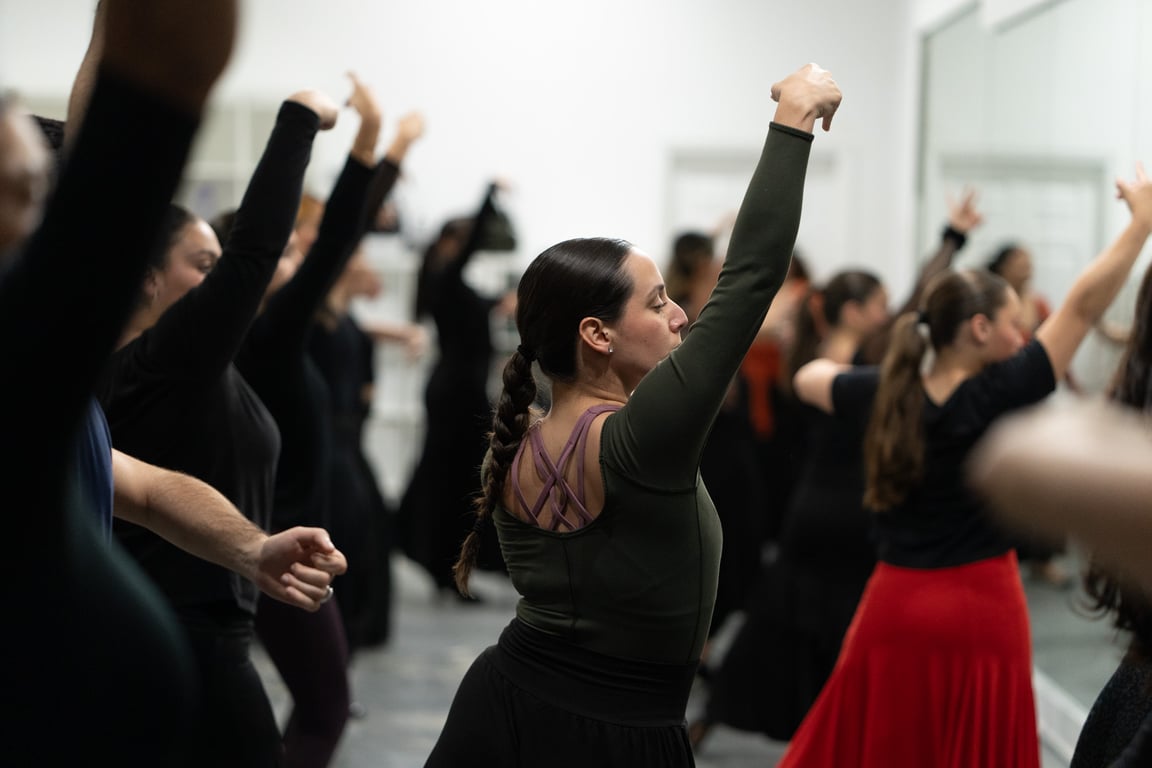
Good flamenco posture can be described in one phrase: proud and grounded. The spine is long and lifted, the chest is open, the head is carried high, and the weight is rooted down through the floor — yet the body is never stiff or braced. It is a living verticality, not a frozen pose. Think of it as strength held in readiness rather than rigidity.
That combination of opposites is what gives flamenco its unmistakable presence. There is dignity in the upward line of the spine and power in the downward connection to the ground. A dancer who holds only the lift looks fragile; one who holds only the weight looks heavy. Postura is the balance of both at once — proud above, rooted below.
Core Engagement and Verticality
Underneath that proud line is quiet, constant work from the center of the body. A gently engaged core is what allows the spine to stay long without the shoulders creeping up or the lower back arching. This is the difference between holding yourself up with tension and supporting yourself from within — the second is what you want.
Verticality is the organizing idea. Imagine a single line running from the crown of your head down through your spine and into the floor. Your job is to keep that line long and honest: not leaning back to look grand, not tipping forward to chase the feet, not collapsing in the middle. When the vertical line is true and the core supports it, the body is free to move around a stable axis — and that freedom is exactly what flamenco technique demands.
How Good Flamenco Posture Powers Braceo and Zapateado
Posture is not decorative. It is functional. It is the platform that makes the two most visible parts of flamenco — the arms and the feet — actually work.
Ready to put this into practice?
Train with Siudy Garrido through our On-Demand Flamenco Courses — structured, professional flamenco instruction you can start today.
Posture and the Arms
An open chest and long spine give your arms somewhere to live. The slow, circular, continuous arm movement of braceo, together with the wrist rotations and finger articulation of floreo, needs space and a stable frame to move against. Collapse the chest and the shoulders round forward, and the arms lose their reach, their line, and their elegance instantly. This is why teachers so often say that beautiful braceo begins in the back and chest, not the hands. To go deeper on the arms themselves, see our guide to flamenco arms, braceo and floreo.
Posture and the Feet
The rooted, grounded half of postura is what makes clean footwork possible. Zapateado — the percussive footwork built from the planta (ball of the foot), tacón (heel), golpe (whole flat foot), and punta (toe) — draws its power and clarity from a stable connection to the floor. A dancer whose weight is properly grounded can strike each sound distinctly and stay inside the compás; one who is tipped off balance or held too high loses that stable base, and the footwork turns muddy. Remember that the goal of zapateado is always clarity and rhythm, never speed for its own sake — and clarity starts with a grounded stance. Beginners can learn the strikes step by step in our guide to flamenco footwork for beginners.
Alignment Cues for the Flamenco Stance
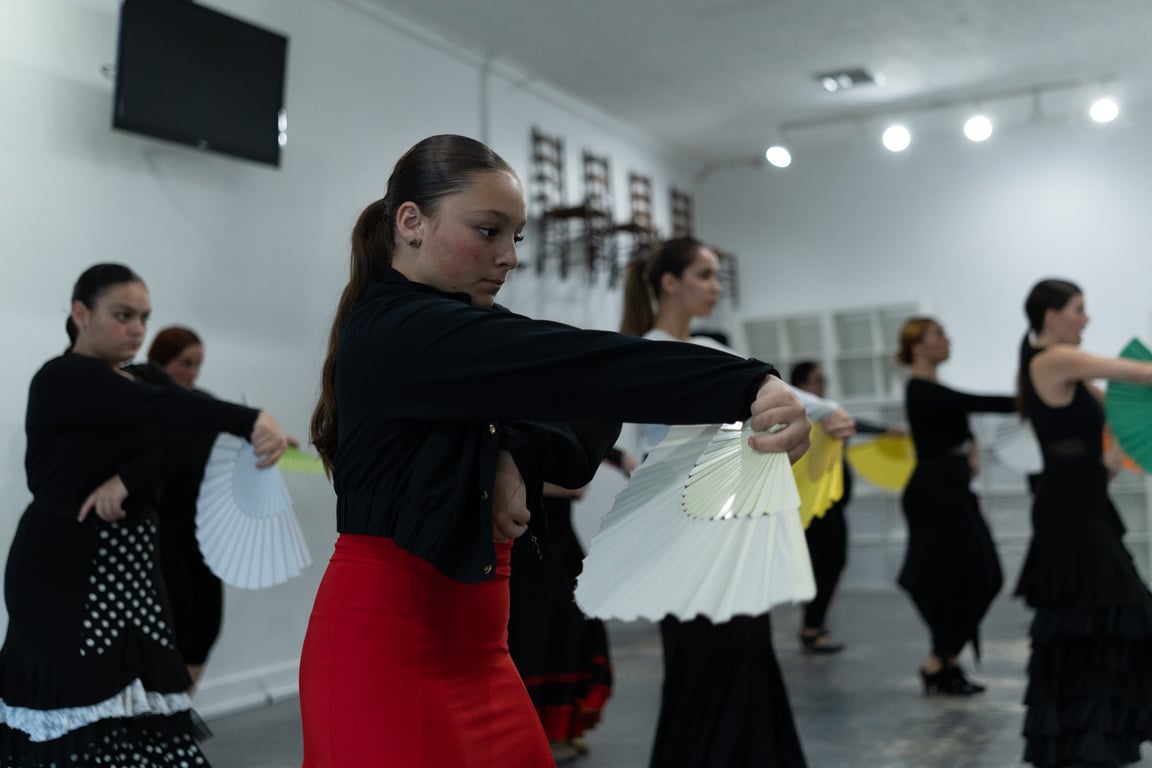
Reading about posture is one thing; feeling it in your own body is another. Use these cues in front of a mirror to build the flamenco stance from the ground up. Work through them slowly and often — good posture is a habit you train, not a position you find once.
- Root the feet. Stand with your weight settled evenly and your feet in firm contact with the floor. Feel grounded, as though the floor is something you press into rather than balance on top of.
- Lengthen the spine. Imagine the crown of your head gently rising toward the ceiling, letting the whole spine grow long. Lift up out of your hips rather than sinking into them.
- Open the chest. Let the collarbones widen and the breastbone lift slightly, so the chest feels open and proud without popping the ribs or arching the lower back.
- Settle the shoulders. Draw the shoulders down and back just enough to release them, keeping the neck long. The shoulders should feel calm, not braced up toward the ears.
- Engage the center. Find a light, supportive engagement through the core that holds the long line without gripping.
- Lift the gaze. Carry the head high and keep your eyes level and outward, presenting yourself to the room rather than to the floor.
When these cues come together, you should feel taller, more open, and paradoxically more relaxed — because the body is supporting itself efficiently instead of fighting itself.
Common Flamenco Posture Errors
Most posture problems come down to a handful of recurring habits. Learn to spot them in the mirror, because each one quietly undermines the whole dance.
- Collapsing the chest. Rounding the shoulders forward and caving the chest is the most common error. It shortens the arms, kills the line of the braceo, and drains the dance of its proud character. The fix is to reopen the chest and re-lengthen the spine.
- Looking down. Dropping the gaze to watch the feet pulls the head and spine forward and breaks your verticality. Trust your training, keep the eyes level, and let the feet work by feel.
- Holding tension. Trying to look strong by stiffening and gripping the body is self-defeating. Tension makes movement heavy and blocks both braceo and footwork. Aim for grounded and supported, not clenched — strength in flamenco is alive, not rigid.
- Losing the ground. Floating the weight too high or tipping off balance robs your footwork of its stable base. Keep the connection to the floor, especially as the feet get busy.
Practicing Posture Every Day
Because posture underlies everything, it rewards constant, patient attention. Spend a few minutes each session simply standing in your postura before a mirror, running through the alignment cues and breathing. Then keep checking it as you add movement: does the chest stay open during braceo? Does the spine stay long as the footwork speeds up? Over time, the proud, grounded carriage stops being something you think about and becomes simply how you stand — the mark of a true dancer.
Structured video study is an ideal way to build this awareness, because you can watch a demonstration, mirror it, and rewatch until the alignment sinks in. Siudy Garrido's on-demand flamenco classes guide you through técnica in the right order, with posture as the foundation, so you always know what to refine next. For more beginner guides and technique breakdowns, explore our flamenco blog. Build the body first, and everything you dance on top of it will look — and sound — like flamenco.
Frequently asked questions
What is the correct flamenco posture?
Why is posture so important in flamenco?
What are the most common flamenco posture mistakes?
How is flamenco posture different from ballet posture?
Start dancing flamenco with Siudy Garrido
On-Demand Flamenco Courses — professional instruction, at your pace.
Explore Courses →