Flamenco Footwork for Beginners: An Introduction to Zapateado
Few sounds are as thrilling as a flamenco dancer's zapateado cutting cleanly across the guitar. That crisp, rapid-fire percussion looks like magic, but it is built on a small set of precise movements that any beginner can learn. Strong flamenco footwork is not about speed or force. It is about clarity, control, and staying inside the rhythm. This guide, grounded in the teaching method of two-time Latin Grammy-nominee Siudy Garrido, introduces the foundations of zapateado so you can build a clean, musical foundation from your very first steps.
If you are mapping out your broader journey, start with our pillar guide on how to learn flamenco, then return here to focus on the feet.
What Is Zapateado?
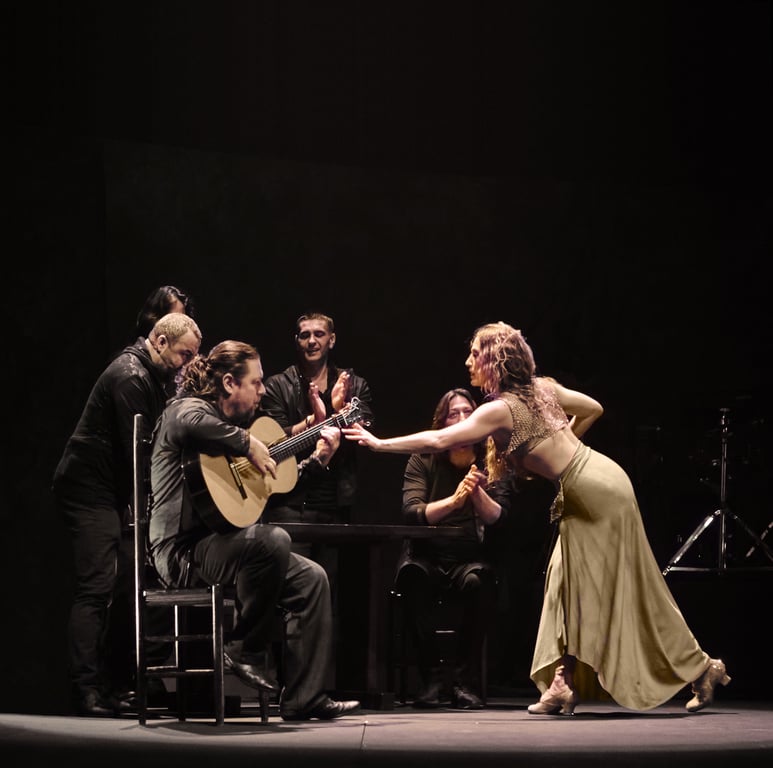
Zapateado is the percussive footwork of flamenco, the art of turning your shoes into an instrument. In flamenco, the dancer is a musician, and the feet are the drum. Every strike produces a distinct sound, and the dancer arranges those sounds in rhythm to accompany the singing (cante) and guitar.
Because footwork is a form of music, the goal is never to make noise. The goal is to make clear, deliberate sounds that lock into the beat. A beginner who plays four perfectly clean strikes in time is already ahead of one who rattles off twenty muddy ones.
The Core Strikes of Flamenco Footwork
Nearly all flamenco footwork is assembled from a handful of basic strikes. Learn these individually before you ever try to combine them at speed.
- Planta — the ball of the foot strikes the floor. This is the light, agile sound used in fast passages, played with the heel raised.
- Tacón — the heel strikes the floor. It produces a deeper, heavier accent, often used to mark strong beats. The tacón can be struck with the foot flat or with the toe lifted.
- Golpe — the whole flat foot strikes the floor at once, planta and tacón landing together for a full, grounded sound.
- Punta — the tip of the toe taps the floor, usually behind or beside the body, adding a light, delicate accent between heavier strikes.
These four give you the alphabet. Combinations such as planta-tacón (a quick ball-then-heel of the same foot) form the syllables, and longer sequences become the words and sentences of your footwork.
How to Practice a Single Strike
Stand tall with your weight centered and knees soft. Keep your strikes low to the floor — lifting the foot high wastes time and blurs the sound. Let the movement come from the ankle and knee, not from swinging the whole leg. Listen after every strike: is it one clean sound, or a smear?
Clarity Before Speed
This is the single most important principle of flamenco footwork, and the one beginners most often ignore. Speed is a byproduct of clarity, not a substitute for it.
Advanced dancers appear fast because each strike is so clean and economical that the sounds can stack closely together. If you chase speed first, you build in sloppiness that becomes very hard to unlearn. Practice everything slowly enough that every single sound is distinct, then increase the tempo only when the clarity holds.
Ready to put this into practice?
Train with Siudy Garrido through our On-Demand Flamenco Courses — structured, professional flamenco instruction you can start today.
Staying in Compás
Compás is the rhythmic cycle that governs all of flamenco, and footwork must live inside it. It is not enough for your strikes to be clean; they must land in the right place in time. Footwork that is technically sharp but out of compás is, in flamenco terms, simply wrong.
Train your timing from the beginning by practicing to a steady reference:
- Clap or count the beat out loud (palmas) before adding the feet.
- Use a metronome to anchor a slow, even tempo.
- Speak the rhythm — say the strikes aloud as you play them so your ear leads your feet.
Internalizing compás is a lifelong pursuit, but even a few weeks of counting while you drill will transform how grounded your footwork feels.
Beginner Footwork Drills
A short, focused daily practice will move you forward faster than an occasional marathon session. Try these:
- Alternating heels (tacones): Step onto one flat foot, then strike the heel of the other, alternating left and right in a slow, even pulse. This builds weight transfer and evenness.
- Planta-tacón on one foot: Strike the ball, then the heel of the same foot as two separate sounds. Repeat on the other side. This is the engine of most fast footwork.
- Three-strike combination: Combine planta-tacón-tacón (ball of one foot, its heel, then the other foot's heel) as a repeating loop. Keep it painfully slow at first.
- Golpe accents: Play steady plantas and drop a full golpe on the first beat of each cycle to train accenting within compás.
In every drill, prioritize even spacing and clean tone over how many strikes you can fit in.
Common Beginner Mistakes
- Going too fast, too soon — the root of nearly every footwork problem.
- Lifting the feet too high — this slows you down and muddies the sound.
- Incomplete weight transfer — failing to fully commit weight to a foot produces weak, uneven strikes.
- Tension — stiff ankles and locked knees kill both speed and tone. Stay relaxed and grounded.
- Ignoring the rhythm — practicing footwork without a beat trains clean sounds that arrive in the wrong place.
Shoes and Surface
Flamenco footwork depends on the right equipment. Traditional flamenco shoes have small nails driven into the heel and toe, which give zapateado its bright, layered ring. A hard-soled shoe with a low, stable heel is essential — sneakers and soft soles simply cannot produce the sounds.
Just as important is the surface. Practice on wood whenever possible; carpet swallows the sound and robs you of the feedback you need to improve. If you are starting out without flamenco shoes, any sturdy hard-soled shoe on a wood floor will let you learn the movements while you invest in proper footwear.
Your Next Steps
Flamenco footwork rewards patience above all. Master the four core strikes, keep every sound clean, and never let your feet drift out of compás. Build slowly, and speed will follow on its own.
To practice with structured, sequential guidance, explore Siudy Garrido's on-demand flamenco classes, where you can drill footwork at your own pace and rewatch each technique until it lands. When you are ready to widen your scope beyond the feet, revisit the complete roadmap in how to learn flamenco to see how footwork fits alongside braceo, posture, and musicality.
Frequently asked questions
What is zapateado in flamenco?
Do I need special shoes to start learning flamenco footwork?
How long does it take to get good flamenco footwork?
Why does my footwork sound muddy or uneven?
Start dancing flamenco with Siudy Garrido
On-Demand Flamenco Courses — professional instruction, at your pace.
Explore Courses →