Understanding Flamenco Compás: A Beginner's Guide to Rhythm
 Part of our guide
How to Learn Flamenco: A Complete Guide for Beginners →
Part of our guide
How to Learn Flamenco: A Complete Guide for Beginners →
Ask any experienced dancer what a beginner should learn first, and the answer is almost never a step. It is rhythm. In flamenco, that rhythm has a name — compás — and understanding it is the single most important foundation you can build. This guide explains what compás is, how the main rhythmic families differ, and how beginners internalize it through clapping and counting. If you are just starting out, it pairs naturally with our broader guide on how to learn flamenco from the beginning.
What Is Flamenco Compás? The Rhythmic Cycle Behind the Art
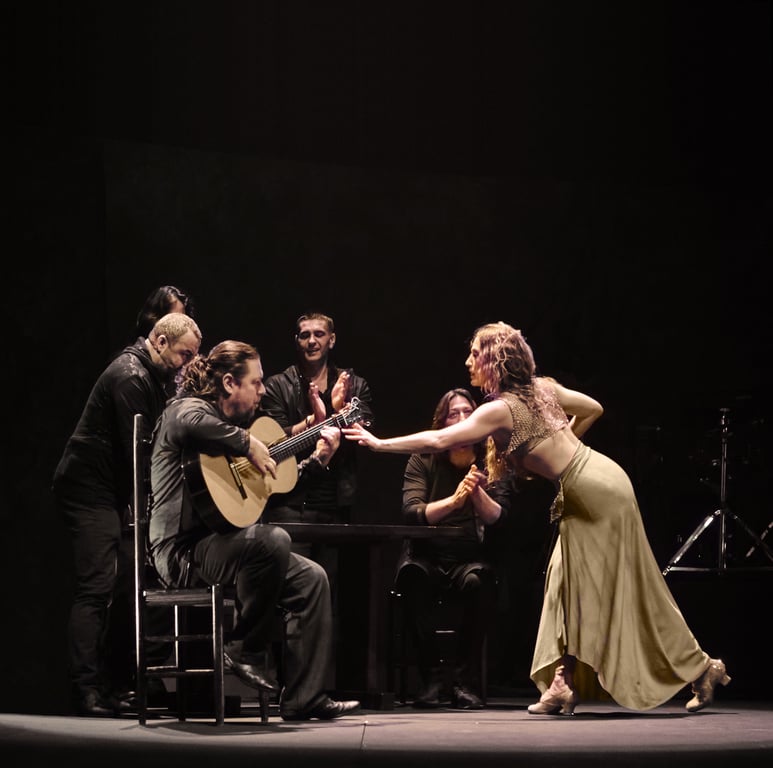
Flamenco compás is the rhythmic cycle that organizes the whole art. Each style, or palo, has its own compás — a repeating pattern in which certain counts are accented and others fall quieter or silent. Compás is not merely a metronome ticking underneath the music; it is the shared framework that lets the singer, the guitarist, and the dancer move as one. When people ask what is compás, the most honest answer is that it is flamenco's heartbeat: get it right and everything else has a home, lose it and even the most beautiful movement comes apart.
This is why flamenco rhythm is treated as a skill in its own right, learned before footwork rather than alongside it. A dancer who cannot feel the compás is not yet dancing flamenco — they are performing choreography that happens to sit near the music. The good news is that compás is learnable, and the path in is simpler than it first appears.
The 12-Beat Family: Soleá, Alegrías, and Bulerías
Many of flamenco's best-known palos share a distinctive twelve-beat cycle. What makes this family fascinating is that these styles share the count itself but feel completely different, because they differ in tempo and character rather than in the underlying number of beats.
- Soleá — slow, solemn, and majestic. Its name is linked to soledad (solitude), and it is often described as a "mother" form from which other styles draw.
- Alegrías — bright and joyful, associated with Cádiz. It carries the same twelve counts as soleá but with a lifted, celebratory character.
- Bulerías — the fastest and most syncopated of the three, festive and quick, with phrases that often begin on beat twelve.
Hearing three such different moods emerge from one shared cycle is one of the first genuine "aha" moments in learning flamenco. It also explains why teachers treat the compás as a container: the same twelve beats can hold solemnity or celebration depending on tempo, accent, and the character of the palo.
The Four-Count Family: Tangos and Rumba Flamenca
Not every palo lives in twelve beats. A second family sits in a simpler, binary four-count feel, and this is usually where beginners start. Tangos — the straightforward four-count flamenco style, not to be confused with the Argentine tango — are a common entry point precisely because the cycle is short and easy to keep. The festive, more modern rumba flamenca shares this accessible four-count feel and is another friendly place to begin.
Starting in the four-count family lets you focus on keeping a compás — staying inside a repeating cycle without rushing or dragging — before you take on the longer twelve-beat forms. Once four counts feel automatic, the leap to twelve is far less daunting.
Ready to put this into practice?
Train with Siudy Garrido through our On-Demand Flamenco Courses — structured, professional flamenco instruction you can start today.
How Beginners Internalize Compás
The traditional and most effective way to absorb flamenco compás is through palmas — the rhythmic hand-clapping that accompanies the music. Long before you worry about your feet, you clap. You count aloud, you mark the strong beats, and you practice with recordings until the pattern stops being something you think about and becomes something you feel.
Palmas Sordas and Palmas Claras
Palmas come in two main sounds. Palmas sordas are muffled and deep, produced with cupped hands. Palmas claras are sharp and crisp, produced with flatter hands. As a beginner, using claras to clearly mark the accents helps you hear where you are in the cycle; sordas can be woven in later as your feel for the compás matures. The point is not to perform impressive clapping — it is to build an internal clock you can trust.
Count, Then Clap, Then Move
A reliable order for practice is to count the cycle aloud, then clap it, and only then add movement. If you cannot clap a palo's compás, you are not yet ready to dance it — and that is a feature of good training, not a setback. This same principle carries directly into flamenco footwork for beginners, where clean, well-timed strikes matter far more than speed. Footwork that ignores the compás is simply noise; footwork locked into it is zapateado.
Why Approximate Accents Are the Honest Answer
If you study several sources, you will notice they sometimes disagree about exactly which beats of a twelve-count cycle are accented. This is not a contradiction to be resolved — it is the reality of a living oral tradition. Accent patterns genuinely vary by region, by school, and by teacher, and part of learning flamenco compás is developing the ear to feel where the emphasis falls rather than memorizing a single "correct" diagram.
So when a good teacher keeps accent patterns approximate, they are being honest, not vague. The goal is to internalize the feel of a palo — its weight, its lift, its drive — through listening and repetition, guided by a teacher's example. Treat any single printed accent map as one useful reference among several, not as gospel.
Practical Tips for Practicing Compás
- Start with a four-count palo. Learn to keep tangos or rumba flamenca before tackling twelve-beat forms.
- Clap every day. Even a few minutes of palmas with a recording builds your internal clock faster than silent footwork drills.
- Count out loud. Speaking the cycle anchors it; if the counting falters, so does the compás.
- Practice with the music, not against it. Whenever you can, clap and move with recordings of cante and toque rather than in silence.
- Prioritize staying in the cycle over speed. A steady, unhurried compás always sounds better than a fast one that drifts.
- Listen for character, not just count. Ask yourself whether a piece feels solemn, joyful, or festive — that is your ear learning the palos.
Where Compás Takes You Next
Once compás lives in your body, everything downstream in flamenco becomes possible: footwork that lands where it should, arms that phrase with the music, and the confidence to respond to a singer in real time. It is the foundation the rest of the art is built on, which is why patient, structured practice matters so much more than rushing ahead.
If you would like to build your compás in the right order, explore Siudy Garrido's on-demand flamenco classes, which guide you from your first rhythmic cycle through advanced técnica at your own pace. For more beginner guides and technique breakdowns, browse the flamenco blog — your first steady compás is closer than you think.
Frequently asked questions
What is compás in flamenco?
What is the difference between the 12-beat and four-count palos?
How do beginners learn flamenco rhythm?
What are palmas sordas and palmas claras?
Start dancing flamenco with Siudy Garrido
On-Demand Flamenco Courses — professional instruction, at your pace.
Explore Courses →