Flamenco for Kids: How Children Can Begin and Benefit
 Part of our guide
How to Learn Flamenco: A Complete Guide for Beginners →
Part of our guide
How to Learn Flamenco: A Complete Guide for Beginners →
Parents who love flamenco, or who have simply watched a child light up at the sound of clapping and stamping, often ask the same question: is this an art a young person can really begin? It is a fair question, and the honest answer is an encouraging one. This guide explains why children can learn flamenco, what young beginners focus on first, the benefits it can offer, and how you can support a child's practice with realistic expectations.
It is one chapter in our broader look at how to learn flamenco, adapted here for the youngest students.
Can Children Learn Flamenco? Understanding Flamenco for Kids
Yes. Children can learn flamenco, and many take to it with real joy, particularly its rhythmic heartbeat. Flamenco is a demanding art, but it is a learnable one, and much of what makes it difficult for adults, especially the deep sense of rhythm it requires, is something young children can absorb naturally when it is introduced playfully and in the right order.
The key is not to rush. A thoughtful approach to flamenco for kids does not begin with dazzling footwork or complicated choreography. It begins with feeling the pulse of the music, standing well, and building coordination step by step. Children who start this way develop habits that serve them for years, whether or not they go on to dance seriously.
What Young Beginners Focus On First
Flamenco rests on three intertwined elements: cante (song), toque (guitar and musicianship), and baile (dance). For young dancers, the entry point is rhythm and the body, introduced gently. Here is what a sound early sequence tends to emphasize.
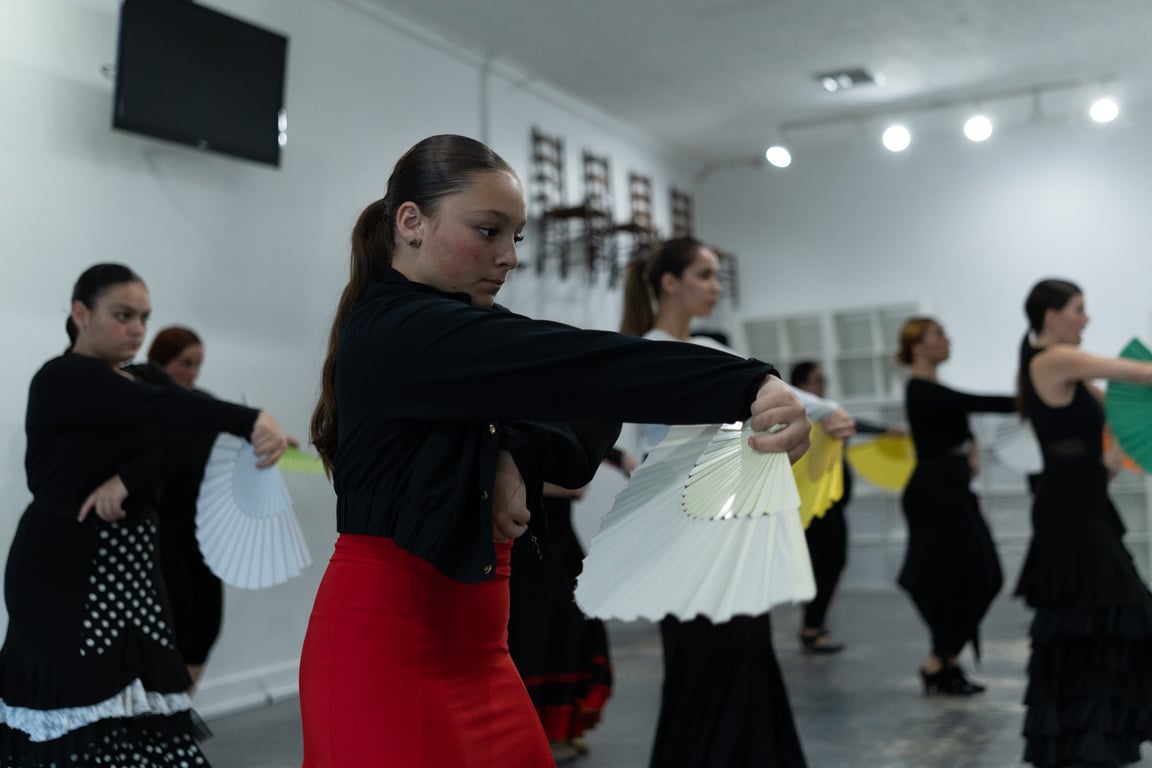
- Compás through palmas. Compás is the rhythmic cycle that organizes every flamenco style, and palmas is the rhythmic hand-clapping that keeps it. For children, clapping palmas is the most natural way in: it turns rhythm into a game they can feel and share long before their feet need to keep up.
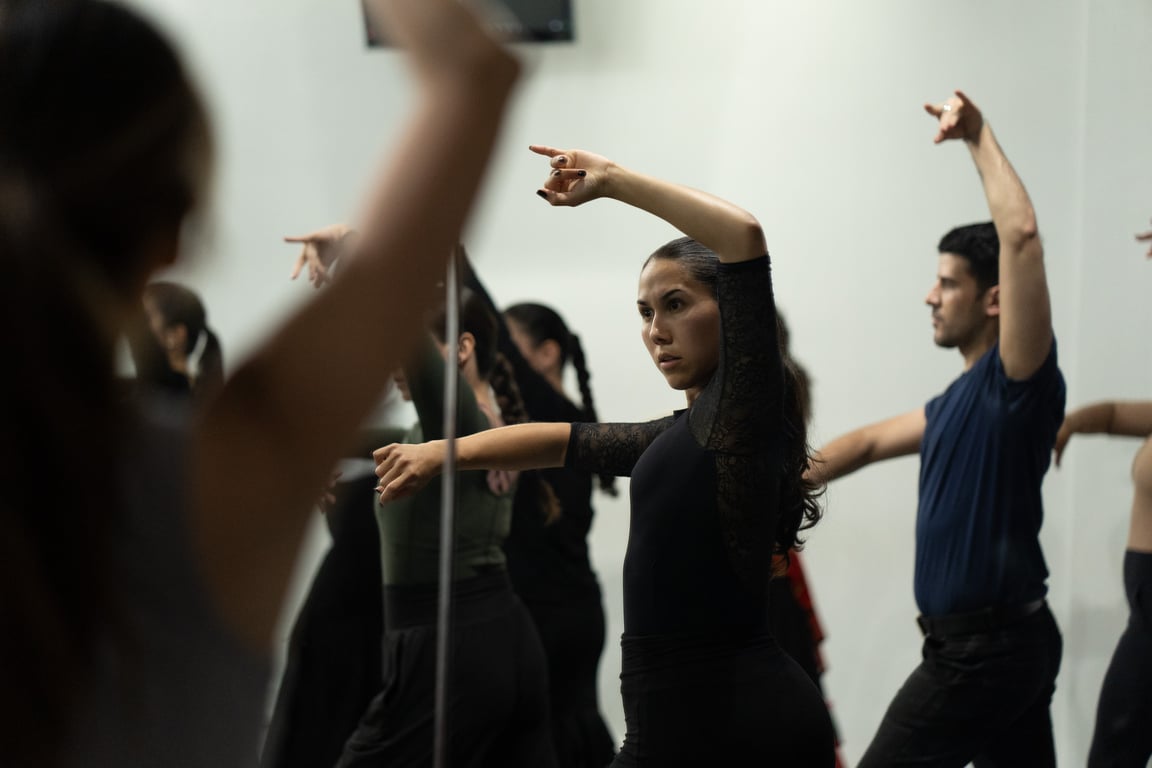
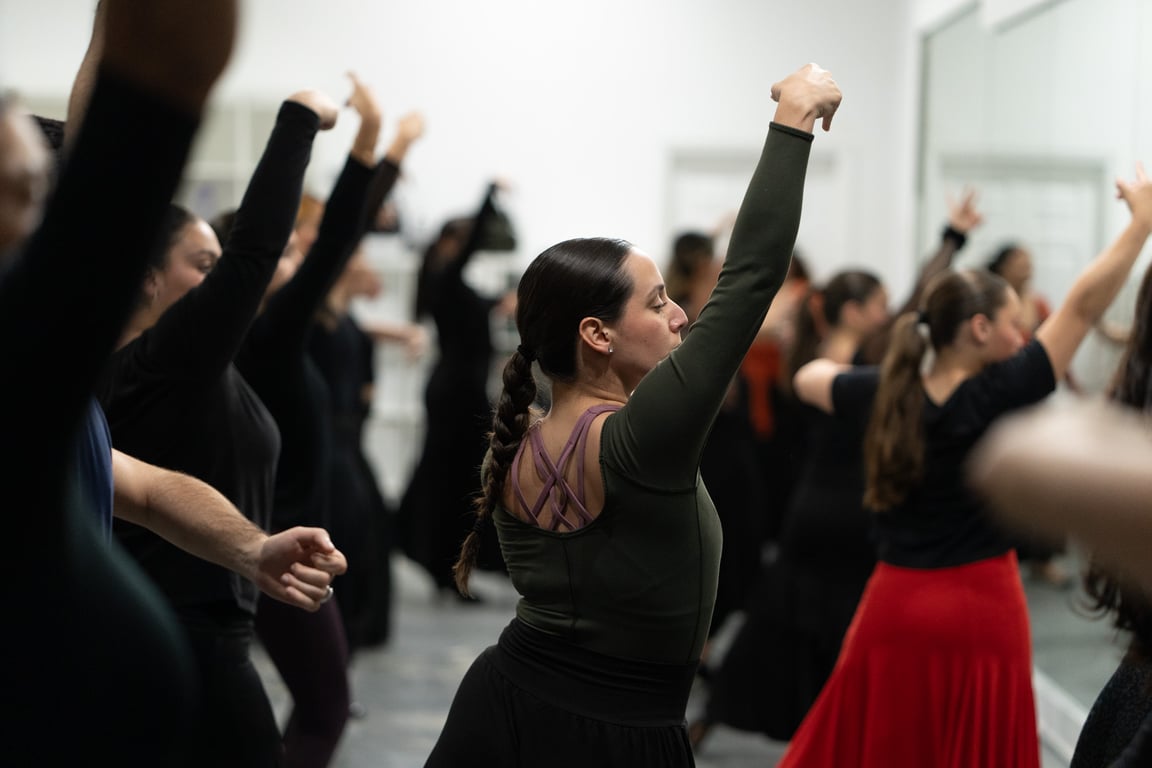
- Postura. Postura is the proud, grounded posture of flamenco, with a long spine and an open chest, weight rooted but never stiff. Learning to stand and carry themselves well gives children a foundation for every movement that follows.
- Simple marcaje and footwork. Marcaje means the marking steps that connect a dance, the gentle, walking movements that keep time while the music unfolds. Paired with simple, unhurried footwork, this lets children experience the dance without the strain of advanced technique.
Notice what is deliberately left for later: heavy zapateado, the fast, percussive footwork flamenco is famous for. That intensity is built gradually, once a child's rhythm is secure and their body is ready. Rushing it teaches speed at the expense of clarity, which is the opposite of good flamenco. If you would like to understand the rhythmic foundation your child is building, our guide to understanding flamenco compás explains it in depth.
The Developmental Benefits of Flamenco for Kids
Beyond the pleasure of the art itself, flamenco can support a child's growth in several genuine ways. These are described in general, everyday terms, the kind of benefits any parent can observe over time.
Ready to put this into practice?
Train with Siudy Garrido through our On-Demand Flamenco Courses — structured, professional flamenco instruction you can start today.
- Rhythm and musicality. Few activities train timing as directly as flamenco. Clapping palmas and moving in compás develop a durable internal sense of rhythm that carries over to music of every kind.
- Coordination. Flamenco asks the hands, feet, arms, and posture to work together. For a child, coordinating clapping with stepping, or arm movement with the beat, is meaningful physical practice.
- Confidence. Standing tall in postura and, eventually, performing for others builds a quiet self-assurance. Meeting a small challenge and mastering it is a lesson that reaches well beyond the studio.
- Cultural connection. Flamenco is an art from Andalusia in southern Spain, inscribed by UNESCO on its Representative List of the Intangible Cultural Heritage of Humanity. Learning it gives a child a living link to a rich cultural tradition.
These benefits are best understood as tendencies rather than guarantees, and they grow with steady practice over time. We explore them further in our overview of the benefits of learning flamenco, much of which applies to learners of any age.
Realistic Expectations by Age
Children develop at their own pace, so it is wiser to think in terms of readiness than in terms of a fixed starting age. Rather than promising that a child of a certain age will reach a certain milestone, a good teacher watches the individual student and adjusts.
In broad terms, younger children thrive on the playful, rhythmic side of flamenco: listening, clapping palmas, moving to the pulse, and learning to stand in a strong posture. This is real flamenco learning, even without demanding footwork. As children grow, their attention span, strength, and coordination expand, and they can gradually take on more precise zapateado, longer sequences, and the beginnings of expressive arm movement. The progression is the same one every flamenco student follows, only paced to suit a growing body. What stays constant is the order: rhythm and posture first, technique layered on patiently afterward.
How to Support a Child's Flamenco Practice
You do not need to be a dancer yourself to help a child flourish in flamenco. A few supportive habits go a long way.
- Keep it joyful. At the start, enthusiasm matters more than precision. Celebrate a clean clap of palmas or a proud posture, and let the love of the music lead.
- Encourage short, regular practice. As with any skill, consistency beats intensity. A few minutes of clapping compás most days does more than a rare, long session.
- Listen to flamenco together. Playing recordings at home trains a child's ear and makes the rhythms feel familiar before they ever try to dance them.
- Trust the sequence. Resist the urge to push toward fast footwork too soon. A teacher who builds rhythm and posture first is setting your child up for cleaner, stronger dancing later.
- Find qualified instruction. Flamenco has a specific technique and a specific order of learning, and a knowledgeable teacher makes an enormous difference to how well, and how safely, a child progresses.
Structured instruction is where good habits take root. At Siudy Flamenco, led by two-time Latin Grammy-nominated artist Siudy Garrido, we offer structured flamenco training that teaches the art in its proper order, rhythm and posture before technique. You can explore our on-demand flamenco classes to study from anywhere at a comfortable pace, and families in Miami may also wish to look at our in-person classes.
An Encouraging Path Forward
So, can children learn flamenco? Without a doubt, and often with a delight that adults envy. The art meets young students exactly where they are, beginning with the simple pleasure of rhythm and building, patiently, toward everything else. Approached with joy, consistency, and good guidance, flamenco for kids offers not only a beautiful skill but a lasting sense of rhythm, coordination, confidence, and cultural connection.
If you would like to keep learning alongside your child, our full flamenco blog is a good place to continue, and our guide on how to learn flamenco maps the wider journey from a first compás onward.
Frequently asked questions
Can children learn flamenco?
What age can a child start flamenco?
What do kids learn first in flamenco?
Is flamenco good for children?
Start dancing flamenco with Siudy Garrido
On-Demand Flamenco Courses — professional instruction, at your pace.
Explore Courses →