20 Flamenco Facts: History, Elements, and Culture Explained
 Part of our guide
What Is Flamenco? Meaning, Origins, and the Art Explained →
Part of our guide
What Is Flamenco? Meaning, Origins, and the Art Explained →
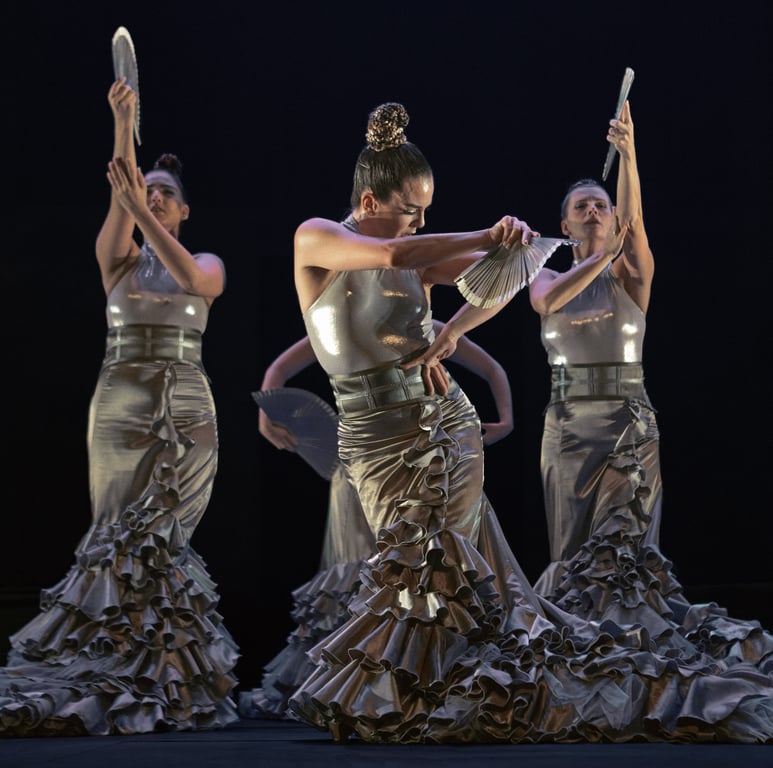
Flamenco is one of the most recognizable art forms in the world, yet much of what people believe about it is half-true or simply wrong. As an artist who has spent more than two decades inside this tradition, I find the real story far more interesting than the myths. What follows is a collection of accurate, well-documented flamenco facts, grouped by theme and drawn from the history, technique, and culture of the art itself. Each is short enough to share and, I hope, surprising enough to make you listen to flamenco a little differently.
Flamenco Facts About Origins and History
These facts begin with where the art actually came from, and it is not a single place or people.
- Flamenco was never invented; it was fused. It grew over centuries as a blend of Andalusian folklore, Moorish and Arabic melodies, Gitano (Roma) rhythms, and Jewish and Sephardic influence, coming together in southern Spain.
- Its heartland is Andalusia. The tradition is rooted in Andalusia in southern Spain, with further roots reaching into the regions of Murcia and Extremadura.
- The Roma brought expressiveness from far away. The Roma, or Gitanos, migrated from the Indian subcontinent and reached the Iberian Peninsula in the early 15th century, contributing much of flamenco's rhythm, vocal technique, and raw expressiveness.
- The first written reference dates to 1774. Flamenco is first mentioned in writing in 1774, in José Cadalso's Cartas Marruecas (Moroccan Letters).
- The word “flamenco” itself is younger than the art. The term came to name the genre only in the mid-19th century, appearing in a newspaper reference in 1847.
- Flamenco went professional in the cafés cantantes. During the era of the cafés cantantes, roughly the 1860s to the 1910s, flamenco became public and professional for the first time, with artists earning fixed pay rather than performing only at private gatherings. The singer Silverio Franconetti opened a celebrated café cantante in Seville around 1881, and this period is often called flamenco's “Golden Age.”
- Tablaos came later. From the mid-20th century, the tablaos succeeded the cafés cantantes and became the venues most associated with flamenco today.
For the full arc of how these threads came together, our guide to the history of flamenco traces the journey in detail.
Facts About the Three Elements
Ask a newcomer what flamenco is and most will say “dance.” In fact the art rests on three pillars, and the dance is only one of them.
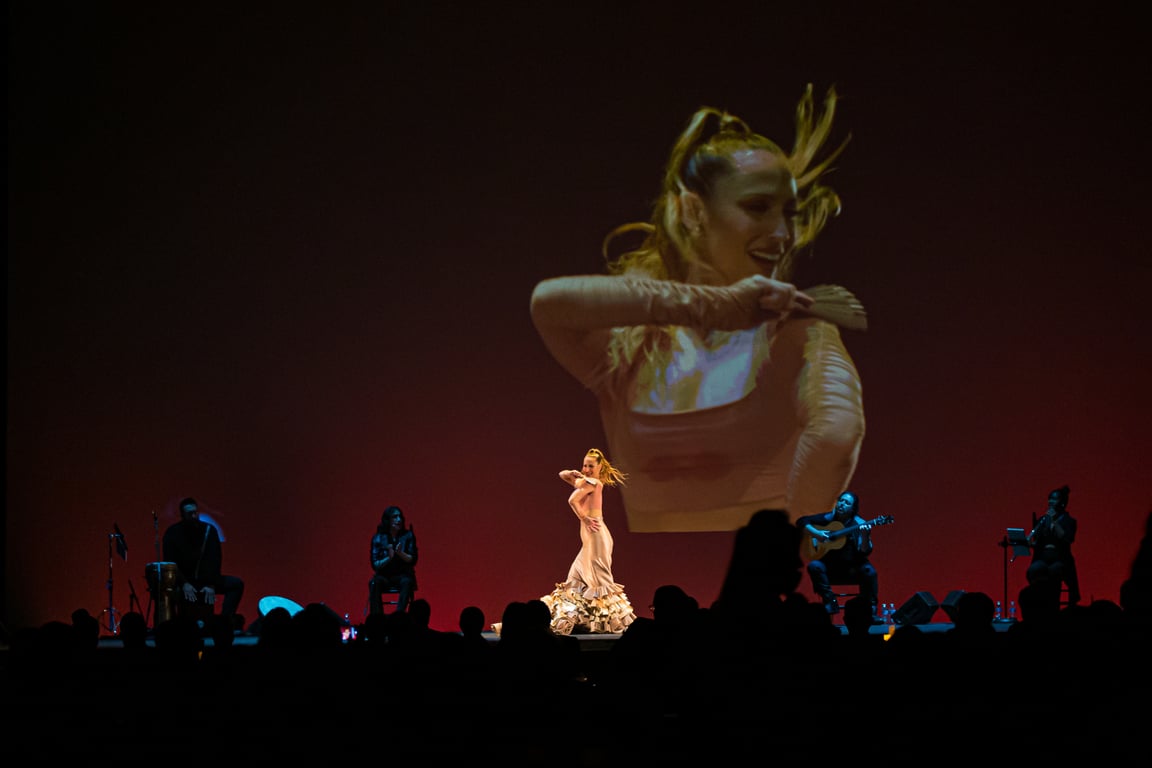
- Flamenco has three core elements. They are cante (song), toque (guitar and musicianship), and baile (dance), woven together into a single expressive language.
- The song, not the dance, is the heart. Cante carries much of flamenco's emotion, and traditionally the dancer responds to the singer rather than the other way around.
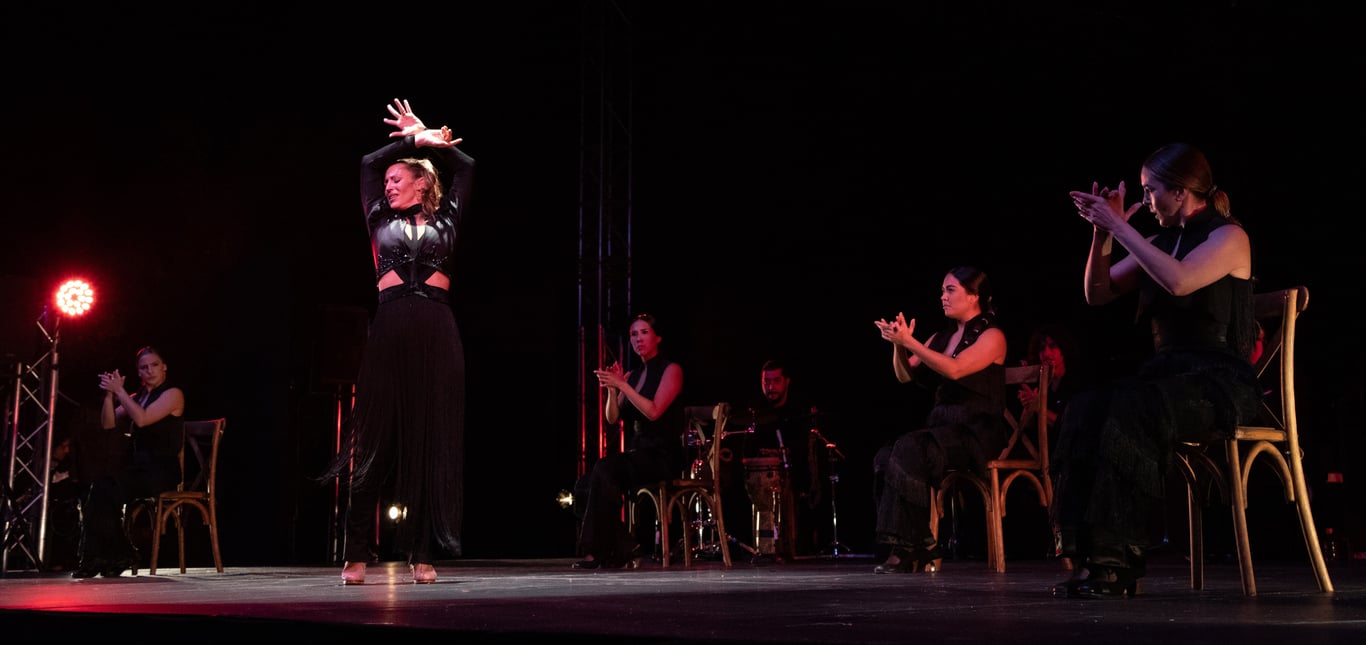
- Two supporting elements are always close by. Palmas, the rhythmic hand-clapping that holds the pulse, and jaleo, the encouraging shouts of ¡olé!, ¡vamos!, and ¡agua!, give flamenco its atmosphere of shared, live intensity.
We break each of these down further in our guide to what flamenco is.
Facts About the Palos
Flamenco is not one uniform sound. It is organized into palos, styles or forms, each with its own compás (rhythmic cycle), tempo, and emotional character.
Ready to put this into practice?
Train with Siudy Garrido through our On-Demand Flamenco Courses — structured, professional flamenco instruction you can start today.
- Many palos share a twelve-beat cycle. Among them are soleá, alegrías, and bulerías, which differ less in the count itself than in tempo and mood.
- Soleá is a “mother” form. Slow, solemn, and majestic, its name is linked to soledad (solitude), and it is considered one of the foundational forms of flamenco.
- Alegrías come from Cádiz. Bright and joyful in character, they are one of the sunniest palos in the repertoire.
- Bulerías are the fastest. Syncopated and festive, they are among the most exhilarating forms to watch.
- Some palos sit in a simple four-count. Tangos follow a straightforward binary feel, which is why they are a common entry point for beginners, alongside related forms such as tientos (slow, solemn tangos) and the festive, modern rumba flamenca.
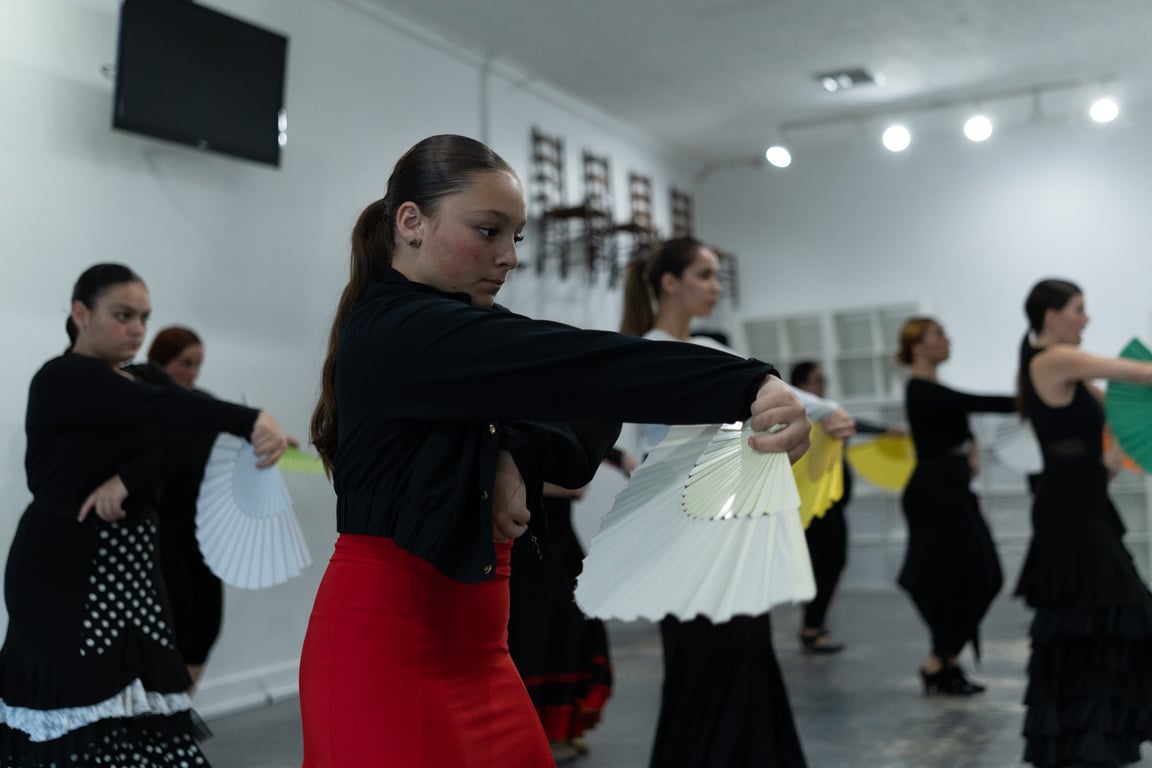
- Sevillanas is not a palo at all. Despite looking flamenco-like, sevillanas are a folk dance and music of Seville, derived from the Castilian seguidilla, set in 3/4 time with a fixed structure of four coplas. They are social and participatory, danced by everyone at the feria, or fair, while flamenco is improvised and watched at a tablao.
Our overview of the palos of flamenco maps the main families in full.
Facts About Dance Technique
The dance has a precise vocabulary, and knowing a few terms transforms how you watch it.
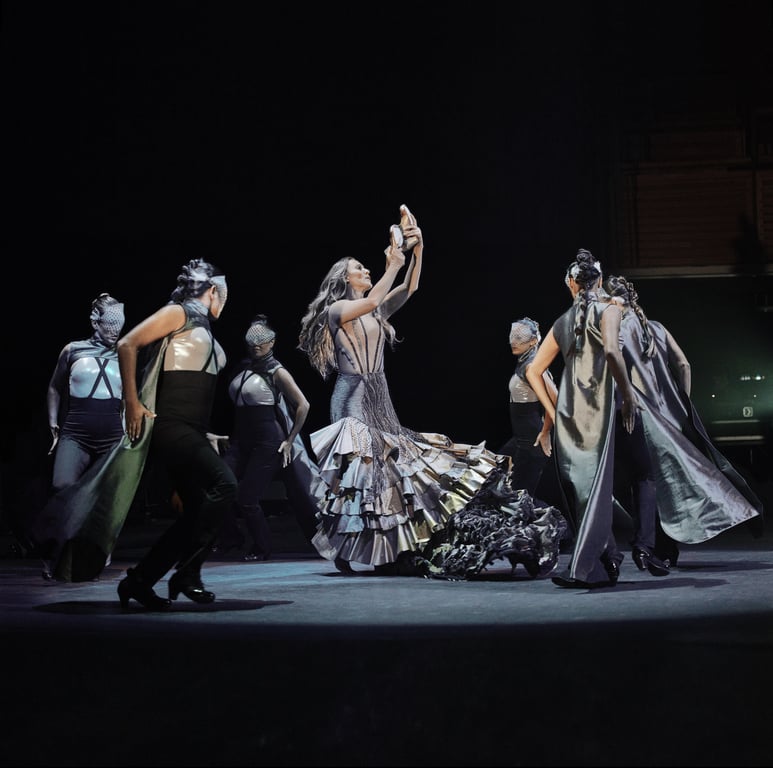
- The footwork has a name and a purpose. The percussive footwork flamenco is famous for is zapateado, built from clear strikes such as the planta (ball of the foot), tacón (heel), golpe (the whole flat foot at once), and punta (the toe tip). The goal is always clarity and compás, never speed for its own sake.
- The arms are as important as the feet. Above the waist, braceo is the slow, circular arm movement, while floreo is the rotation of the wrists and articulation of the fingers.
- Posture gives flamenco its presence. Postura means a proud, grounded carriage, spine long and chest open, with the weight rooted yet never stiff.
Facts About the Music
The instruments of flamenco hold a few genuine surprises, including one that only joined the tradition within living memory.
- The flamenco guitar is built to be percussive. Lighter than a classical guitar, it is often fitted with a golpeador, a tap plate that protects the soundboard from golpes, the percussive finger taps that are part of the playing itself.
- The cajón is a recent arrival, and it is Peruvian. This box drum was introduced to flamenco in 1977, when Paco de Lucía encountered it in Lima and his percussionist Rubem Dantas recognized its potential; it was first recorded on Paco de Lucía's 1981 album Solo quiero caminar, and it is now standard.
- Even the clapping has varieties. Palmas come in two forms: palmas sordas, muffled and deep, and palmas claras, sharp and crisp.
- Castanets are not core flamenco. Often assumed to be the sound of flamenco, castanets (castañuelas or palillos) actually belong to the escuela bolera and classical Spanish dance. In pure flamenco the hands stay free for braceo and floreo; castanets appear only in festive or folkloric styles such as sevillanas and fandangos de Huelva.
Facts About Culture and Recognition
Finally, the facts that place flamenco in the wider world, and in the realm of the ineffable.
- UNESCO recognized flamenco in 2010. It was inscribed on the Representative List of the Intangible Cultural Heritage of Humanity on 16 November 2010, at the fifth session of the Intergovernmental Committee in Nairobi, Kenya.
- Flamenco has a word for its soul. Duende is the heightened emotional authenticity that lifts a performance from technically correct to genuinely moving. It is a felt quality, not a technique, and it cannot be manufactured, only summoned.
- A poet gave duende its most famous voice. Federico García Lorca explored the concept in his 1933 lecture on the subject, and his words remain the touchstone for anyone trying to describe what separates a great flamenco performance from a merely accomplished one.
Learn the fuller story of flamenco's global recognition in our piece on flamenco as UNESCO heritage.
From Facts to Feeling
Facts are a fine place to start, but flamenco is meant to be felt. The more you understand its history, elements, and language, the more the art rewards you, whether you are watching or learning to move yourself. If these flamenco facts have made you want to go further, explore on-demand flamenco classes with two-time Latin Grammy–nominated artist Siudy Garrido, or browse more guides on our flamenco blog.
Frequently asked questions
When was flamenco recognized by UNESCO?
What are the three elements of flamenco?
Are castanets part of flamenco?
Is sevillanas a type of flamenco?
Start dancing flamenco with Siudy Garrido
On-Demand Flamenco Courses — professional instruction, at your pace.
Explore Courses →