Flamenco vs. Ballet: A Fair Comparison of Two Great Dance Traditions
 Part of our guide
What Is Flamenco? Meaning, Origins, and the Art Explained →
Part of our guide
What Is Flamenco? Meaning, Origins, and the Art Explained →
Few comparisons in the dance world are made as often, or understood as poorly, as flamenco vs ballet. Both are among the most demanding and celebrated dance traditions on earth, yet they grew from entirely different soil and pursue almost opposite ideals of beauty. This guide sets them side by side fairly, without crowning a winner, so you can appreciate what makes each extraordinary on its own terms. It is part of our broader introduction to what flamenco is.
Flamenco vs Ballet: Two Roots, Two Worlds
The first thing to understand is that these forms come from different histories, and almost everything else follows from that. Flamenco emerged from an Andalusian folk tradition in southern Spain, a fusion of Andalusian folklore, Moorish and Arabic melodies, Gitano (Roma) rhythms, and Jewish and Sephardic influence, shaped over centuries in the communities of the region rather than in an academy. It was a living, communal art before it was ever a staged one.
Ballet, by contrast, grew from a European academic and court tradition, refined over generations into a formal, codified technique with a set vocabulary conventionally named in French. Where flamenco evolved from the ground up as folk expression, ballet was systematized from the top down as an academic discipline. This single contrast, folk versus academy, echoes through every difference between them.
Technique: Grounded Weight vs. Lifted Line
If you watch the two forms back to back, the most immediate difference is where the energy goes. A flamenco dancer drives it downward, into the floor; a ballet dancer sends it upward, toward the ceiling. Neither approach is superior. They are simply two different answers to the question of what the body can express.
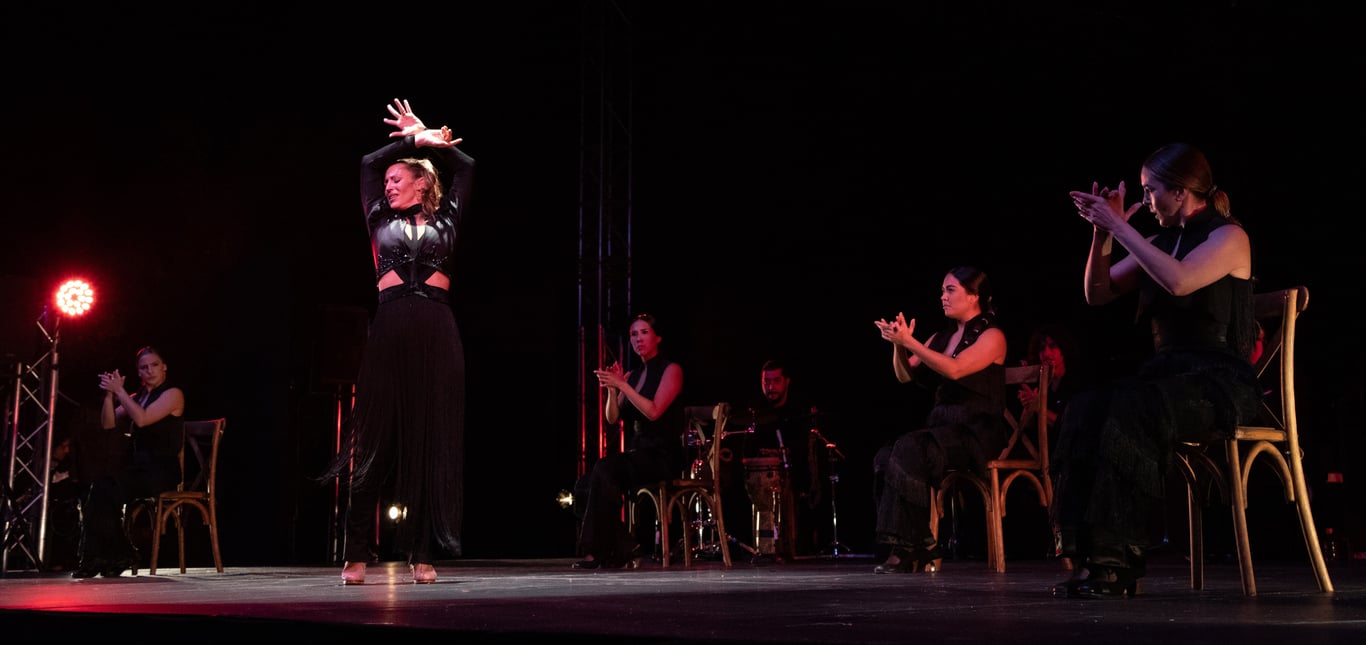
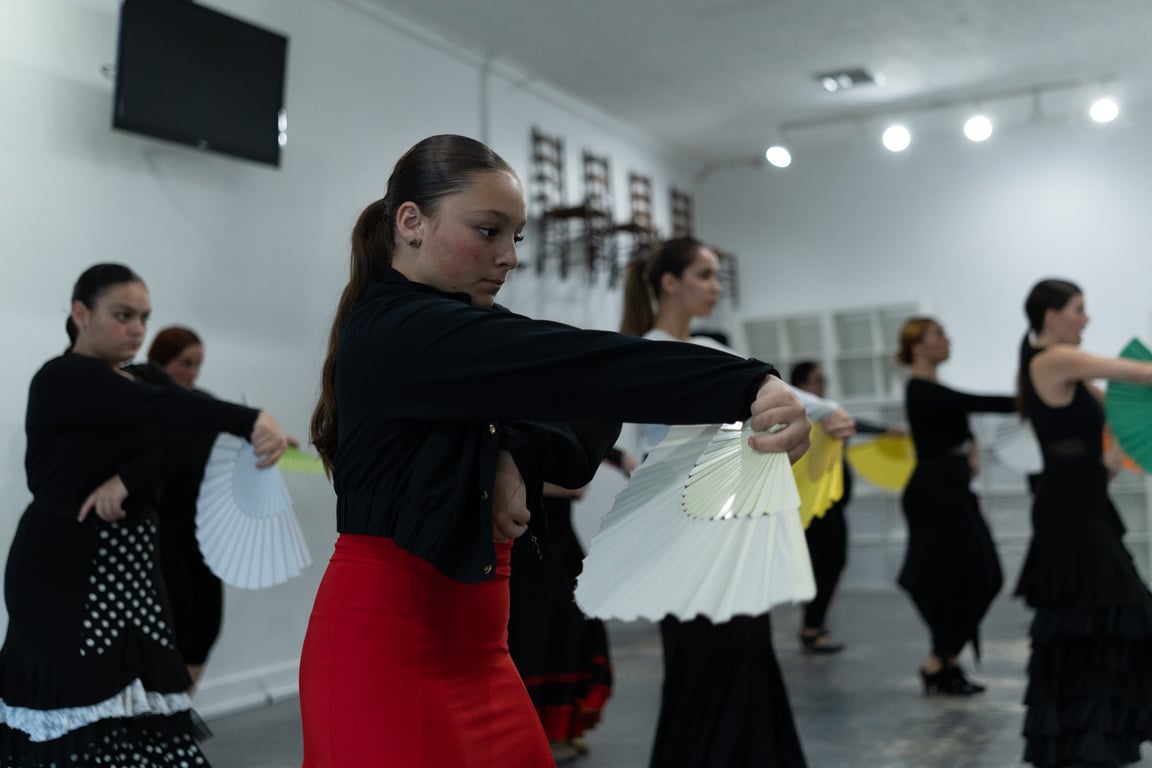
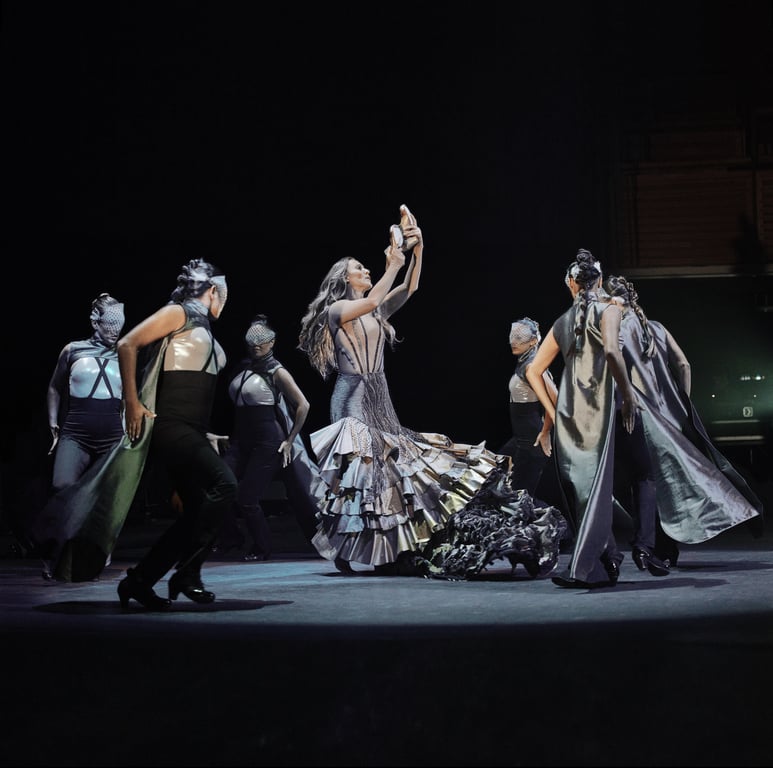
Flamenco is grounded and earthy. Its power comes from a rooted, weighted connection to the floor, expressed most vividly through zapateado, the percussive footwork built from clear strikes such as the planta (ball of the foot), the tacón (heel), and the golpe (a strike of the whole flat foot). Above the waist, the arms move in slow, circular braceo, the wrists articulating with control, all held within a proud, grounded postura, the spine long and the chest open. Crucially, much of flamenco is improvised within compás, the rhythmic cycle that governs each style, so a dancer shapes the moment in real time rather than reproducing fixed steps. You can read more in our guide to flamenco posture and body.
Ballet pursues the opposite ideal: elevation, lightness, and the illusion of weightlessness. It is organized around turnout, the outward rotation of the legs from the hips, and it cultivates long, extended lines, high extensions, and jumps that seem to hang in the air. Its vocabulary is codified and set, a shared library of named positions and steps that dancers learn precisely, and a performance is typically danced from choreography fixed in advance. Where flamenco improvises, ballet composes.
Flamenco vs Ballet at a Glance
The contrasts are easiest to hold in mind side by side. The list below summarizes the core differences, with the reminder that these are broad tendencies of two rich traditions, not rigid rules.
- Origin — Flamenco: Andalusian folk tradition, evolved communally. Ballet: European academic and court tradition, formally codified.
- Relationship to the floor — Flamenco: grounded, earthy, weighted downward. Ballet: lifted, light, reaching upward.
- Signature technique — Flamenco: percussive zapateado and expressive braceo. Ballet: turnout, elevation, and extended line.
- Structure — Flamenco: improvised within compás. Ballet: danced from set choreography and a codified vocabulary.
- Footwear — Flamenco: heeled shoes with nails (clavos). Ballet: soft slippers or pointe shoes.
- Guiding ideal — Flamenco: emotional immediacy, or duende. Ballet: classical line and precision.
Footwear: Nailed Heels vs. Soft Slippers and Pointe
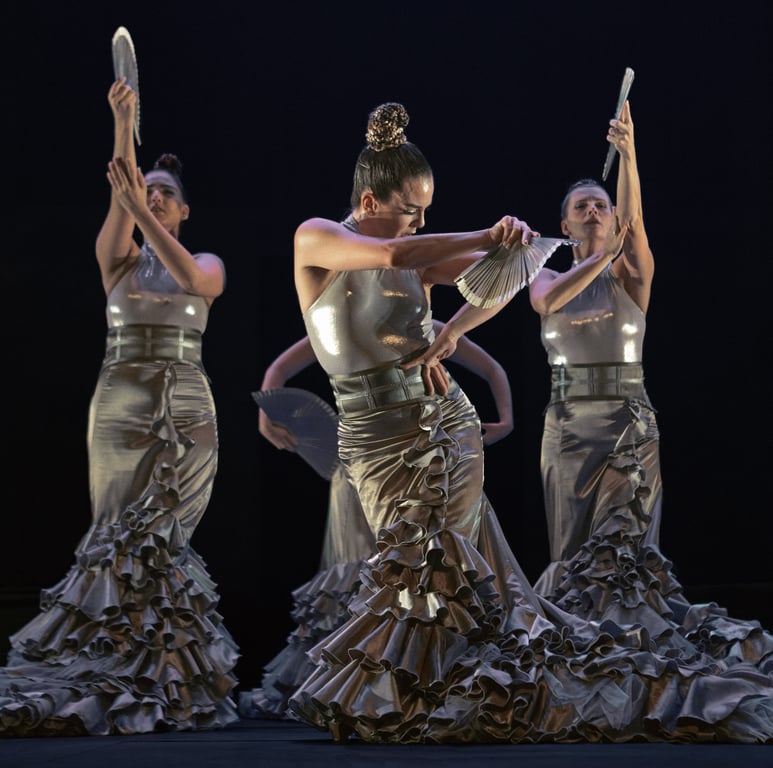
Nowhere is the divide more literal than in the shoes, because footwear in both forms is engineered for exactly the effect each tradition seeks. Flamenco is danced in sturdy heeled shoes fitted with nails, called clavos, driven into the toe and heel. Those nails are what give zapateado its sharp, resonant crack; the shoe is, in effect, a percussion instrument, and the dancer plays the floor with it. The heel and the weighted contact are inseparable from flamenco's earthbound power. Our guide to flamenco footwork for beginners covers this in practical detail.
Ready to put this into practice?
Train with Siudy Garrido through our On-Demand Flamenco Courses — structured, professional flamenco instruction you can start today.
Ballet demands the reverse. The dancer wears soft, flexible slippers or, for much of the classical repertoire, pointe shoes, whose hardened toe box allows a dancer to rise onto the very tips of the toes. Far from amplifying contact with the floor, ballet footwear is designed to minimize the visible effort of leaving it, supporting the illusion of lightness and flight. One shoe is built to strike the ground; the other, to escape it.
Music: Answering the Song vs. Serving the Score
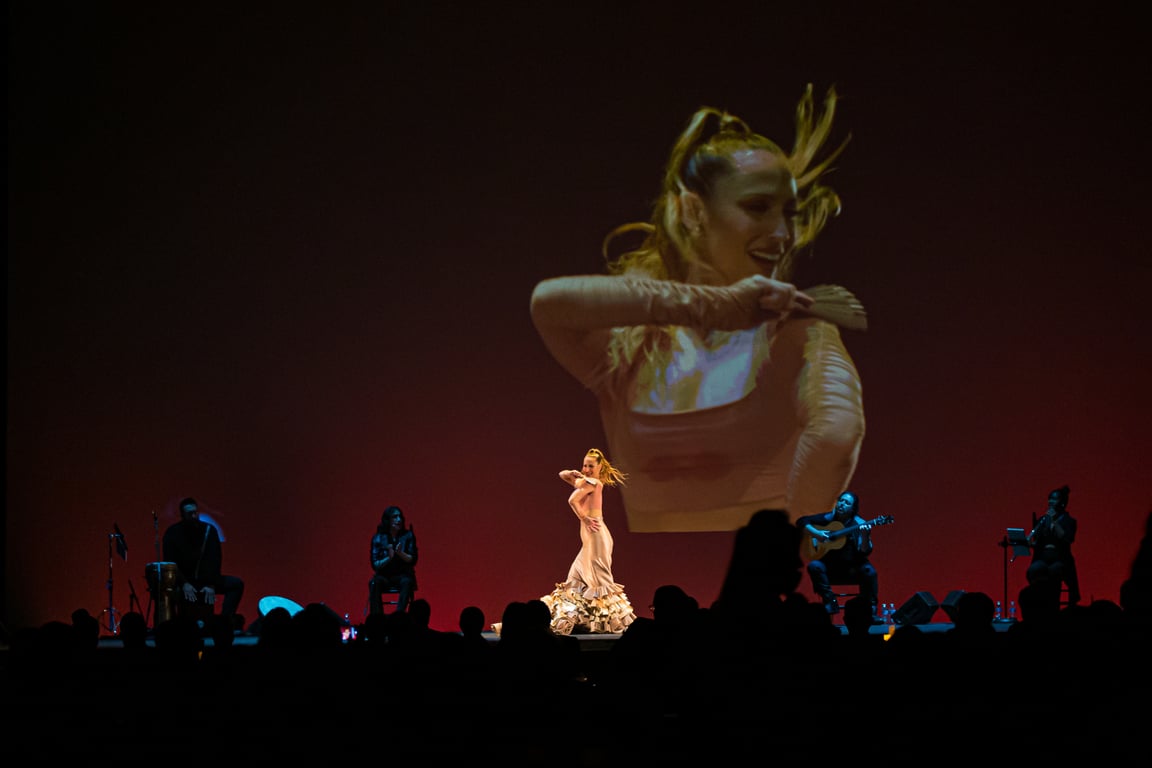
The two forms also relate to their music in fundamentally different ways. In flamenco, dance is one of three intertwined elements alongside cante (song) and toque (guitar), and the relationship is a live conversation. Traditionally the dancer responds to the singer, and both move within the shared compás, so the music is not a fixed backdrop but a partner reacting in the moment. Because so much is improvised, the exchange between dancer, singer, and guitarist changes from one performance to the next.
Classical ballet is more often set to a composed score, frequently orchestral and prepared in advance, with the choreography built to match its structure. The dancer interprets a fixed piece rather than improvising a dialogue in real time. Both relationships are deeply musical; they simply place the dancer in different roles, one a responsive partner, the other an interpreter of a finished work.
Expression: Duende vs. Classical Line
Finally, the two traditions prize different qualities in a great performance. Flamenco reaches for duende, the heightened emotional authenticity that lifts a performance beyond correct technique into something genuinely moving. The idea was famously explored by the poet Federico García Lorca in a 1933 lecture, and it names a felt quality of raw, immediate emotion rather than a step that can be drilled. Flamenco's ideal is presence, intensity, and truth in the moment.
Ballet, in its classical form, prizes line: the clean, harmonious shapes the body makes in space, achieved through precision, control, and refinement. Its beauty is one of clarity and composure, of a form perfected. This is not to say ballet lacks emotion or flamenco lacks precision, far from it, but each tradition organizes itself around a different center of gravity, one emotional and immediate, the other formal and composed.
Both Demand Years of Devotion
Whatever their differences, flamenco and ballet share one decisive truth: each demands years of dedicated training, and neither is more legitimate or more difficult than the other in any absolute sense. Ballet asks for extraordinary flexibility, turnout, balance, and mastery of a vast codified vocabulary. Flamenco asks for rhythmic precision within compás, footwork of great clarity, expressive arm work, and the courage to improvise. These are different mountains, not a taller and a shorter one.
Many dancers study both, and the two can enrich each other: ballet cultivates line, alignment, and control, while flamenco cultivates rhythm, grounded power, and expressive freedom. But neither is a shortcut to the other. The most rewarding way to understand flamenco vs ballet is not to ask which is better, but to appreciate how two peoples, in two very different places, each found a complete language of the body.
If this comparison has drawn you toward flamenco's grounded power and emotional immediacy, the next step is to feel it for yourself. Explore on-demand flamenco classes with two-time Latin Grammy–nominated artist Siudy Garrido, or browse the full flamenco blog to keep exploring the art, its history, and its technique.
Frequently asked questions
What is the main difference between flamenco and ballet?
Is flamenco harder than ballet?
Do flamenco and ballet use the same shoes?
Can you study both flamenco and ballet?
Start dancing flamenco with Siudy Garrido
On-Demand Flamenco Courses — professional instruction, at your pace.
Explore Courses →