What Is Duende? The Soul of a Flamenco Performance
 Part of our guide
What Is Flamenco? Meaning, Origins, and the Art Explained →
Part of our guide
What Is Flamenco? Meaning, Origins, and the Art Explained →
You can watch two flamenco dancers perform the very same palo, with the same steps and flawless technique, and feel almost nothing from the first, then find yourself moved to silence or to shouts by the second. What separates them has a name. Flamenco artists call it duende, and understanding it is the difference between admiring flamenco and being changed by it.
What Is Duende? A Definition
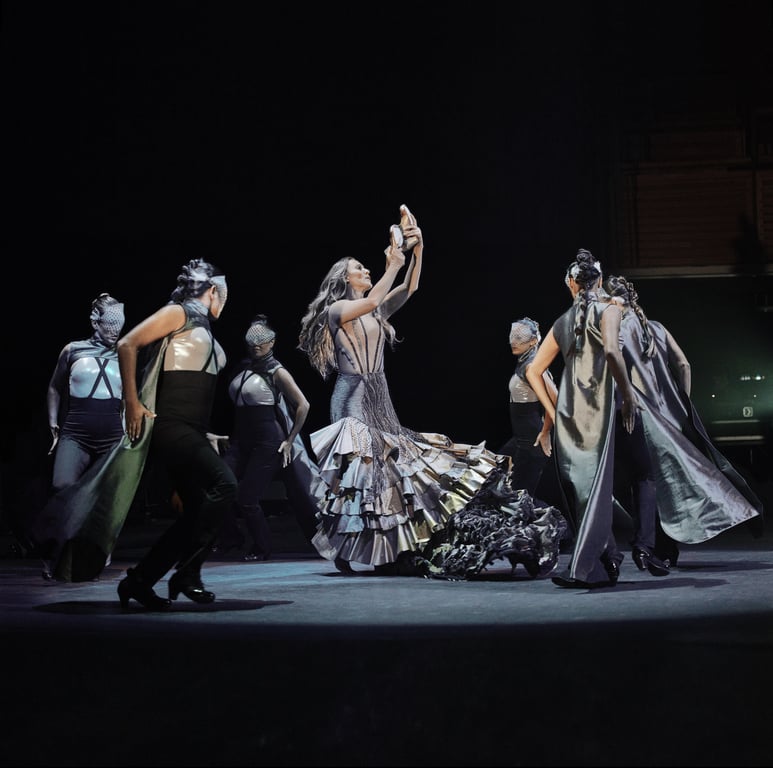
Duende is the heightened emotional authenticity, the soul, that lifts a flamenco performance from technically correct to genuinely moving. It is not a step, a chord, or a section of a dance. It is the charged quality that arrives when an artist stops performing and starts truly inhabiting the moment, and it can pass through a whole room like a current. When people ask what is duende, the honest answer is that it is less something you do than something that happens to you when everything else is in place.
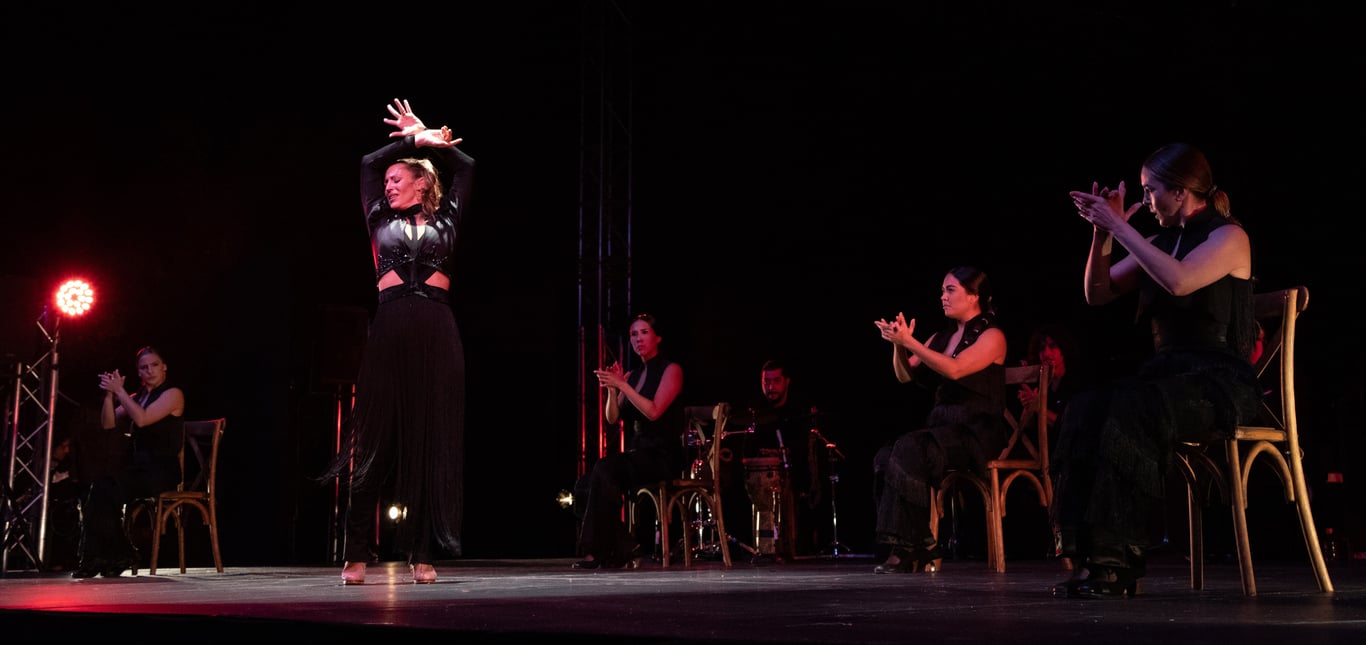
This is why duende resists a tidy definition. It lives in the space between technique and feeling, in the raw cry of the cante, the sudden stillness before a dancer's feet erupt, the shared intensity of a live tablao. If you are new to the art, our guide to what flamenco is lays out the tradition that duende crowns.
Duende Meaning: From Sprite to Spirit
In everyday Spanish, duende names a kind of goblin or sprite, a mischievous household spirit. In flamenco, the word was borrowed and transformed. Here duende meaning shifts toward something graver and more mysterious: an almost involuntary force that seizes an artist and lends a performance its power and truth. It is spoken of as a spirit that rises from the ground rather than a talent that descends from above.
That distinction matters. Duende is not lightness, charm, or virtuosity for its own sake. It is bound up with depth, struggle, and honesty, which is why it so often surfaces in flamenco's most solemn forms rather than its brightest. The soleá, slow and majestic, or the grave siguiriyas leave more room for duende than a festive dance built purely for joy.
Lorca and the Theory of Duende
No one did more to give duende a lasting shape in words than the poet Federico García Lorca. In his 1933 lecture Juego y teoría del duende (“Play and Theory of the Duende”), Lorca explored duende as the dark, earth-bound spirit that gives art its depth and its edge of danger. For him it was the force that made a performance feel alive and unrepeatable, the very opposite of polished, comfortable prettiness.
Lorca was writing as an artist about a feeling every flamenco performer already knew, and his lecture has been read and quoted ever since as the classic exploration of the idea. What endures from it is a simple, demanding notion: real art costs something. Duende is what you feel when an artist pays that cost in front of you, holding nothing back.
Ready to put this into practice?
Train with Siudy Garrido through our On-Demand Flamenco Courses — structured, professional flamenco instruction you can start today.
Duende and Cante Jondo, the Deep Song
If duende has a natural home, it is cante jondo — the deep song, the most profound and emotionally raw branch of flamenco singing. Cante carries much of flamenco's emotion, and traditionally the dancer responds to the singer rather than the other way around. So when a singer reaches that place of total honesty, the feeling does not stay with them: it flows through the guitarist's toque, into the dancer's body, and out to everyone listening.
This is why duende is so often described as something shared rather than owned. It is not a solo achievement but a connection — between singer, player, dancer, and audience — that either catches fire or does not. The three elements of flamenco, cante, toque, and baile, are the channels through which it travels, and palmas and jaleo, the encouraging shouts of ¡olé! and ¡vamos!, are the room's way of feeding it back to the stage.
Why Duende Cannot Be Faked
Here is the hard truth at the center of the idea: duende cannot be faked, forced, or manufactured on demand. You can rehearse a dance to perfection and still not summon it. You can also stumble technically and have it arrive anyway, transforming an imperfect performance into an unforgettable one. Audiences sense the difference instantly, even when they could not name what they are responding to.
That unpredictability is not a flaw in flamenco; it is the point. An art in which the highest moments cannot be guaranteed is an art that stays alive, because every performance is a genuine risk. It is also why duende is treated with a certain reverence rather than claimed lightly. To say a performer “had duende” is among the highest things one can say in flamenco, and it is not said casually.
Technique First, Then Duende
None of this means technique does not matter. Quite the opposite. Duende does not appear out of nowhere; it appears in artists who have mastered their craft so completely that they can finally forget it in the moment. The years spent on compás, on postura, on the clarity of zapateado, are not the enemy of feeling but its foundation. Technique builds the vessel; duende is what may one day fill it.
That is the paradox any serious student comes to understand. You cannot practice duende, yet without disciplined practice you leave it no way in. So the path is clear even if the destination cannot be scheduled: learn the rhythm, learn the posture, learn the footwork, and keep giving yourself fully to the music until, on some night you did not plan, something more than technique takes over.
If flamenco's depth has caught your imagination, the way forward is to study the art itself, patiently and in order. Explore on-demand flamenco classes with two-time Latin Grammy–nominated artist Siudy Garrido to build the foundation that real expression is grounded in, and browse the full flamenco blog for more on the culture, history, and technique behind the art. Duende cannot be promised — but the deeper you go, the more you prepare the ground for it to arrive.
Frequently asked questions
What is duende in flamenco?
What does duende mean?
How does duende relate to cante jondo?
Can duende be learned or taught?
Start dancing flamenco with Siudy Garrido
On-Demand Flamenco Courses — professional instruction, at your pace.
Explore Courses →