How to Practice Flamenco at Home: A Practical Routine
 Part of our guide
How to Learn Flamenco: A Complete Guide for Beginners →
Part of our guide
How to Learn Flamenco: A Complete Guide for Beginners →
One of the questions I hear most often from new students is whether flamenco can really be studied outside a studio. The honest answer is that it can — a great deal of genuine progress happens between classes, alone, in a corner of your own home. What matters is not the size of the room but the quality and order of practice. This guide sets out how to practice flamenco at home in a way that is safe, structured, and consistent, so the hours you put in build the art rather than reinforce bad habits.
It is a practical companion to our broader guide on how to learn flamenco, focused on the home practice that fills the space between lessons. We will cover setting up a workable space, what to practice and in what order, using recordings and video, protecting your feet and knees, and building a short daily routine you can keep.
How to Practice Flamenco at Home: Setting Up Your Space
You do not need a dance studio to make real progress, but a little thought about your space pays off immediately. The single most important element is the floor. Whenever possible, practice your footwork on a hard, flat surface — a wooden floor is ideal, because it gives your zapateado (percussive footwork) a clear, honest sound and is kinder to your joints. Carpet muffles the strikes and hides mistakes, while cushionless concrete is hard on the joints. A good wooden floor sits in the middle: responsive enough to hear yourself, forgiving enough to protect you.
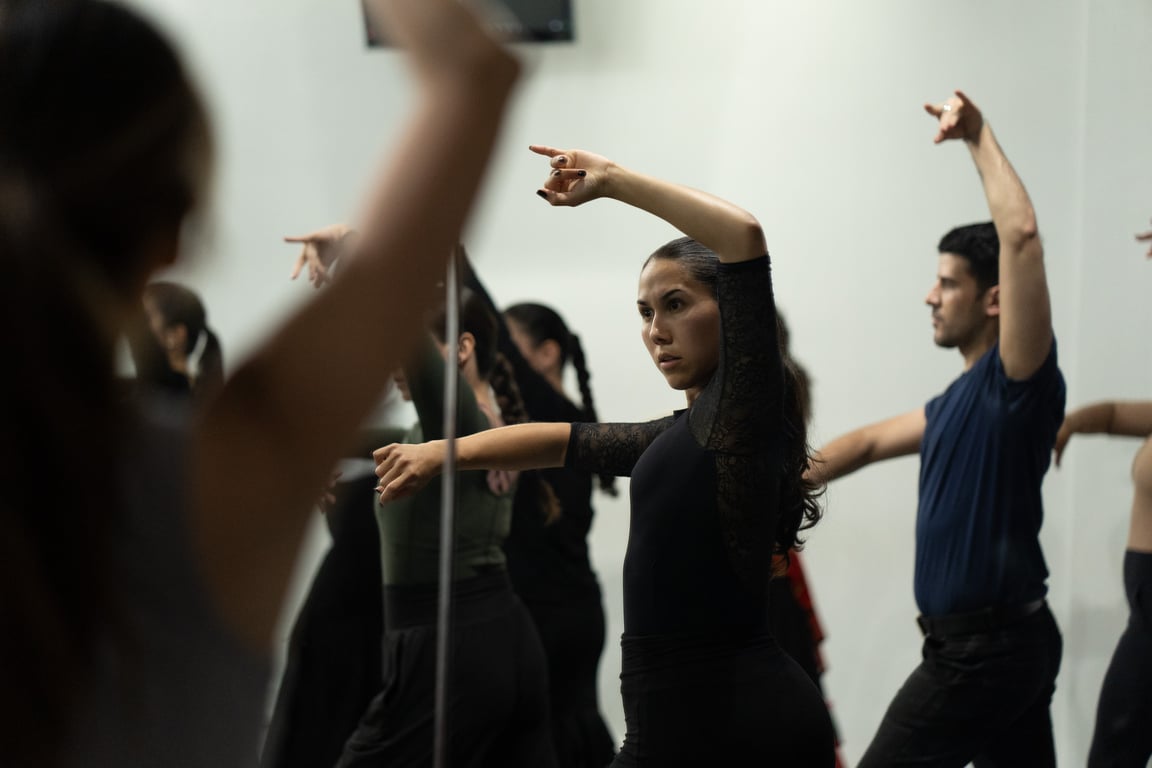
The second element is a mirror. Flamenco lives as much in the upper body and posture as in the feet, and a mirror lets you check what you cannot feel — whether your spine is long, your chest open, your arms moving cleanly. Even a modest mirror that shows you from the waist up is a serious training tool. Finally, give yourself room to move: enough space to extend your arms fully in braceo (the slow, circular arm movement) and take a few steps. A phone or laptop propped where you can see it completes the setup.
What to Practice, and in What Order
The most common mistake I see in home practice is starting with the footwork. It is the loudest, most dramatic part of flamenco, so it is the most tempting to drill — but built on shaky rhythm and posture, fast feet only cement problems. Flamenco rewards sequence. Work through the elements in this order.
- Compas first, through palmas. Before anything else, internalize the rhythm. Compás is the rhythmic cycle at the heart of every palo, or flamenco style, and the surest way to learn it is to clap it as palmas (rhythmic hand-clapping) until you no longer have to count it consciously. This costs nothing, needs no space, and is the foundation everything else sits on.
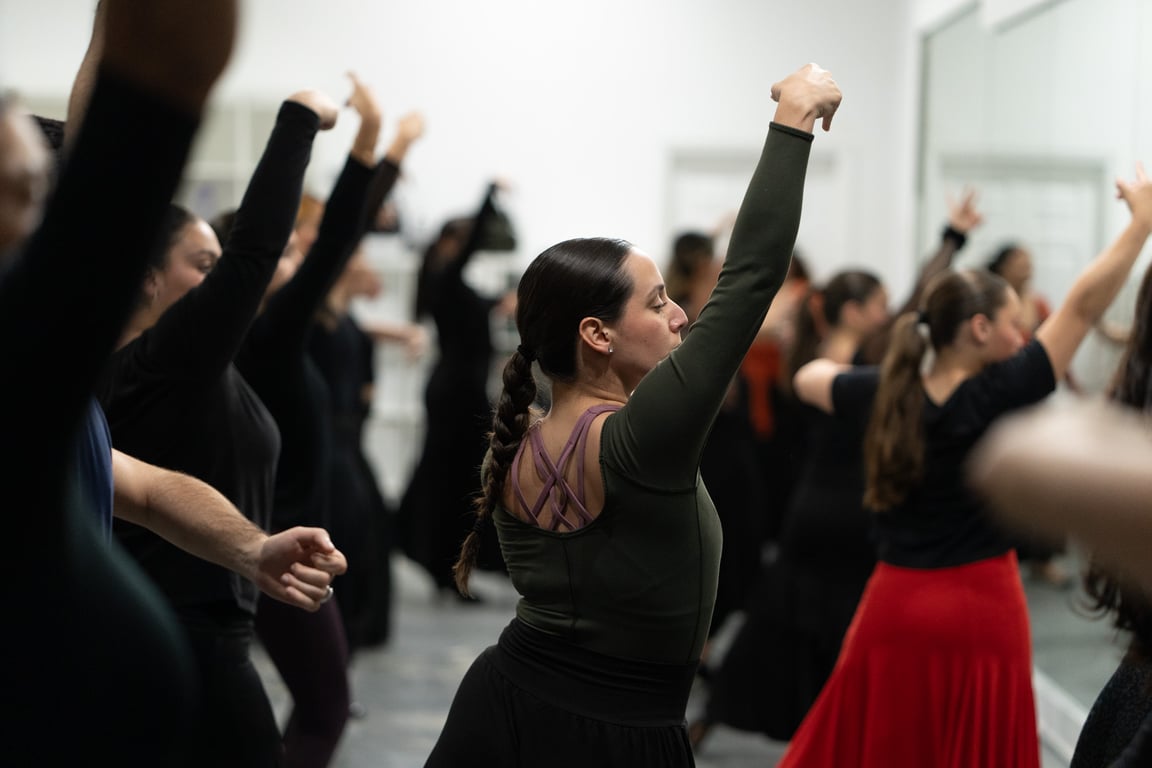
- Postura next. Spend time simply standing in postura — the proud, grounded carriage of flamenco, with a long spine, open chest, and weight rooted through the floor, never stiff. This is where a dancer's presence begins, and it is easy to practice in front of a mirror.
- Braceo and the arms. Add the slow, continuous braceo, letting the arms move in unhurried circles while your posture holds and your shoulders stay down.
- Footwork last. Only once rhythm, posture, and arms feel settled should you give your full attention to zapateado, so the footwork has something solid to sit on.
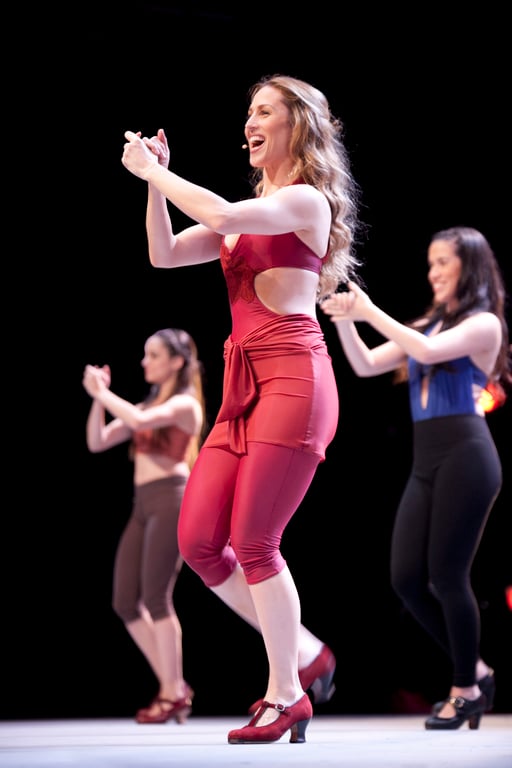
When you do reach the feet, remember that the goal is clarity and compás, never speed for its own sake. Practice the basic strikes cleanly — the planta (ball of the foot), the tacón (heel), the golpe (the whole flat foot at once), and the punta (toe tip) — keeping them inside the rhythm you clapped. Our guide to flamenco footwork for beginners breaks down these strikes, and if the rhythm itself feels elusive, start with understanding flamenco compás.
Ready to put this into practice?
Train with Siudy Garrido through our On-Demand Flamenco Courses — structured, professional flamenco instruction you can start today.
Using Recordings and On-Demand Video
Practicing alone has one real drawback: no one is there to correct you or set the tempo. Recordings and structured video close much of that gap, and they offer something a live class cannot — the ability to slow things down and rewind. A step that flies past in a studio can be watched at half speed, paused, and repeated until your body understands it. Use audio recordings, too, to train your ear to compás: clap palmas along with a recording of a given palo until you feel where the accents fall, then practice your footwork against that same track. Because flamenco traditionally has the dancer respond to the music, learning to move with a recording rather than to a silent count is closer to how the art really works.
Structured, on-demand instruction is one of the best ways to learn how to practice flamenco at home, letting you study properly at your own pace and rewatch difficult passages. You can explore on-demand flamenco classes with Siudy Garrido to build that kind of sequenced practice.
Protecting Your Feet and Knees
Flamenco footwork is percussive and repetitive, which makes it demanding on the body. Practicing at home, without a teacher watching for fatigue, means you have to look after yourself deliberately. A few habits protect you.
- Mind your surface. Return to that hard, flat floor. A responsive wooden surface protects your joints far better than either soft carpet or bare concrete, and it lets you hear your zapateado clearly enough to keep it clean.
- Warm up before you drill. Never launch straight into fast footwork from cold. Loosen the ankles, knees, and hips first so the joints are ready for repeated impact.
- Keep a soft bend in the knees. Locked, rigid legs transmit every strike straight up the joint. A grounded flamenco stance already asks for a slight give in the knee; let it absorb some of the impact.
- Choose clarity over speed. Clean, controlled strikes keep you from hammering the floor harder than your body can absorb.
- Stop at real fatigue or pain. Tired, sloppy footwork teaches nothing and invites injury. Building volume gradually protects you better than pushing through.
Building a Consistent Daily Routine
If you take one principle from this guide, let it be this: consistency beats intensity. The thing that moves you forward is steady, repeated contact with the art, not occasional heroic sessions. A focused twenty to thirty minutes on most days will carry you further than a single exhausting hour once a week, and it is far gentler on your body. A simple routine might open with a few minutes of palmas to settle the compás, move into postura and braceo at the mirror, and finish with slow, clean zapateado against a recording. Keep it short enough that you will return to it tomorrow. Some days you will only have time for compas and posture, and that is fine — a short honest session is worth far more than a skipped one.
One practical note: practice in clothing that lets you see your legs and move freely, and if you have proper flamenco shoes, use them on your hard floor to hear your footwork truly. Our guide on what to wear to a flamenco class covers this in more depth.
Practicing at home will never fully replace the exchange of a real class, but it is where the art takes root between lessons. Set up a corner with a hard floor and a mirror, work rhythm and posture before footwork, use video to slow the hard parts down, protect your feet and knees, and show up for a short session most days. Do that, and a modest space and a patient routine will take you further than you expect. When you are ready to go deeper, browse more guidance on our flamenco blog.
Frequently asked questions
How do I practice flamenco at home without a studio?
What should a beginner practice first at home?
How long should I practice flamenco each day?
How do I protect my feet and knees when practicing footwork at home?
Start dancing flamenco with Siudy Garrido
On-Demand Flamenco Courses — professional instruction, at your pace.
Explore Courses →