What to Wear to a Flamenco Class: A Beginner's Guide
 Part of our guide
How to Learn Flamenco: A Complete Guide for Beginners →
Part of our guide
How to Learn Flamenco: A Complete Guide for Beginners →
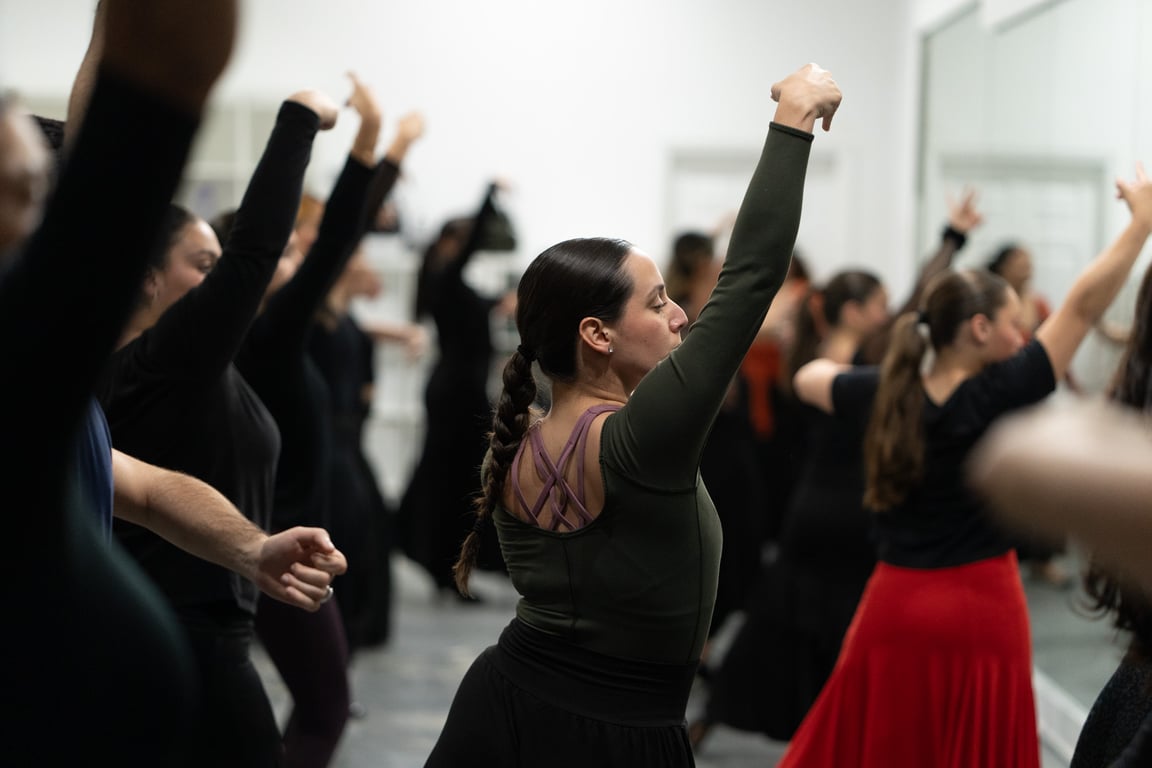
You have signed up for your first lesson, and now a very practical question arrives: what to wear to a flamenco class? It is one of the most common things beginners ask, and the good news is that the answer is refreshingly simple. You do not need a ruffled dress, castanets, or anything you have seen on a stage. You need comfortable, honest practice clothes that let you move, let you feel the rhythm, and let your teacher see your body clearly. This guide walks you through exactly that.
Before we get to specifics, it helps to hold one idea in mind: the studio is not the stage. Much of the imagery people associate with flamenco — the long-trained skirts, the polka-dot dresses, the dramatic shawls — belongs to performance. What you wear to learn is deliberately plainer, because in a class your clothing has a job to do, not a show to put on.
What to Wear to a Flamenco Class: The Short Answer
When people ask what to wear to a flamenco class, the honest, complete answer is this: a practice skirt so you can feel the movement, flamenco or practice shoes with a low and sturdy heel, a fitted top so your posture is visible, and your hair pulled back. Everything else is optional. If you own none of these on day one, comfortable fitted practice clothes and a firm, low-heeled shoe will get you through your first lesson perfectly well.
Let us take each piece in turn, because understanding why each choice matters will help you build a better practice.
The Practice Skirt (Falda)
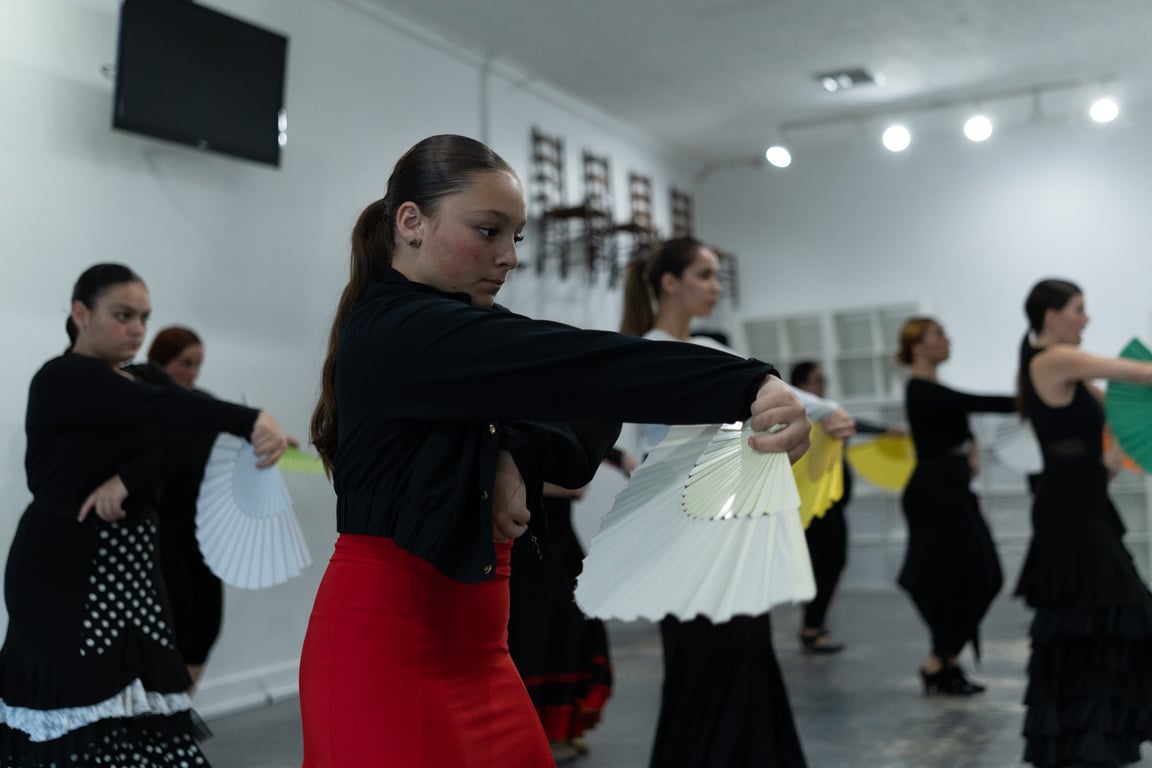
A practice skirt, called a falda, is one of the most useful things a beginner can wear. Flamenco lives in the relationship between the body and the floor, and a skirt gives your movement something to respond to. As you turn, mark, and shift your weight, the fabric moves with you, and that feedback teaches your body faster than a mirror alone can.
Crucially, a practice skirt is not the bata de cola — the long-trained skirt you may have admired in a performance. The bata de cola is heavy, requires real control to manage, and belongs to a much later stage of study. Wearing one to a beginner class would get in the way of learning rather than help it. A simple, lighter falda that lets you see your own legs and feet is what you want. Many dancers also find leggings or fitted practice trousers perfectly acceptable early on, especially for footwork-heavy sessions.
Flamenco Practice Shoes
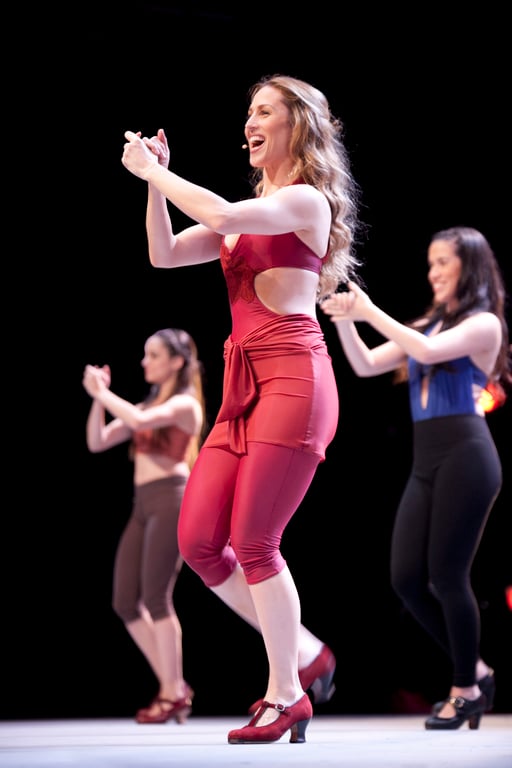
Footwear is where beginners most often go wrong, so it deserves care. Flamenco is famous for its zapateado — percussive footwork built from clear, distinct sounds such as the planta (ball of the foot), the tacón (heel), and the golpe (the whole flat foot striking at once). To make those sounds cleanly, and to protect your body while you do, you need a shoe with a low, sturdy heel and a firm sole.
Here is the reassuring part: you do not need professional nailed shoes for a first class. Traditional flamenco shoes have clavos, small nails driven into the sole and heel to sharpen the sound, but these are an investment for committed students, not a requirement to begin. For your very first lessons, any comfortable shoe with a low, solid, non-slip heel will let you feel the floor and hear your strikes. As you continue, dedicated flamenco practice shoes become well worth it — they are designed for the demands of zapateado and support your feet through repetition.
Ready to put this into practice?
Train with Siudy Garrido through our On-Demand Flamenco Courses — structured, professional flamenco instruction you can start today.
What matters most on day one is the sole and heel, not the label. If you want to understand shoe construction, fit, and when to upgrade to nailed shoes, our guide to flamenco shoes covers it in depth.
A Fitted Top and Visible Posture
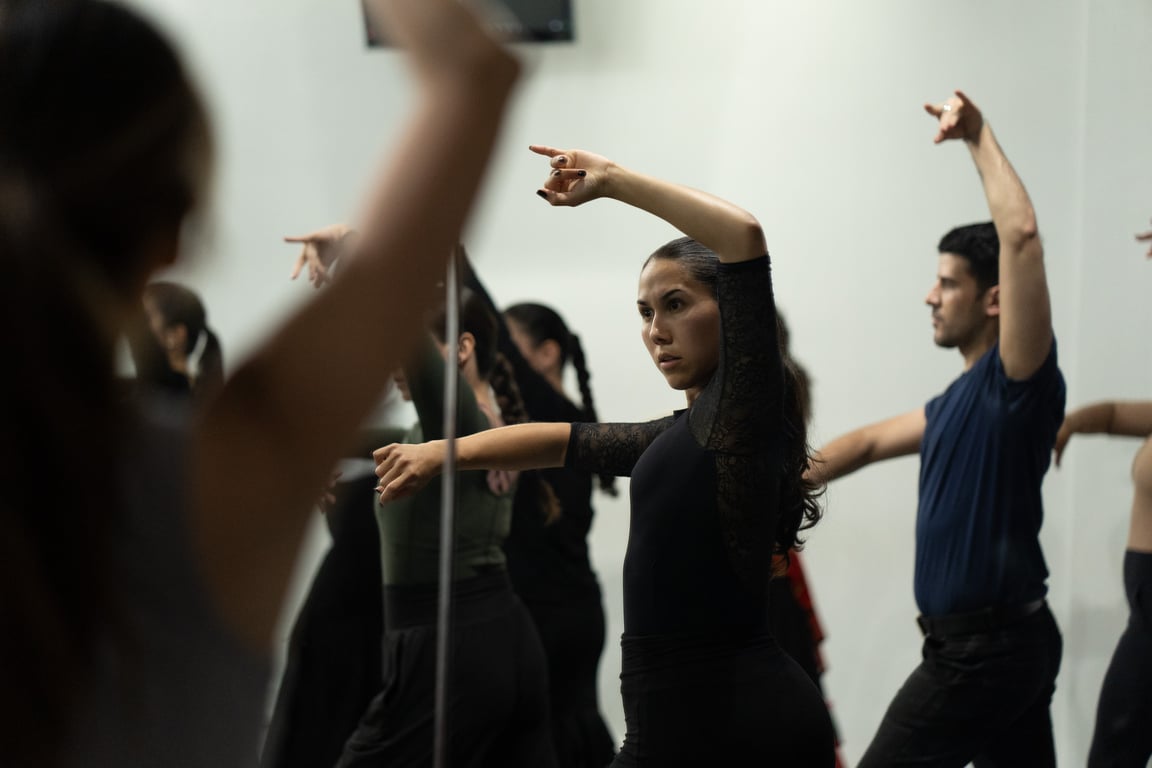
Flamenco begins with postura — a proud, grounded carriage with a long spine, an open chest, and weight rooted through the floor, never stiff. Your teacher cannot correct what they cannot see, which is why a fitted top matters. Baggy shirts hide the line of your back and shoulders, and in the early weeks, posture and braceo (the slow, circular arm movement) are exactly what an instructor needs to watch.
You do not need anything special or revealing — a simple fitted t-shirt, leotard, or close top is ideal. The goal is clarity: let the shape of your torso and arms read clearly so every correction lands where it should.
Hair Back, Distractions Away
Pull your hair back. It sounds minor, but flamenco involves turns, sharp changes of direction, and a strong, expressive use of the head and gaze. Hair in your face breaks your focus and your line. A bun or a secured ponytail keeps your vision clear and lets you present the proud carriage the dance asks for. Leave heavy jewelry and anything that jingles or catches at home; the only sounds you want to make in class are the ones coming from your feet and your palmas.
What to Avoid in Flamenco Class Clothes
Knowing what to leave in the closet is just as useful as knowing what to pack. When you assemble your flamenco class clothes, steer clear of the following:
- Baggy, loose clothing. It hides your posture and arm work, the very things your teacher is trying to shape.
- Sneakers and soft-soled shoes. They muffle your footwork, slip on the floor, and rob you of the clear sound zapateado depends on.
- Bare feet or socks. Without a heel you cannot produce a true tacón, and you risk your footing.
- A heavy costume skirt or bata de cola. Save the trained skirt for when you have the control to command it.
- Anything that distracts. Jangling bracelets, loose hair, and slippery fabrics all pull your attention away from the compás.
Class Wear Is Not the Traje de Flamenca
It is worth stating plainly, because the confusion is so common: what you wear to learn is not the traje de flamenca. That fitted, frequently ruffled dress is tied to performance and to Andalusian celebrations, and it has a rich culture of its own. But it is a costume, not practice wear. Dressing for class is about function; dressing for the stage is about expression, and the two arrive at very different points in a dancer's journey. If the costume side fascinates you, our overview of the flamenco dress and attire traces where it comes from and how it is worn.
Dress for the Work, Not the Show
The most important thing to remember is that in the studio your clothing is a tool. A falda that lets you feel your movement, shoes with a low and sturdy heel that let you hear your feet, a fitted top that shows your posture, and hair swept back so nothing breaks your focus — that is the whole list, and it will serve you from your first lesson onward. Everything else can wait until your body knows what it is doing.
If you are still finding your footing as a beginner, our pillar guide on how to learn flamenco lays out the full path from your first compás through técnica, and you can begin practicing at your own pace with Siudy Garrido's structured on-demand flamenco classes. For more beginner guidance, browse the rest of our flamenco blog. Dress simply, listen closely, and let the dance do the rest.
Frequently asked questions
Do I need special flamenco shoes for my very first class?
What is the difference between a practice skirt and a bata de cola?
Can I just wear leggings and sneakers to flamenco?
Is what I wear to class the same as a traje de flamenca?
Start dancing flamenco with Siudy Garrido
On-Demand Flamenco Courses — professional instruction, at your pace.
Explore Courses →