Is Flamenco Good Exercise? What the Dance Asks of Your Body
 Part of our guide
How to Learn Flamenco: A Complete Guide for Beginners →
Part of our guide
How to Learn Flamenco: A Complete Guide for Beginners →
Anyone who has watched a flamenco dancer hold a proud, upright line while their feet erupt into a storm of rhythm has probably wondered what that must feel like in the body. The performance looks controlled from the outside, yet it is plainly physical. So a fair and common question, especially from adults considering the art, is a practical one: is flamenco good exercise? This guide answers that honestly, working through what the dance actually asks of the body and why it deserves to be taken seriously as physical training.
This piece is part of our broader guide to how to learn flamenco. Here we focus on the physical side: the cardiovascular demand of the footwork, the strength it builds through the core and legs, and the coordination and balance the whole art requires.
Is Flamenco Good Exercise? The Short Answer
Yes — flamenco is genuinely good exercise, and a more complete form of physical training than its elegance might suggest. It is a full-body discipline that draws on cardiovascular endurance, core and lower-body strength, coordination, and balance all at once, and it does so while demanding constant mental attention to rhythm. To ask is flamenco good exercise is really to ask whether an art that engages nearly every system in the body counts as a workout, and the answer is clearly that it does.
What sets it apart from more repetitive forms of exercise is that the physical effort is never separated from the artistic intent. You are not counting reps; you are holding a posture, sustaining a rhythm, and moving with purpose. The fitness arrives as a by-product of practicing the art well.
Cardiovascular Endurance: The Sustained Zapateado
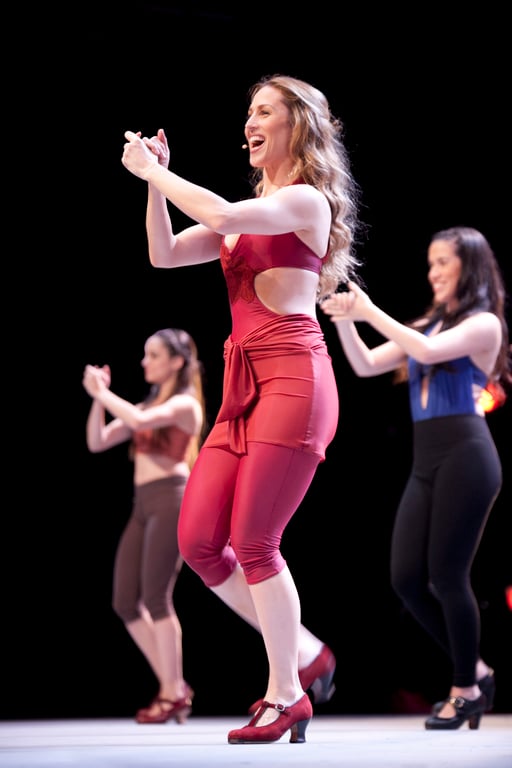
The most obvious physical demand in flamenco comes from the footwork, or zapateado — the percussive striking of the feet against the floor. A sequence of sustained zapateado is genuinely aerobic work. The feet drive rapid, repeated strikes — the planta (ball of the foot), the tacón (heel), and the golpe (a strike of the whole flat foot) — and holding that intensity across a passage raises the breath and the heart rate the way any sustained rhythmic effort does.
Because a dance builds and releases across its length, the demand comes in waves: passages of driving footwork give way to slower, marking sections, then build again. That interval-like rhythm of exertion and relative recovery is precisely what develops cardiovascular endurance over time. The more you practice, the longer you can sustain a passage cleanly before fatigue blurs the compás.
Core and Postural Strength: The Upright Postura
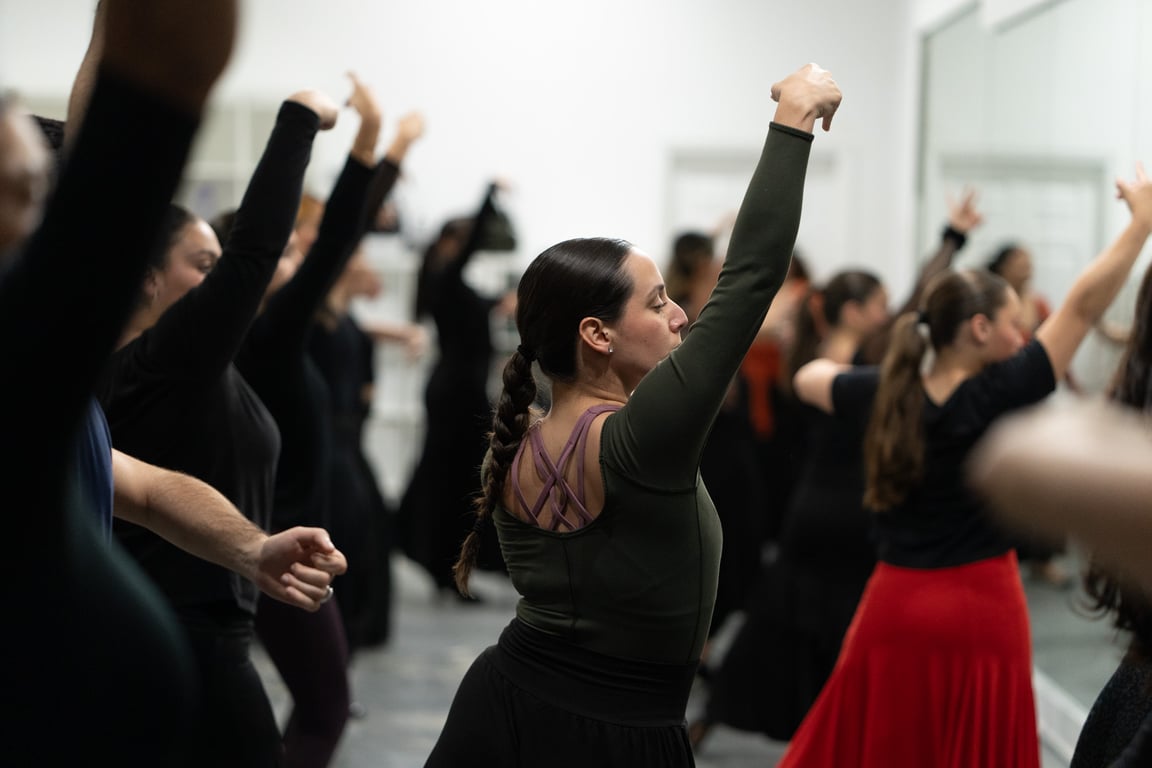
Flamenco's physical work is not confined to the legs. Much of it lives in the torso, and it is easy to overlook because it looks so composed. At the center of the dance is postura — the proud, grounded carriage, spine long and chest open, that a dancer must hold continuously, never stiff and never collapsed.
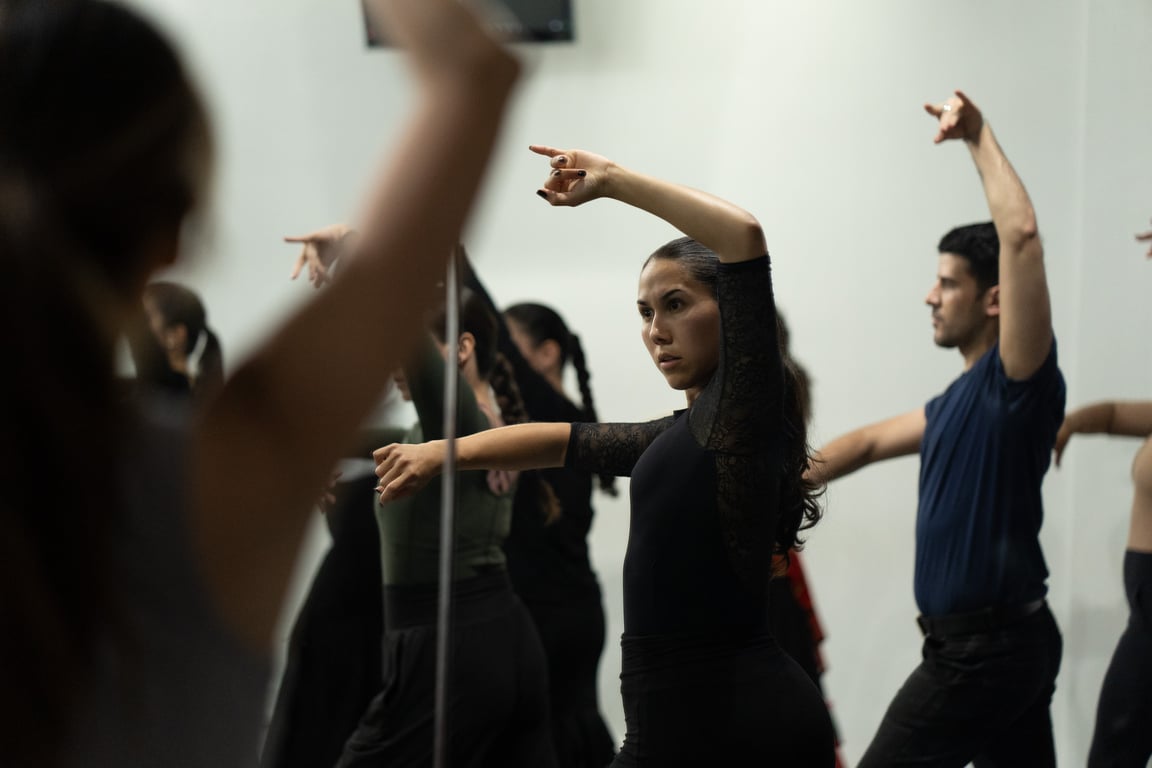
Maintaining that upright line is quiet, sustained work for the muscles of the core and back. It is the kind of postural strength that is built through holding a position under control rather than through explosive movement. Above the waist, the arms move in slow, circular braceo, while the wrists and fingers articulate in floreo. Sustaining that continuous, controlled arm movement, cycle after cycle, engages the shoulders, upper back, and core far more than its unhurried appearance suggests. The result is strength expressed as poise — the ability to stay tall and open while the rest of the body works hard beneath.
Ready to put this into practice?
Train with Siudy Garrido through our On-Demand Flamenco Courses — structured, professional flamenco instruction you can start today.
Lower-Body Strength and Stamina
Beneath the rhythm, the legs are doing a great deal. Flamenco is danced from a grounded, slightly rooted stance, and the repeated drive of the zapateado calls on the calves, ankles, feet, and the larger muscles of the legs again and again. This is where much of the dance's lower-body strength and stamina come from.
Unlike a single burst of effort, footwork asks these muscles to fire cleanly and repeatedly while staying in compás, which builds a particular kind of muscular endurance rather than raw power. Over weeks and months of practice, the legs and feet grow more capable of sustaining that percussive work without losing clarity — and clarity, not speed, is always the goal. Stamina in flamenco is measured by how long you can keep the rhythm clean, not by how fast you can move.
Coordination, Balance, and the Mental Workout
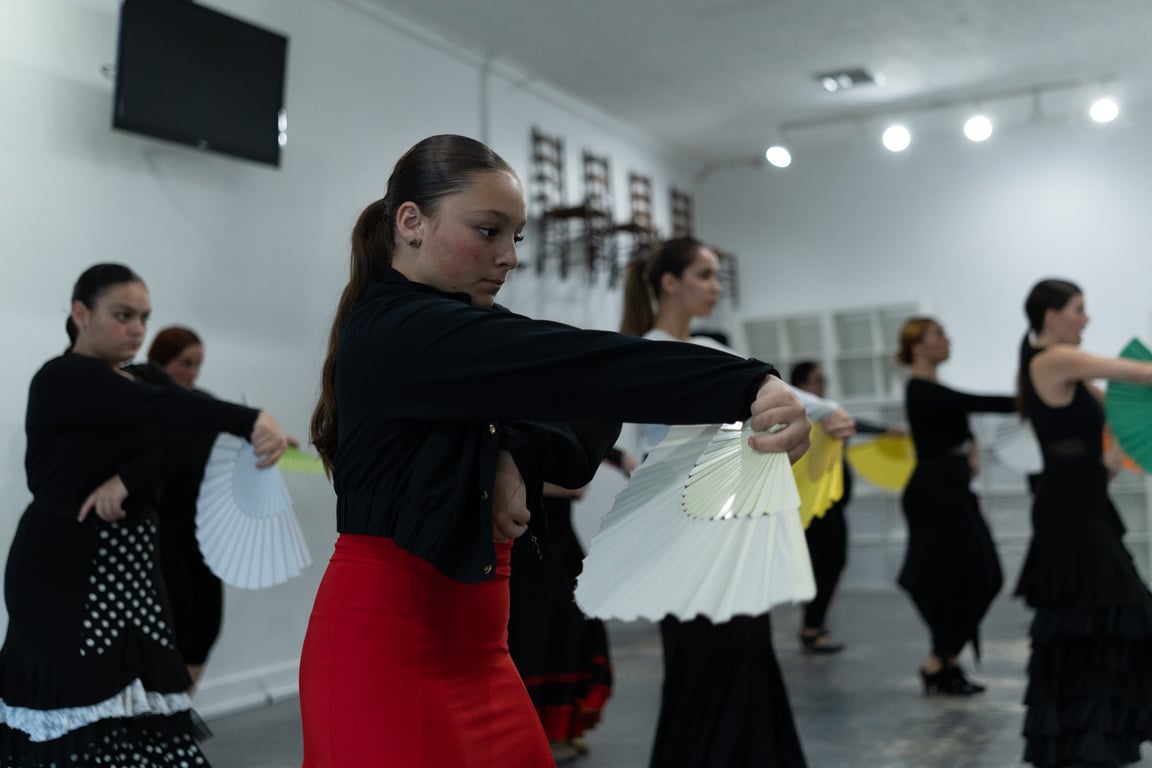
Perhaps the most underrated aspect of flamenco as exercise is how much it trains coordination and balance. A dancer must drive intricate footwork with the legs, hold the upright postura through the torso, and move the arms in independent, flowing braceo — all at the same time, and all locked into a rhythmic cycle. That is a demanding act of full-body coordination that improves markedly with practice.
Balance is woven through all of it. Shifting weight from foot to foot during footwork, turning, and marking steps all require constant, subtle control of the body's center. And because every movement is bound to compás — the rhythmic cycle that organizes a flamenco style, or palo — the mind is always engaged, counting, listening, and anticipating. Flamenco is a rhythmic and mental workout as much as a physical one, which is part of why it can feel so absorbing: there is no room to switch off. This blend of body and mind is one of the many benefits of learning flamenco that reach beyond fitness alone.
Respecting the Demands: Feet, Knees, and Building Gradually
Because it is genuinely physical, flamenco should be approached with respect for what it asks of the body. The zapateado drives repeated percussive impact through the feet and into the floor, and that load is felt in the feet, ankles, and knees. This is not a reason to avoid the art — it is a reason to learn it in the right order.
A sound program builds gradually. Early practice emphasizes clean posture, rhythm, and marking steps at a manageable pace before any pursuit of speed or sustained intensity. Warming up properly, progressing patiently, and giving the body time to adapt over weeks and months are what keep flamenco sustainable. The principle that governs learning flamenco governs its physical side too: consistency beats intensity. A little clean, well-supported practice done regularly builds more — and strains less — than occasional bouts of pushing too hard. If something hurts sharply rather than simply working hard, that is a signal to ease back and check your technique, not to power through.
The Takeaway
So, is flamenco good exercise? Without question. It develops cardiovascular endurance through sustained footwork, core and postural strength through the upright postura and continuous braceo, lower-body strength and stamina through the grounded zapateado, and coordination and balance through the demand of doing all of it at once, in rhythm. Few activities integrate the body and mind so completely — and, unlike a workout done purely for its own sake, flamenco gives that effort a purpose and an artistry that keep you coming back.
If the physical side has piqued your curiosity, the best way to feel it is to begin, at a pace that builds you up rather than wears you down. Explore Siudy Garrido's on-demand flamenco classes, where posture, rhythm, and footwork are taught in the order that lets your body adapt safely, and browse more guides on our flamenco blog to keep learning about the art behind the movement.
Frequently asked questions
Is flamenco good exercise?
What parts of the body does flamenco work?
Is flamenco hard on your body?
Do I need to be fit before starting flamenco?
Start dancing flamenco with Siudy Garrido
On-Demand Flamenco Courses — professional instruction, at your pace.
Explore Courses →