Can Adults Learn Flamenco? Why It Is Never Too Late to Begin
 Part of our guide
How to Learn Flamenco: A Complete Guide for Beginners →
Part of our guide
How to Learn Flamenco: A Complete Guide for Beginners →
It is one of the most common questions we hear, and often the most quietly anxious: is it too late? People discover flamenco in their thirties, forties, fifties, and beyond — moved by a performance, a piece of music, or a longing they cannot quite name — and they wonder whether the art is closed to anyone who did not begin as a child. So let us answer plainly.
Can Adults Learn Flamenco? Yes, and It Is More Common Than You Think
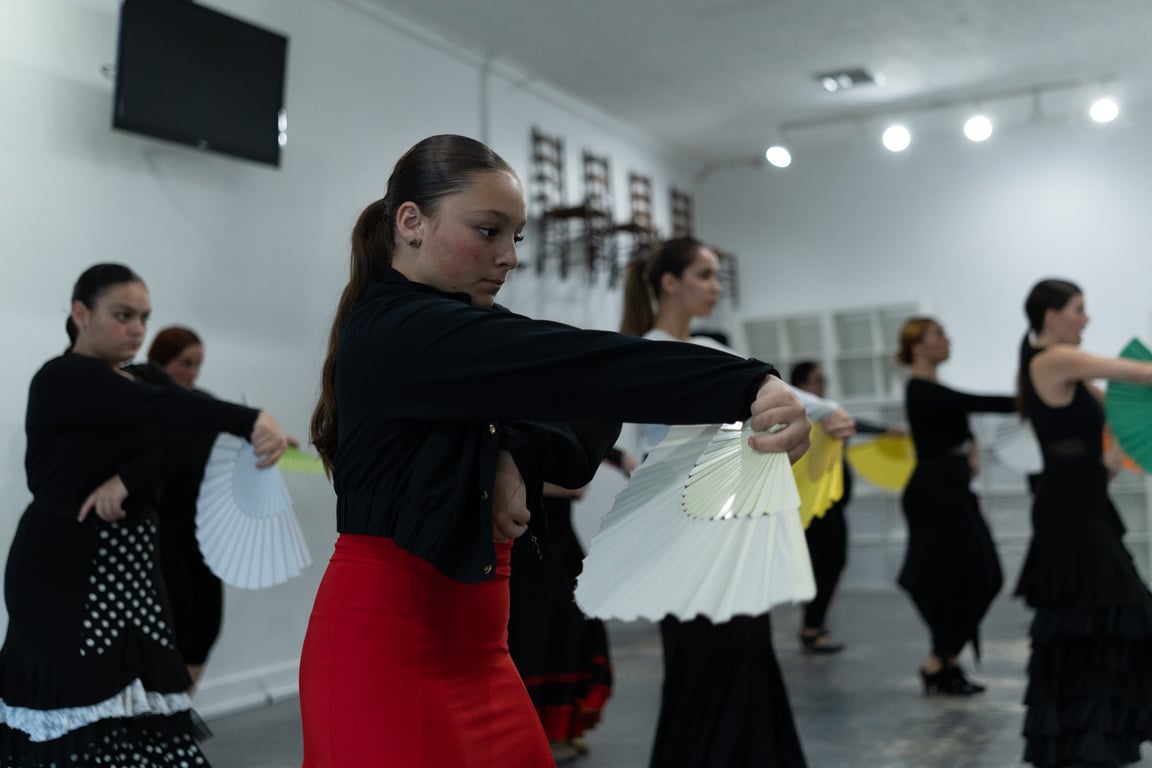
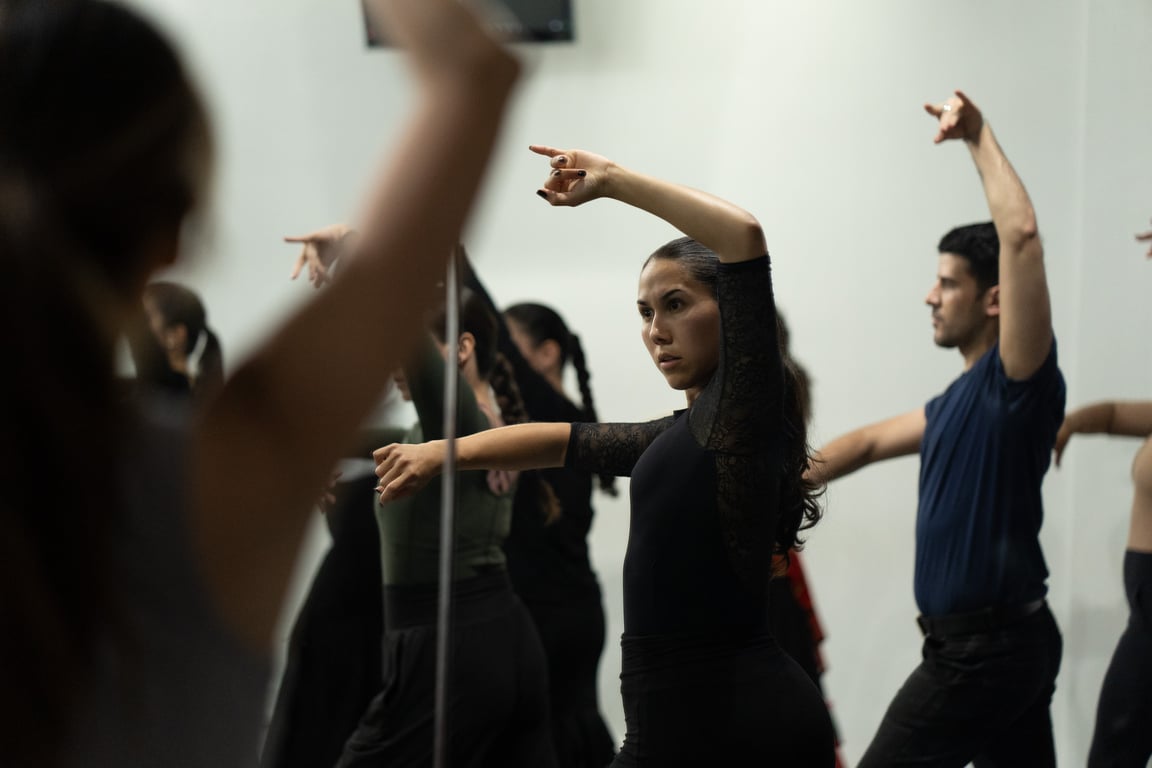
Yes — adults can learn flamenco, and flamenco is very commonly begun in adulthood. There is no age ceiling on this art. Whether you are asking can adults learn flamenco at thirty or well into later life, the honest answer is that maturity is far more of an asset than an obstacle. Flamenco is not a discipline reserved for those who started young; it is a lifelong art that welcomes newcomers at every stage.
Part of what makes flamenco so hospitable to adult beginners is that it was never built for the very young in the first place. It is an art rooted in feeling, in cante (song), and in the slow accumulation of understanding — not in the extreme early physical training some dance forms demand. What flamenco asks of you is patience, attention, and a willingness to grow into it. Those are qualities adults tend to have in abundance.
The Honest Advantages Adults Bring
When people ask can adults learn flamenco, they often expect a list of disadvantages to overcome. In flamenco, that framing is simply wrong. Adults arrive with real, concrete strengths that serve the art directly.
- Discipline and patience. Flamenco rewards deliberate, consistent practice, and it punishes rushing. Adults are usually far better than children at slowing down, repeating a movement until it is clean, and staying with a difficult passage — exactly the habits that build real technique.
- Musicality and listening. Everything in flamenco is bound by compás, the rhythmic cycle that organizes a piece. A grown ear, shaped by years of listening to music, often grasps rhythm and phrasing more readily and can hear how the dancer answers the singer.
- Emotional maturity. Flamenco is an art of feeling as much as of form. The concept of duende — the heightened emotional authenticity that lifts a performance from technically correct to genuinely moving — draws on lived experience. The joys and losses an adult carries are not baggage here; they are precisely the material flamenco transforms into expression.
The poet Federico García Lorca explored duende in a famous 1933 lecture, describing it as something summoned rather than manufactured. You cannot drill it. But you can bring a life's worth of feeling to it — and that is something a young beginner simply does not yet possess.
The Realities: What You Build Gradually
Honesty runs both ways. Flamenco is demanding, and beginning as an adult means building certain physical foundations step by step rather than assuming you already have them. This is not a warning; it is a map. Knowing what develops gradually lets you practice sensibly and avoid frustration.
Ready to put this into practice?
Train with Siudy Garrido through our On-Demand Flamenco Courses — structured, professional flamenco instruction you can start today.
The first is postura — the proud, grounded posture flamenco is known for, with a long spine and open chest, rooted but never stiff. It feels unfamiliar at first and strengthens over time as the supporting muscles wake up. The second is zapateado, the percussive footwork built from clear strikes such as the planta (ball of the foot), tacón (heel), and golpe (a strike of the whole flat foot). Footwork is a matter of clarity and compás long before it is a matter of speed, and it is built slowly, one clean strike at a time. The third is general mobility and stamina, which flamenco develops as a byproduct of the practice itself.
None of this requires you to arrive flexible, fit, or experienced. It requires you to warm up, work at a reasonable pace, and progress in the right order — rhythm and compás first, then posture and arms, then footwork. If you would like a fuller sense of the challenge before you begin, we address it candidly in our guide to whether flamenco is hard to learn. The short version: it is demanding but genuinely learnable, and consistency matters more than intensity.
Why On-Demand Study Suits an Adult Life
The biggest obstacle for most adult beginners is not age at all. It is time. Careers, families, and full schedules make a fixed weekly class at a distant studio hard to sustain — and flamenco, which thrives on regular practice, does not respond well to long gaps.
This is where structured on-demand study fits an adult life so naturally. You can practice when your day allows rather than when a timetable dictates. You can slow a demonstration down, rewatch a difficult passage as many times as you need, and revisit the foundations without feeling that you are holding a class back. Above all, you can build the daily habit that real progress requires, in whatever pockets of time you have. For an adult juggling responsibilities, the freedom to learn at your own pace is not a compromise — it is often what makes learning possible at all.
What matters is that the study still follows a proper sequence rather than a scattering of steps. A serious program teaches rhythm before movement, posture before footwork, and clarity before speed. Our overview of how to learn flamenco lays out that path from your first compás onward, whatever age you begin.
Begin Where You Are
So if you have been quietly wondering can adults learn flamenco, let the answer settle: yes, and the age you happen to be is not a reason to hesitate. It is simply the age at which you begin. The art has always welcomed those who come to it later, and the discipline, musicality, and depth of feeling you bring as an adult are exactly what it draws on. The only real requirement is that you start — and then keep returning, patiently, cycle by cycle.
When you are ready to take the first step, explore on-demand flamenco classes with two-time Latin Grammy–nominated artist Siudy Garrido, designed to be studied at your own pace, in the right order, from wherever you are. For more on the culture, technique, and history behind the art, browse the full flamenco blog. It is never too late to answer flamenco's call — only too soon to assume you cannot.
Frequently asked questions
Can adults learn flamenco, or is it too late to start?
What advantages do adults bring to learning flamenco?
How long does it take an adult to learn flamenco?
Do I need to be flexible or fit to start flamenco as an adult?
Start dancing flamenco with Siudy Garrido
On-Demand Flamenco Courses — professional instruction, at your pace.
Explore Courses →