The Flamenco Cajon: History, Sound, and Role
 Part of our guide
Flamenco Music and Instruments: The Sound Behind the Dance →
Part of our guide
Flamenco Music and Instruments: The Sound Behind the Dance →
Among the sounds of a modern flamenco performance, few are as immediately recognizable as the dry, resonant snap of a wooden box being struck by a pair of hands. That box is the cajon, and its story holds a surprise: for all its presence in flamenco today, it is not an old Spanish instrument at all. It is a relative newcomer, and it comes from the other side of the Atlantic.
This guide, part of our broader look at flamenco music and its instruments, traces how the flamenco cajon arrived, why it took hold so completely, how it is played, and the part it plays within the ensemble. Understanding it reveals something important about flamenco itself: a living art that absorbs new voices when they serve its deepest rhythms.
What Is the Flamenco Cajon?
The cajon — the word simply means “box” or “crate” in Spanish — is a percussion instrument built as a hollow wooden box, typically with one thinner face that serves as the striking surface. The player sits directly on top of it and strikes the front face with the hands, so that the instrument functions as both seat and drum. It is Peruvian in origin, developed in the coastal traditions of Peru long before it ever reached a flamenco stage.
What matters for our purposes is how recently it became part of flamenco. Unlike the guitar or the human voice, both woven into the art across centuries, the cajon flamenco entered the tradition within living memory. Its adoption is one of the clearest examples of flamenco evolving in the modern era rather than remaining fixed in the past.
How the Cajon Came to Flamenco
The introduction of the cajon to flamenco can be dated with unusual precision to 1977. In that year the great guitarist Paco de Lucia encountered the instrument in Lima, Peru, while touring in South America. Traveling with him was the percussionist Rubem Dantas, a member of Paco de Lucia's group, and it was Dantas who spotted the instrument's potential for flamenco and helped bring it into the fold.
The cajon made its first recorded appearance on Paco de Lucia's 1981 album Solo quiero caminar (“I only want to walk”). From that recording the instrument spread outward through the flamenco world with remarkable speed. Within a generation, a Peruvian box drum encountered on a single tour had become a fixture of the art. This is a well-documented chapter in flamenco's recent history, and it belongs to the wider story of how Paco de Lucia opened the tradition to new sounds without abandoning its core.
Why the Cajon Became Standard
A new instrument does not conquer a centuries-old tradition by novelty alone. The flamenco cajon became the standard percussion instrument of the genre because it fit what flamenco already was. Its sound echoes the percussive language that has always lived at the heart of the art.
Ready to put this into practice?
Train with Siudy Garrido through our On-Demand Flamenco Courses — structured, professional flamenco instruction you can start today.
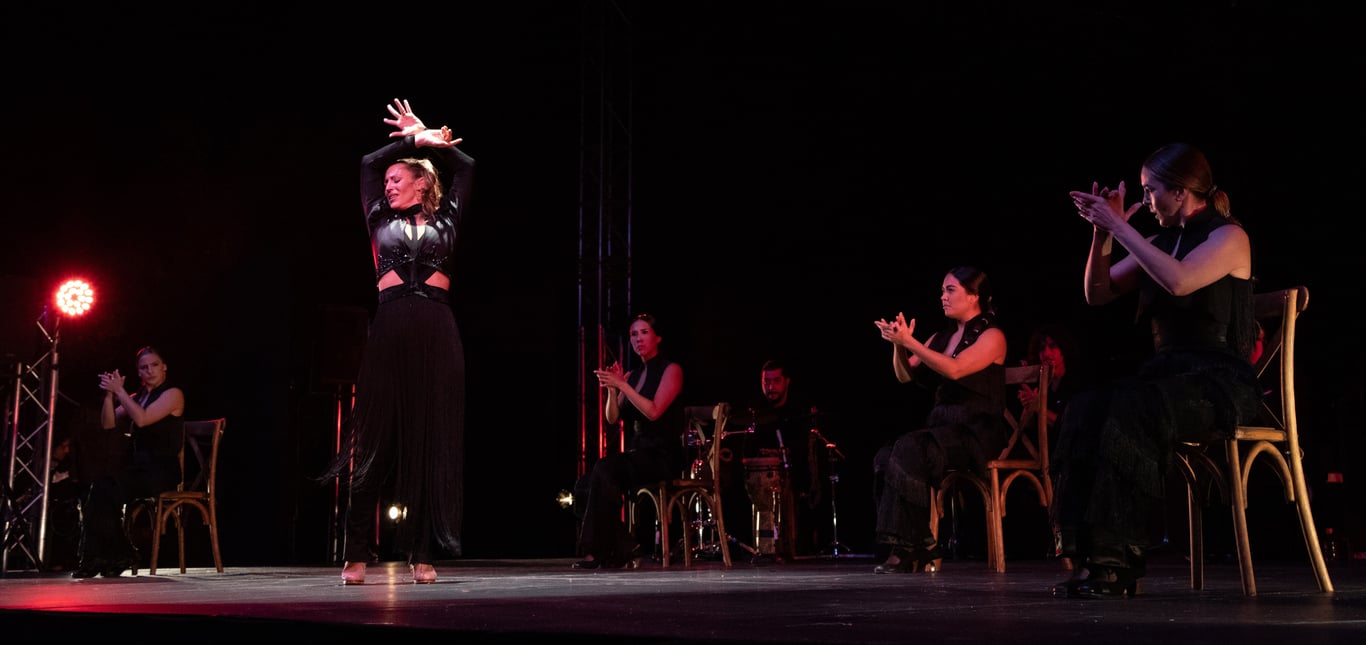
Consider the two percussive elements that predate the cajon by generations. The first is zapateado, the dancer's percussive footwork — the storm of heel and toe strikes that turns the feet into a drum. The second is palmas, the rhythmic hand-clapping that keeps the pulse of any flamenco gathering, whether the deep muffled palmas sordas or the sharp palmas claras. The cajon's tones sit naturally alongside both: its bright edge answers the crack of a heel and a crisp clap, while its lower voice grounds the compas beneath them.
Because it reinforces rather than replaces these sounds, the cajon slipped into the ensemble as if it had always belonged. It offered flamenco a portable, expressive drum that could hold and drive the compas — the rhythmic cycle that organizes every flamenco piece — without introducing anything that felt foreign to the tradition. For a deeper look at that rhythmic foundation, our guide to palmas and compas explains how flamenco's pulse is built and kept.
How the Cajon Is Played
The physical technique of the cajon is as direct as the instrument itself. The player sits astride the box, and from that seated position strikes the front face with the hands and fingers. There are no sticks and no pedals; the hands do everything, which is part of why the cajon feels so at home beside palmas.
The variety in its sound comes from where and how the face is struck. A blow near the top edge produces a bright, cutting, high-pitched crack, while a strike toward the center of the face yields a deeper, rounder, more resonant tone. By moving between these zones and varying the force and shape of the hand, a single player can lay down a full rhythmic line — sharp accents, driving pulses, and softer fills — all on one wooden box. It is this range, drawn from such a simple object, that makes the cajon so expressive a partner for the dancer's feet and the clapping hands.
The Cajon's Role in the Cuadro
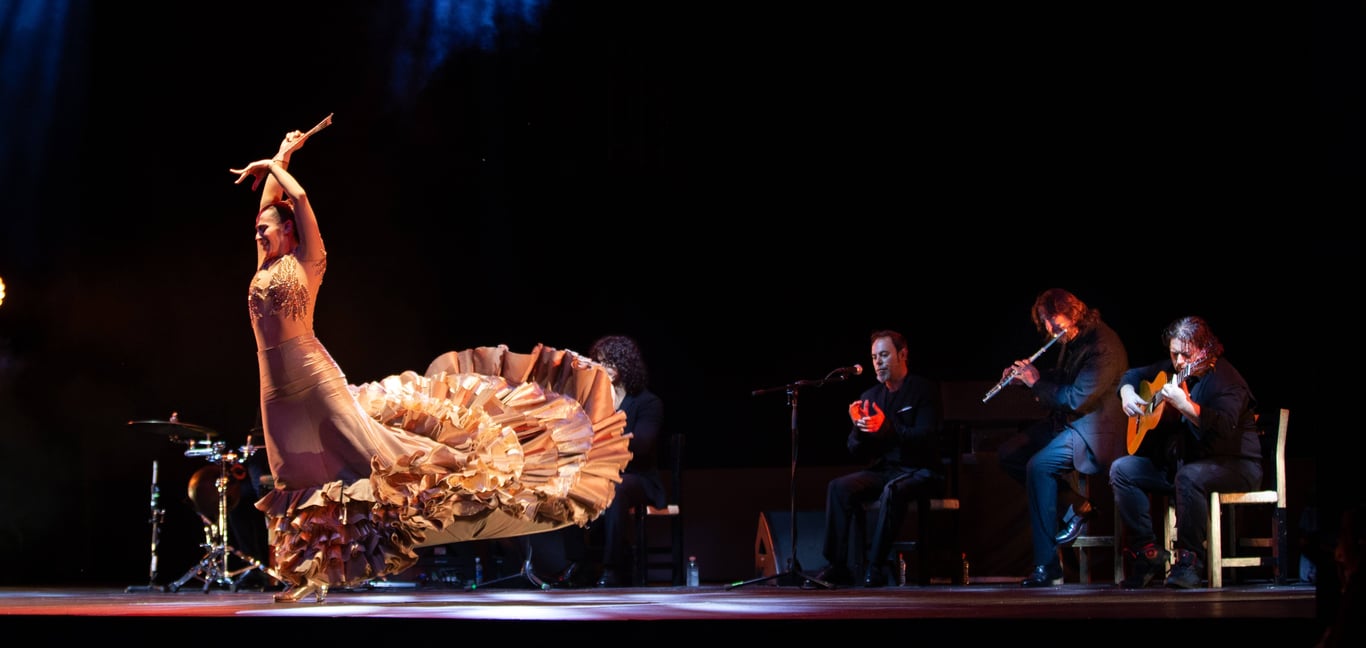
In performance, the cajon takes its place within the cuadro flamenco — the flamenco ensemble, the group of artists who create a performance together. A traditional cuadro centers on the singer, the guitarist, and the dancer, supported by palmas; the cajon joins this gathering as a dedicated percussive voice.
Within the cuadro, the cajon's task is to serve the compas and the collective feeling of the piece. It reinforces the rhythm that binds singer, guitarist, and dancer, marking accents and underlining the momentum of a bulerias or the gravity of a slower form. Crucially, it does not compete with the dancer's zapateado but converses with it, thickening the percussive texture while leaving room for the feet to speak. In the hands of a sensitive player, the cajon becomes another listening member of the ensemble, responding to the singer and dancer just as the guitar does. To see how it fits alongside the voice, the guitar, and palmas, our overview of what instruments are used in flamenco lays out the full ensemble.
A Tradition That Keeps Growing
The rise of the flamenco cajon is a reminder that flamenco is not a fixed relic but a living art, still capable of taking in a new voice and making it wholly its own. A box drum from the coast of Peru, encountered on a single tour in 1977, now sounds as natural in a flamenco performance as the guitar beside it — because it answered a rhythmic need that was already there.
To hear how percussion, footwork, and compas work together as one language, explore Siudy Garrido's on-demand flamenco classes, where rhythm is taught as the foundation of everything that follows, and browse more guides on our flamenco blog to keep going deeper into the music behind the dance.
Frequently asked questions
What is a flamenco cajon?
Who brought the cajon into flamenco?
Why did the cajon become standard in flamenco?
How is the flamenco cajon played?
Start dancing flamenco with Siudy Garrido
On-Demand Flamenco Courses — professional instruction, at your pace.
Explore Courses →