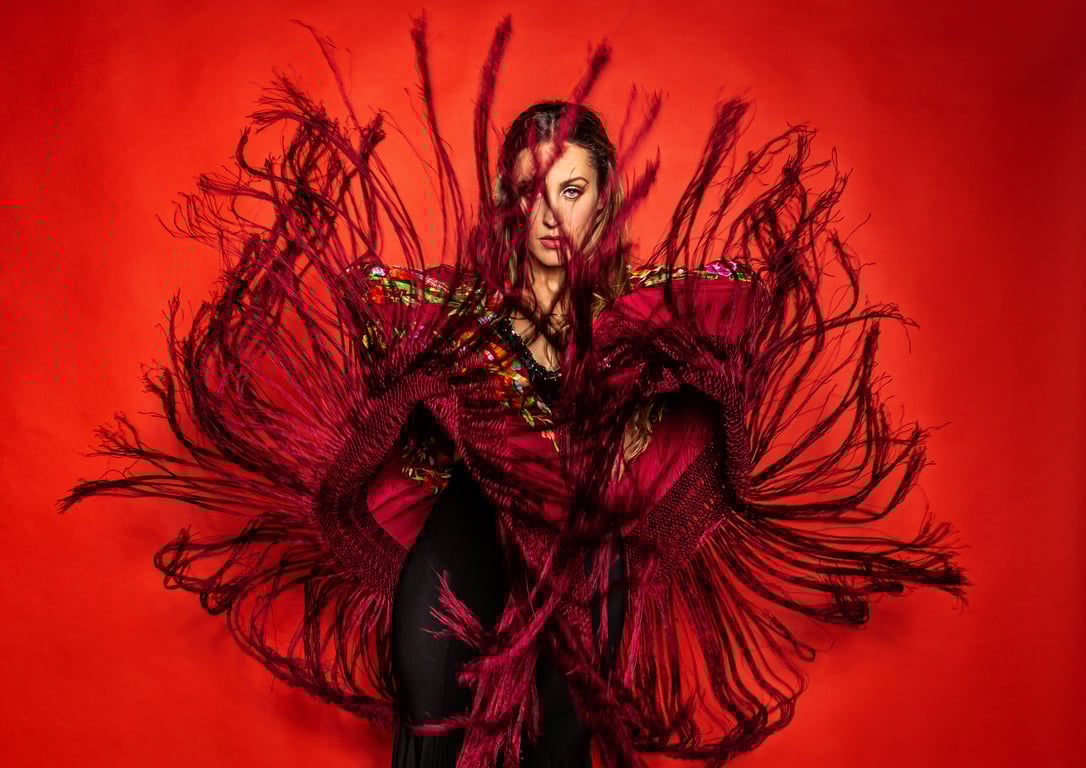
Flamenco Music and Instruments: The Sound Behind the Dance
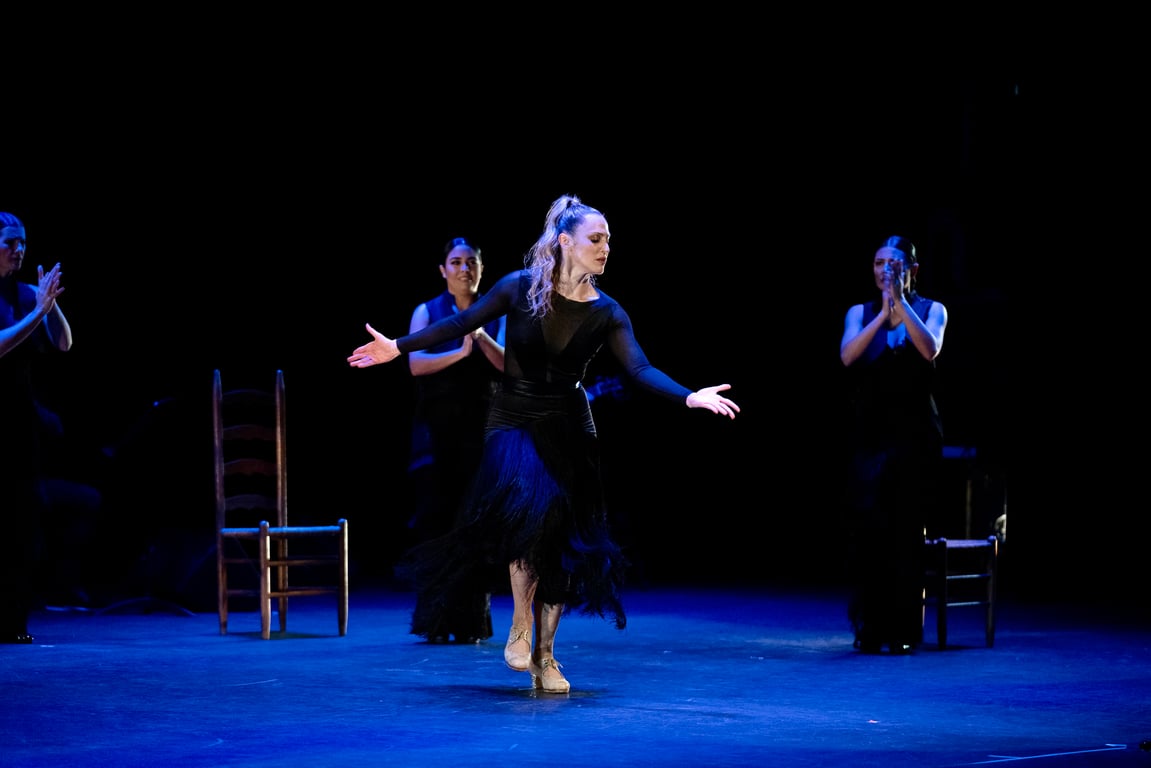
When people picture flamenco, they usually see the dancer first — the driving feet, the sculpted arms, the burning gaze. But close your eyes at a genuine flamenco performance and something else takes over: a voice that seems to tear straight from the chest, a guitar answering it phrase for phrase, and hands clapping a rhythm so precise it feels like a second heartbeat. That is the sound of flamenco, and understanding it changes how you hear and feel everything else the art does.
This guide walks through flamenco music from the inside out — the voice, the guitar, the percussion, and the invisible framework of rhythm that binds them. Flamenco is a living art from Andalusia in southern Spain, inscribed by UNESCO in 2010 on the Representative List of the Intangible Cultural Heritage of Humanity. It is not a soundtrack the dancer performs over. It is a conversation, and the music is more than half of it.
How Flamenco Music and Dance Interlock
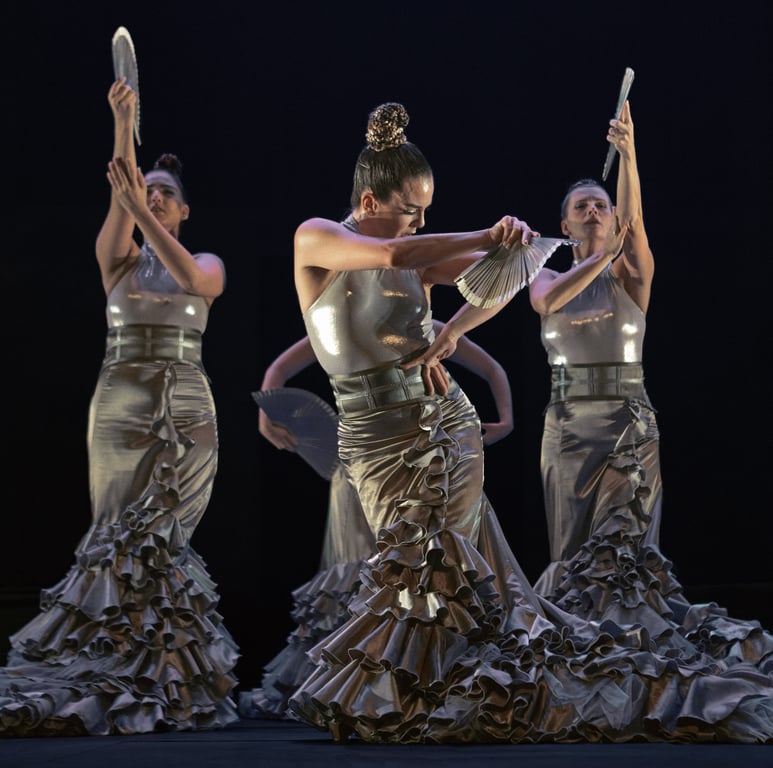
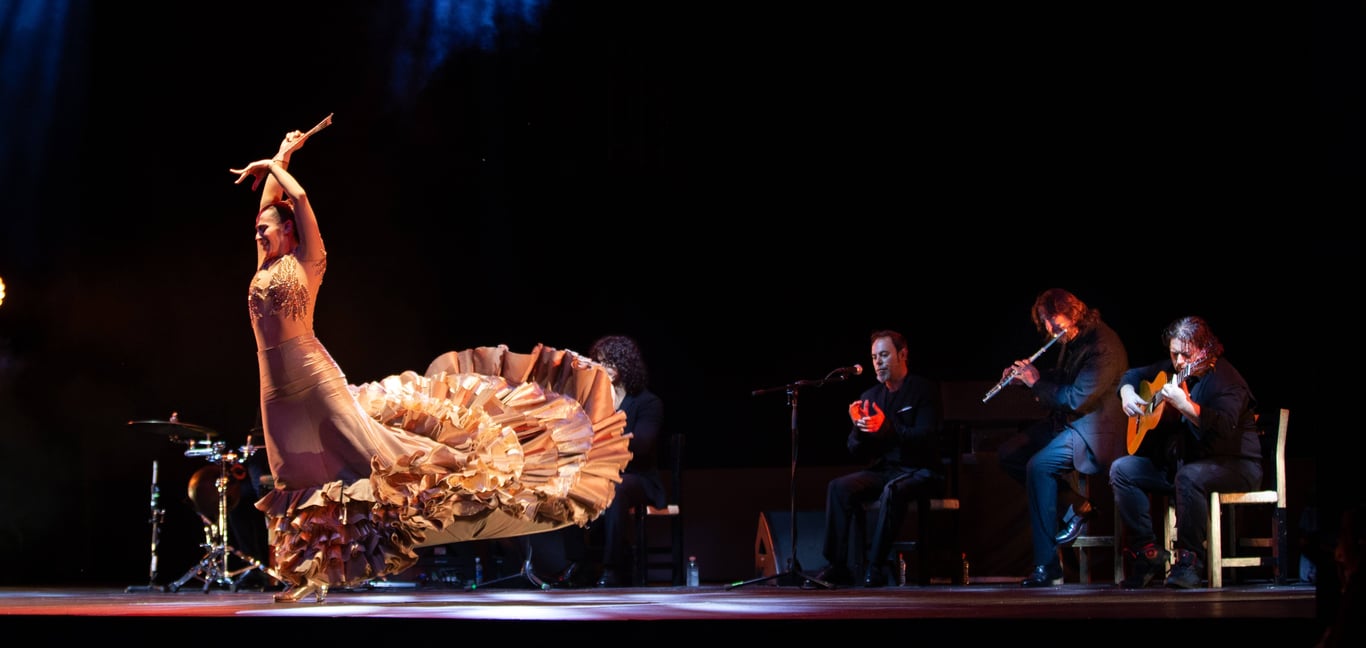
To understand flamenco music, start with the three interwoven elements that make up flamenco itself: cante (song), toque (guitar and musicianship), and baile (dance). These are not separate acts happening at the same time — they listen and respond to one another in real time. The singer sets an emotional weather; the guitarist shapes the harmony and pulse; the dancer answers with body, arms, and feet. For a fuller introduction to the art as a whole, see our overview of what flamenco is.
What allows three artists to improvise together without falling apart is a shared rhythmic framework called compás. Compás is the repeating rhythmic cycle that organizes a flamenco piece — the grid every voice, string, and clap locks into. Get the compás right and the music has a home; lose it and even beautiful playing comes undone. We will return to it at the end, because it is the thread that ties every instrument together.
Cante: The Emotional Heart of Flamenco Music
If flamenco music has a center, it is the voice. Cante — the song — carries much of flamenco's emotion, and in traditional baile the dancer responds to the singer rather than the other way around. The cantaor or cantaora does not aim for the polished sweetness prized in other vocal traditions. Flamenco singing is raw, cracked, and urgent by design, built to deliver the feeling of a palo — grief, longing, defiance, or joy — with unmistakable directness.
This is why so much of the art traces back to the voice. The dancer's phrasing, the guitarist's falsetas, the very structure of a piece all grow up around what the singer is expressing. To go deeper into how the song works and why it sits at the core of the tradition, read our guide to cante, the flamenco song.
Cante also carries flamenco's history. The art grew out of a fusion of Andalusian folklore, Moorish and Arabic melodies, and Gitano (Roma) rhythms, with Jewish and Sephardic influence layered in — and much of that inheritance lives in the voice. The Roma, who reached the Iberian Peninsula in the early fifteenth century, contributed a great deal of flamenco's expressiveness and vocal technique. When flamenco first became public and professional, in the cafés cantantes of the late nineteenth century, it was singers who headlined; the acclaimed cantaor Silverio Franconetti ran one of the most celebrated of these venues in Seville. Song, in other words, is not just the emotional heart of flamenco music today — it is where the tradition began.
Toque: The Flamenco Guitar
The instrument most people associate with the sound of flamenco is the flamenco guitar. Though it looks much like its classical cousin, it is built and played very differently, and those differences are what give flamenco its bright, percussive bite.
How a Flamenco Guitar Differs From a Classical Guitar
A flamenco guitar is generally lighter than a classical guitar, with a construction that favors attack, immediacy, and a crisp, punchy tone over the deep sustain a classical player wants. Most flamenco guitars also carry a golpeador — a tap plate fitted to the soundboard. It is there for a practical reason: flamenco guitarists strike the body of the instrument with their fingers, and the golpeador protects the top from these golpes, or taps, which become part of the rhythm itself.
Core Flamenco Guitar Techniques
The tocaor or tocaora draws on a distinctive toolkit of right-hand techniques. A few form the backbone of the style:
Ready to put this into practice?
Train with Siudy Garrido through our On-Demand Flamenco Courses — structured, professional flamenco instruction you can start today.
- Rasgueado — the rolling, fan-like strumming, often produced by flicking the fingers out in rapid succession, that gives flamenco its driving momentum.
- Picado — fast, articulated single-note runs, usually played with alternating fingers, used for melodic lines and scale passages.
- Tremolo — a rapid repetition of a single note that creates the illusion of a sustained, shimmering melody over the bass.
- Alzapúa — a thumb technique that combines single notes and strummed chords for a powerful, percussive attack.
- Golpe — the finger tap on the golpeador that adds a percussive accent, blurring the line between melody instrument and drum.
Together these techniques let a single guitarist carry harmony, melody, and rhythm at once — which is why the flamenco guitar can sound like a small ensemble in one pair of hands. Historically the guitarist's job was to accompany the singer and the dancer, holding the compás and the harmony while the voice took the spotlight. Over the twentieth century the toque also grew into a solo art in its own right, capable of carrying an entire piece on the strength of falsetas — the guitarist's melodic phrases — without a voice at all. If you want to start playing, our flamenco guitar guide for beginners breaks down where to begin.
Percussion: Palmas, Jaleo, and the Cajón
Flamenco's percussion is, first and foremost, made by the body. Long before any drum joined the ensemble, rhythm was kept by hands and voices — and it still is.
Palmas and Jaleo
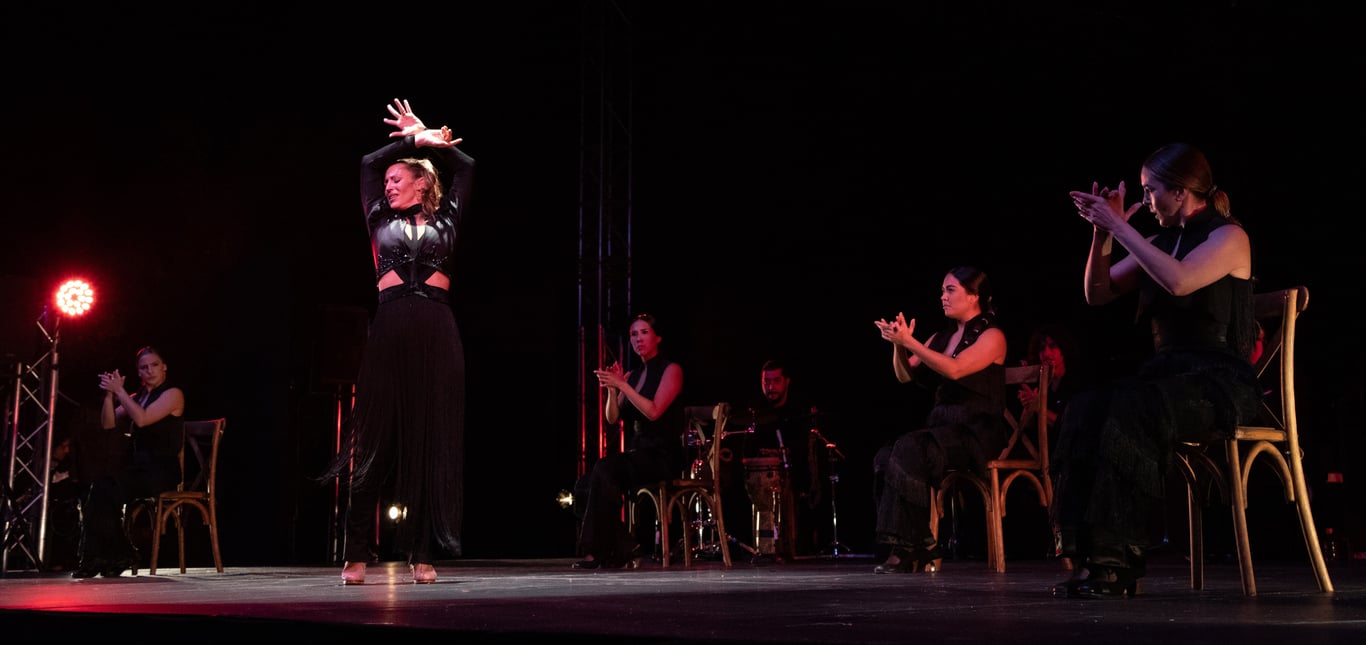
Palmas — rhythmic hand-clapping — are the living pulse of flamenco, and clapping the compás well is a genuine skill in its own right. There are two broad kinds: palmas sordas, muffled and deep, played with cupped hands for a soft, low sound; and palmas claras, sharp and crisp, cutting through the texture with a bright crack. Surrounding the clapping is jaleo — the encouraging shouts of ¡olé!, ¡vamos!, and ¡agua! that lift the performers and mark the intensity of a moment. Because palmas are the foundation every other instrument leans on, we cover them in depth in our guide to palmas and compás.
The Cajón: A Peruvian Box Drum Adopted by Flamenco
The one drum you are almost certain to see today is the cajón, a Peruvian box drum the player sits on and strikes with the hands. It sounds so native to flamenco that many listeners assume it has always been there, but it is a relatively recent arrival. Paco de Lucía encountered the cajón in Lima in 1977, and Rubem Dantas, the percussionist in his sextet, spotted its potential for the flamenco sound. It was first recorded on Paco de Lucía's 1981 album Solo quiero caminar, and within a generation it became a standard part of flamenco percussion. The cajón is a reminder that flamenco, for all its deep roots, is a living art that keeps absorbing new voices.
A Note on Castanets
Many newcomers expect castanets — castañuelas or palillos — to be central to flamenco music. They do appear in some folkloric styles and in certain school or academy pieces, and you will see them in related Spanish dance. But they are not core to traditional, cante-driven flamenco, where the rhythm lives in the hands, the feet, the guitar, and the voice. If you have wondered which instruments genuinely belong to the art, our dedicated guide to what instruments are used in flamenco sorts the essential from the merely associated.
Compás: How It All Holds Together
Everything above — the voice, the guitar, the clapping, the cajón — only becomes flamenco when it is bound by compás. Compás is the rhythmic cycle that organizes a piece, and each palo, or flamenco style, has its own. It is the shared clock that lets a singer, a guitarist, a percussionist, and a dancer improvise together and still land as one.
Many palos share a distinctive twelve-beat cycle — among them soleá, alegrías, and bulerías — which differ less in the count itself than in tempo and character: the solemn weight of soleá, the bright lift of alegrías, the fast syncopation of bulerías. Others, such as tangos, sit in a simpler four-count feel, which is why they are often where beginners start. Learning to recognize these cycles is the key that unlocks how flamenco music is actually organized. To explore the styles themselves, see our guide to the palos of flamenco.
Flamenco Songs and the Families of Palos
When people ask about flamenco songs, they are really asking about the palos. There is no single flamenco melody the way there is a national anthem; instead there is a family of forms, each with its own compás, tempo, and emotional world, and every performance is built on one of them. Knowing a few by name makes the whole art easier to follow.
- Soleá — slow, solemn, and majestic, its name linked to soledad, solitude; often described as a "mother" form of flamenco.
- Alegrías — joyful and bright, associated with the city of Cádiz.
- Bulerías — the fastest and most festive, full of syncopation, and a favorite for closing a performance.
- Siguiriyas — grave and tragic, with a distinctive accent pattern, among the most intense of all the palos.
- Tangos — a straightforward four-count palo (not to be confused with the Argentine tango), and a common entry point for newcomers.
Each of these carries its own feeling in the voice, its own falsetas on the guitar, and its own way of clapping the palmas — which is exactly why compás and the palos are inseparable from the instruments that give flamenco music its sound.
Hearing Flamenco With New Ears
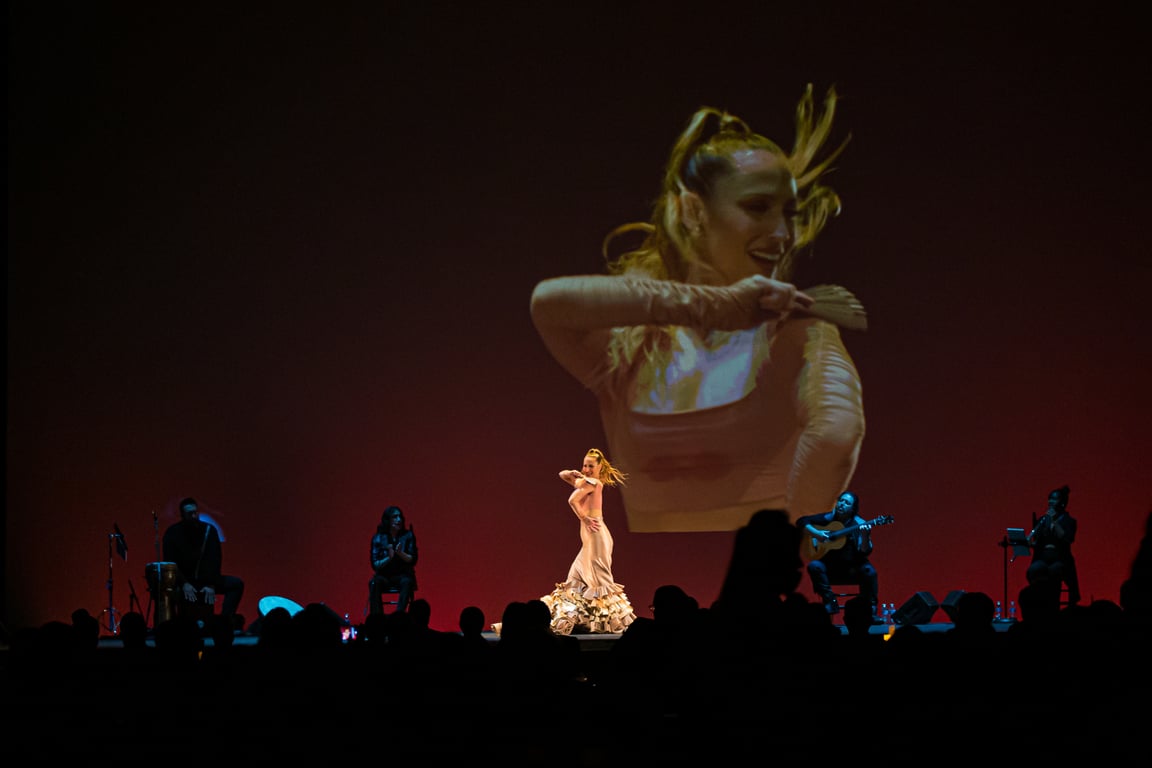
Once you know what to listen for, a flamenco performance opens up. You start to hear the singer set the emotion, the guitar answer with rasgueado and picado, the palmas and cajón hold the compás, and the dancer respond to all of it at once — four artists in a single, breathing conversation. The instruments of flamenco are not a backdrop. They are the art, sounded out loud.
The best way to truly understand this sound is to step inside it. Explore Siudy Garrido's on-demand flamenco classes to learn how rhythm, cante, and movement fit together from your very first compás, and browse more guides on our flamenco blog to keep going deeper into the music behind the dance.
Frequently asked questions
What instruments are used in flamenco?
What is a flamenco guitar?
Is flamenco always sung?
What is the cajon and how did it join flamenco?
What holds flamenco music together?
Start dancing flamenco with Siudy Garrido
On-Demand Flamenco Courses — professional instruction, at your pace.
Explore Courses →