What Instruments Are Used in Flamenco? A Clear Guide
 Part of our guide
Flamenco Music and Instruments: The Sound Behind the Dance →
Part of our guide
Flamenco Music and Instruments: The Sound Behind the Dance →
Ask someone to name a flamenco instrument and most will say the guitar. That is not wrong — but it is only part of the story, and it skips the instrument flamenco actually begins with. So what instruments are used in flamenco? The honest answer is that flamenco's core sound is built as much from the body as from any wood-and-string instrument: a voice, a guitar, two clapping hands, and a pair of drumming feet, with one adopted drum arriving surprisingly late in the tradition.
This guide sorts the essential from the merely associated, so you can hear a performance the way flamenco artists do. It expands on our overview of flamenco music and instruments, where the whole sound is mapped out — start there if you want the big picture first. Flamenco is a living art from Andalusia in southern Spain, inscribed by UNESCO in 2010 on the Representative List of the Intangible Cultural Heritage of Humanity, and its instruments reflect that living, evolving character.
What Instruments Are Used in Flamenco: The Short Answer
Before we go deep, here is the map. When people ask what instruments are used in flamenco, the core set is smaller and more surprising than they expect:
- The voice (cante) — the primary instrument, carrying most of flamenco's emotion.
- The flamenco guitar (toque) — melody, harmony, and rhythm in one pair of hands.
- Palmas — rhythmic hand-clapping that keeps the pulse.
- The feet (zapateado) — the dancer's footwork, played as percussion.
- The cajon — a Peruvian box drum, adopted into flamenco in the late 1970s.
Notice what is missing from that list: castanets. We will come back to why. First, the instrument everything else is built around.
The Voice: Flamenco's Primary Instrument
If you want to know what instruments are used in flamenco and only remember one, remember the voice. Cante — the song — carries much of flamenco's emotion, and it is the center the rest of the art grows around. In traditional baile, the dancer responds to the singer, not the reverse; the guitarist accompanies and answers the voice; even the rhythm of a piece is shaped by what the singer is expressing.
Flamenco singing does not aim for polished sweetness. The cantaor or cantaora sings raw, cracked, and urgent by design, delivering the feeling of a given form — grief, longing, defiance, or joy — with unmistakable directness. Much of this expressiveness and vocal technique traces back to the Roma (Gitanos), who reached the Iberian Peninsula in the early fifteenth century and contributed a great deal to flamenco as it took shape from a fusion of Andalusian folklore, Moorish and Arabic melodies, and Gitano rhythms. To treat the voice as the primary instrument is not a poetic flourish — it is how flamenco is actually organized.
The Flamenco Guitar (Toque)
The guitar is the instrument most listeners picture, and for good reason: a single flamenco guitarist can hold harmony, melody, and rhythm all at once. The flamenco guitar looks like its classical cousin but is built differently — generally lighter, favoring a bright, immediate, percussive attack over deep sustain.
Its most telling feature is the golpeador, a tap plate fitted to the soundboard. It is there because flamenco guitarists strike the body of the instrument with their fingers; the golpeador protects the top from these golpes, or taps, which become part of the rhythm itself. Add techniques like rasgueado (rolling strums), picado (fast single-note runs), alzapua (a percussive thumb technique), and tremolo, and you have an instrument that can sound like a small ensemble on its own. Historically the guitar accompanied the singer and dancer; over the twentieth century it also grew into a solo art. If you want to pick one up yourself, our flamenco guitar guide for beginners shows where to start.
Palmas and the Feet: Percussion From the Body
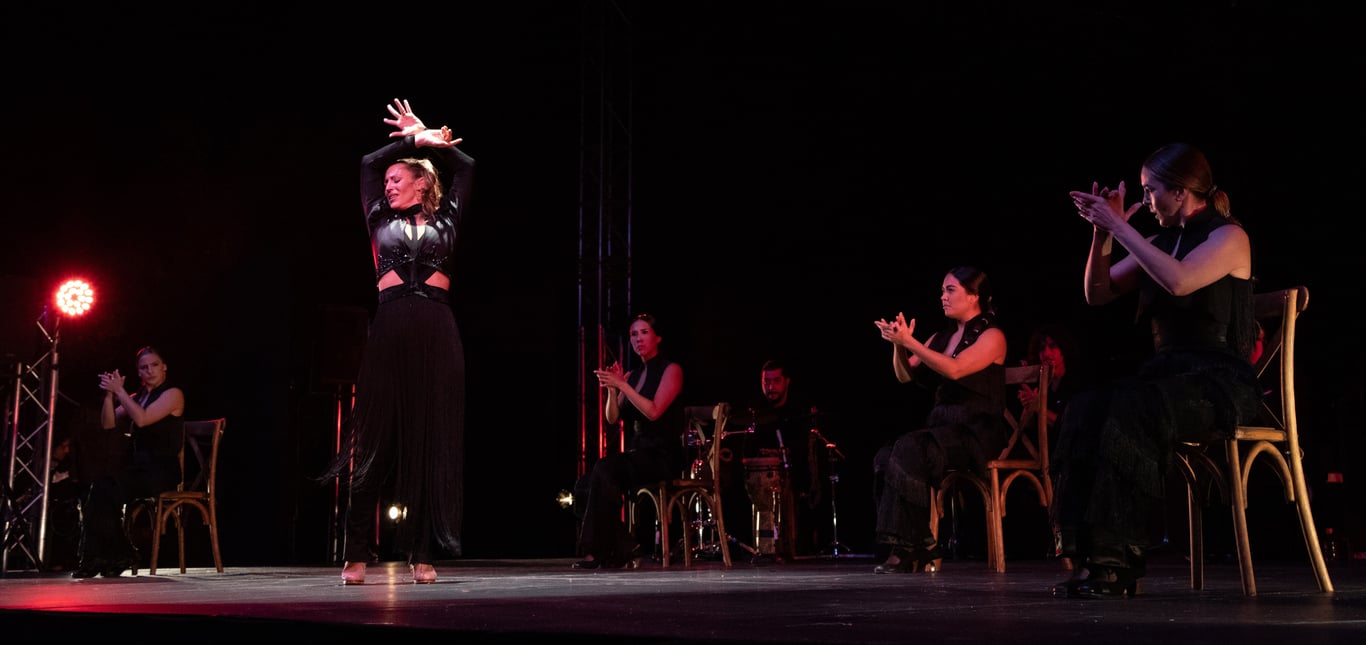
Long before any drum joined flamenco, the rhythm was kept by the body — and it still is. Two of flamenco's most important instruments are not objects at all: the hands and the feet.
Ready to put this into practice?
Train with Siudy Garrido through our On-Demand Flamenco Courses — structured, professional flamenco instruction you can start today.
Palmas: Rhythmic Hand-Clapping
Palmas are the living pulse of flamenco, and clapping the rhythm cleanly is a genuine skill. There are two broad kinds: palmas sordas, muffled and deep, played with cupped hands for a soft, low sound; and palmas claras, sharp and crisp, cutting through the texture with a bright crack. Skilled performers weave the two together, and surrounding it all is jaleo — the encouraging shouts of ole, vamos, and agua that lift the artists and mark a peak moment. Palmas are the foundation the other instruments lean on to stay together.
Zapateado: The Feet as Percussion
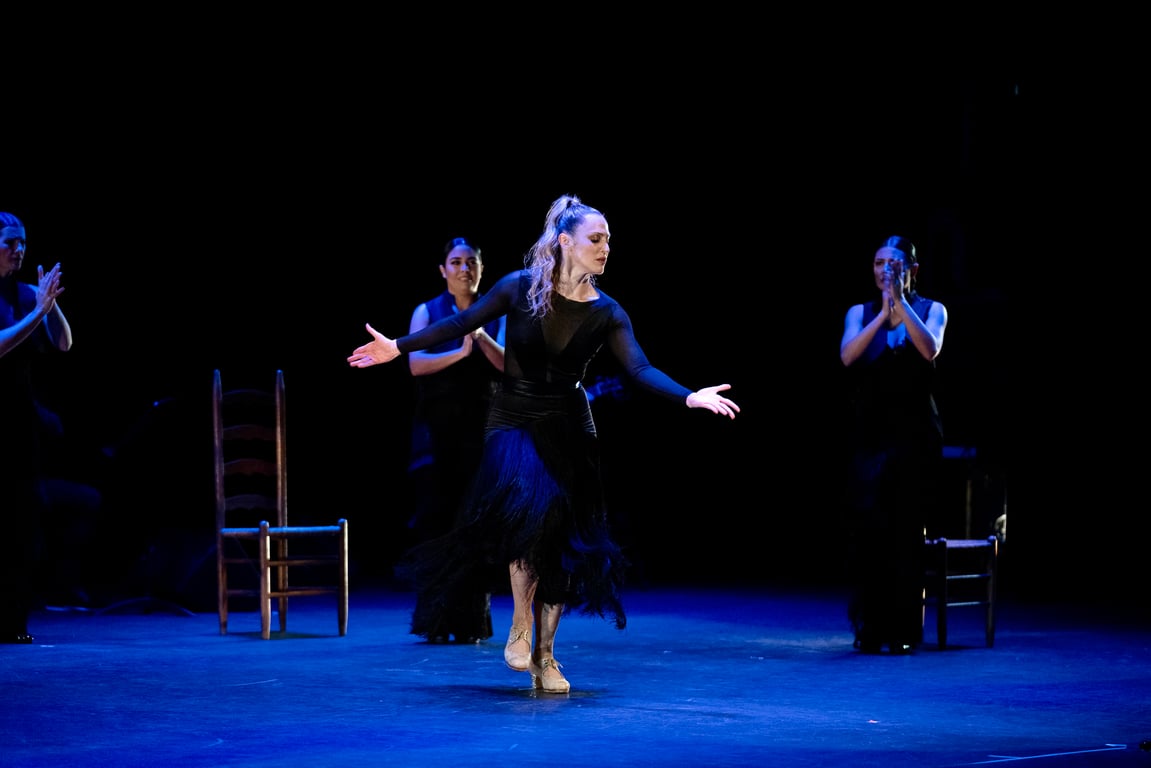
The dancer's feet are an instrument too. Zapateado — percussive footwork — turns the floor into a drum, built from core strikes: the planta (ball of the foot), the tacon (heel), the golpe (the whole flat foot at once), and the punta (the toe tip). The goal is always clarity and locking into the rhythm, never speed for its own sake. When a dancer breaks into an escobilla, the footwork showcase of a dance, the feet are carrying the percussion as surely as any drum would.
The Cajon: Flamenco's Adopted Drum
Ask what instruments are used in flamenco today and you will almost always see a cajon — a Peruvian box drum the player sits on and strikes with the hands. It sounds so native that many assume it has always been there. It has not.
Paco de Lucia encountered the cajon in Lima in 1977, and Rubem Dantas, the percussionist in his sextet, spotted its potential for the flamenco sound. It was first recorded on Paco de Lucia's 1981 album Solo quiero caminar, and within a generation it became a standard part of flamenco percussion. The cajon is a perfect reminder that flamenco, for all its deep roots, is a living art that keeps absorbing new voices — a relatively recent arrival that now feels essential.
Why Castanets Are Not Core to Flamenco
Here is the myth worth correcting. Many newcomers assume castanets — castanuelas or palillos — are central to flamenco music, probably because they appear so often in images of Spanish dance. In truth, they are not core to traditional, cante-driven flamenco.
Castanets do appear in some folkloric styles, in certain school or academy pieces, and in related Spanish dance forms, so it is fair to say they live near flamenco. But in the heart of the tradition, the percussion belongs to the voice, the guitar, the hands, and the feet. When you strip a flamenco performance down to its essentials, the castanets are the first thing to fall away — and nothing is lost. Keeping that distinction clear is part of hearing flamenco accurately rather than through cliche.
How the Instruments Fit Together
None of these instruments works alone. What binds them is compas — the repeating rhythmic cycle that organizes a flamenco piece. Each palo, or flamenco style, has its own compas, and the voice, guitar, palmas, feet, and cajon all lock into that shared grid. Many palos share a distinctive twelve-beat cycle — among them solea, alegrias, and bulerias — differing in tempo and character; others, such as tangos, sit in a simpler four-count feel, which is why they are often where beginners start.
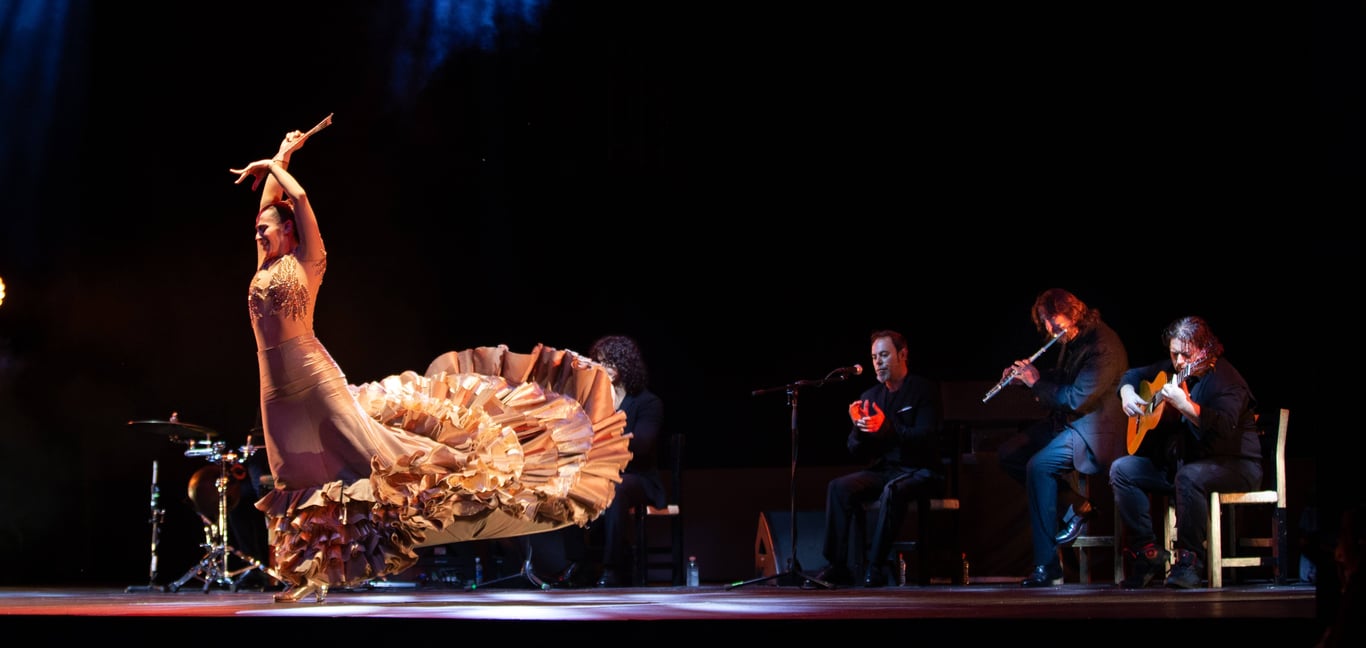
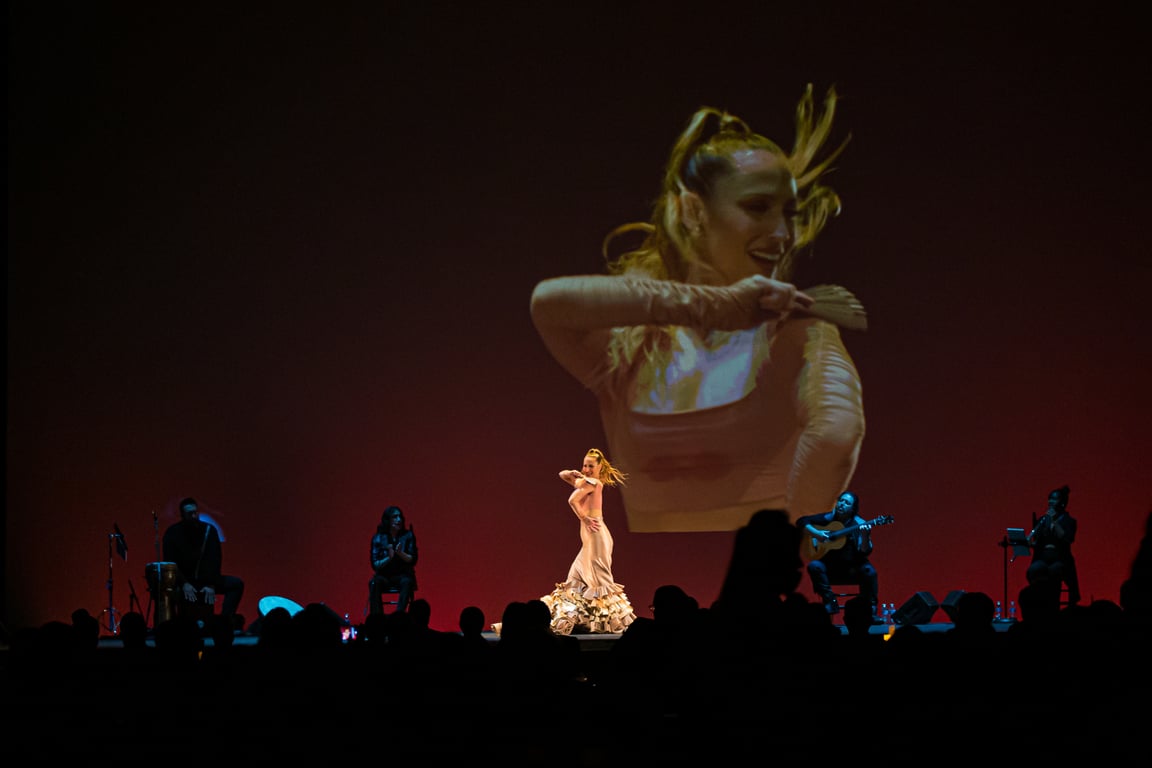
Hear it that way and a performance opens up: the singer sets the emotion, the guitar answers, the palmas and cajon hold the pulse, and the feet punctuate it all — several artists in one breathing conversation. The instruments of flamenco are not a backdrop to the dance. They are the art, sounded out loud.
The best way to understand this sound is to step inside it. Explore Siudy Garrido's on-demand flamenco classes to learn how cante, guitar, palmas, and footwork fit together from your very first compas, and browse more guides on our flamenco blog to keep going deeper into the music behind the dance.
Frequently asked questions
What instruments are used in flamenco?
Is the voice really an instrument in flamenco?
Are castanets a flamenco instrument?
When did the cajon become part of flamenco?
Start dancing flamenco with Siudy Garrido
On-Demand Flamenco Courses — professional instruction, at your pace.
Explore Courses →