Flamenco Guitar for Beginners: A Practical First Guide
 Part of our guide
Flamenco Music and Instruments: The Sound Behind the Dance →
Part of our guide
Flamenco Music and Instruments: The Sound Behind the Dance →
Few sounds are as instantly recognizable as a flamenco guitar in full flight — the rolling strum, the sudden percussive tap, the runs of notes that seem to pour out faster than fingers should move. If that sound has ever made you want to pick up an instrument, this guide is for you. Learning the flamenco guitar is a serious commitment, but the first steps are more approachable than they look, and knowing what makes the instrument and its techniques distinctive will save you a great deal of confusion early on.
This is a beginner's primer, part of our broader look at flamenco music and its instruments. We will cover how a flamenco guitar differs from a classical one, the core right-hand techniques that define the style, the role the guitar plays in a performance, and how to actually begin — grounded in the rhythm that holds everything together.
What Makes a Flamenco Guitar Different
At a glance, a flamenco guitar looks almost identical to a classical guitar — the same six nylon strings, the same broad shape. But it is built and set up to do a different job, and those differences shape everything about how it sounds and feels to play.
A flamenco guitar is generally lighter than a classical guitar, with a construction that favors attack, immediacy, and a crisp, punchy tone over the long, singing sustain a classical player prizes. It also tends to have a lower action — the strings sit closer to the fingerboard — which makes rapid, articulate playing easier and gives the instrument its bright, slightly buzzing bite. The result is a guitar built for speed, rhythm, and percussive energy rather than for lush, sustained chords.
The most visible difference is the golpeador, a tap plate fitted to the soundboard, usually a clear or dark sheet just below and around the strings. It is there for a very practical reason. Flamenco guitarists strike the body of the instrument with their fingers as part of the playing, and the golpeador protects the wooden top from these golpes, or taps. In other words, the flamenco guitar is designed from the start to be a percussion instrument as well as a melodic one.
Core Flamenco Guitar Techniques
What truly separates the flamenco guitar from its classical cousin is the right hand. Flamenco players — the tocaor or tocaora — draw on a distinctive toolkit of techniques that let a single guitarist carry harmony, melody, and rhythm all at once. You do not need to master all of them to begin, but you should know what they are and roughly what each one does.
- Rasgueado — the rolling, fan-like strumming that gives flamenco its driving momentum, often produced by flicking the fingers out one after another in rapid succession. This is usually the first technique beginners tackle, because it builds rhythm and hand independence.
- Picado — fast, articulated single-note runs, typically played with alternating fingers, used for melodic lines and scale passages. Picado is where the dazzling speed comes from, and it rewards slow, patient practice.
- Alzapua — a thumb technique that combines single notes and strummed chords in one motion, producing a powerful, percussive attack that sits at the low end of the sound.
- Tremolo — a rapid repetition of a single note that creates the illusion of a sustained, shimmering melody floating over the bass. It is one of the more advanced techniques but a beautiful goal to work toward.
- Golpe — the finger tap on the golpeador that adds a percussive accent, blurring the line between a melody instrument and a drum. Golpe often works hand in hand with rasgueado to lock the rhythm.
Together, these techniques are why a lone flamenco guitar can sound like a small ensemble. A single player can hold a chord progression, sing out a melody, and drum a rhythm on the body all in the same passage — a range that few other instruments offer in one pair of hands.
Ready to put this into practice?
Train with Siudy Garrido through our On-Demand Flamenco Courses — structured, professional flamenco instruction you can start today.
The Role of the Guitar: Accompaniment and Falsetas
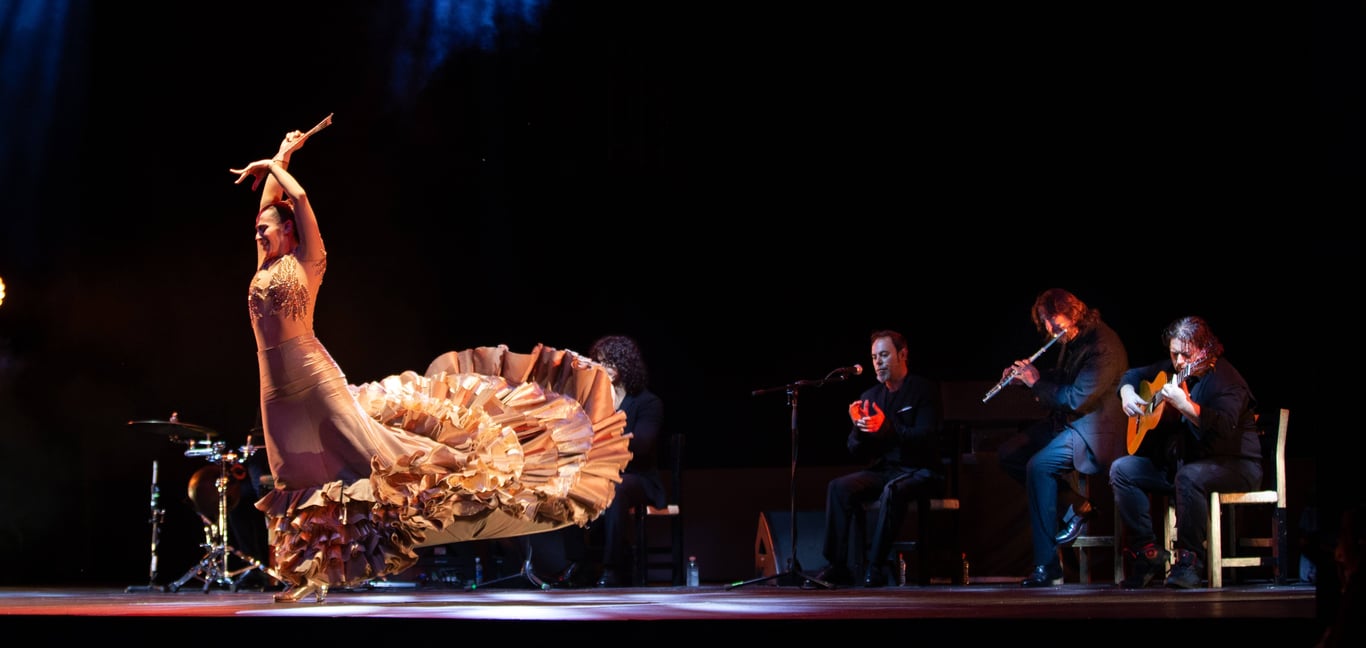
To understand the flamenco guitar, it helps to know what it is for. Flamenco itself is a woven conversation between three elements: cante (song), baile (dance), and toque (the guitar and musicianship). Historically, the guitarist's job was to accompany — to support the singer and the dancer, holding the harmony and the rhythm steady while the voice carried the emotion and the dancer responded to it. In that role, the guitar listens as much as it plays, following the singer's phrasing and marking the dancer's accents.
Within that supporting role, the guitarist also weaves in falsetas — short melodic phrases of their own, played in the spaces between the singer's lines. Over the twentieth century, the toque grew from pure accompaniment into a solo art in its own right, capable of carrying an entire piece on the strength of those falsetas, with no voice at all. As a beginner you will almost certainly start on the accompaniment side, learning to hold rhythm and harmony, before you begin stringing falsetas together. To see how the guitar fits alongside the voice, palmas, and cajon, our guide to what instruments are used in flamenco lays out the full ensemble.
How Compas Governs Everything You Play
Here is the single most important thing a beginner can understand: in flamenco, rhythm comes first. Every note you play on the flamenco guitar lives inside compas — the repeating rhythmic cycle that organizes a piece. Each palo, or flamenco style, has its own compas, its own tempo, and its own character, and the guitar's whole job is to lock into that cycle so that singer, dancer, and clapping hands can move together as one.
Many palos share a distinctive twelve-beat cycle — among them soleá (slow and solemn), alegrías (bright and joyful, from Cádiz), and bulerías (the fastest and most festive) — which differ less in the count itself than in tempo and mood. Others, such as tangos, sit in a simpler four-count feel, which is exactly why they are a common starting point for newcomers. A slower four-count gives you room to place your rasgueado and golpe cleanly before you take on the trickier twelve-beat forms. If your compas is shaky, even flawless finger technique will sound wrong — so the rhythm is not an afterthought, it is the foundation.
Practical Advice for Getting Started
If you are ready to begin, a few principles will keep your practice honest and productive from the first day.
- Learn the rhythm before the fireworks. Clap the compas as palmas until the cycle feels natural in your body. When you can clap a tangos or a soleá cleanly, placing chords on the guitar becomes far easier.
- Start slow, and stay slow longer than feels comfortable. Speed in picado and rasgueado is a byproduct of clean, even repetition — never the goal in itself. Clarity first, tempo later.
- Begin with a simpler palo. A four-count form such as tangos lets you build rasgueado and golpe without wrestling the twelve-beat cycle at the same time.
- Respect the right hand. Much of what makes flamenco sound like flamenco lives in the right-hand techniques, so give them dedicated, focused practice rather than treating them as an afterthought to chords.
- Listen constantly, and listen to the singer. Because the guitar traditionally answers the voice, training your ear to follow cante will make you a far more musical accompanist.
Above all, be patient with yourself. The flamenco guitar asks the hands to do several things at once, and that coordination takes time to build. Progress in flamenco is rarely a straight line, but every hour spent inside the compas compounds.
Where to Go From Here
Learning the flamenco guitar is really learning to speak a rhythmic language — and the fastest way to internalize it is to study rhythm, cante, and movement together, the way they actually live in flamenco. Explore Siudy Garrido's on-demand flamenco classes to feel how compas ties the whole art together from your very first cycle, and browse more guides on our flamenco blog to keep going deeper into the music behind the dance.
Frequently asked questions
What is the difference between a flamenco guitar and a classical guitar?
What are the main flamenco guitar techniques for beginners?
What does the flamenco guitar do in a performance?
Do I need to learn rhythm before flamenco guitar technique?
Start dancing flamenco with Siudy Garrido
On-Demand Flamenco Courses — professional instruction, at your pace.
Explore Courses →