Castanets Flamenco: Are They Really Used?
 Part of our guide
Flamenco Music and Instruments: The Sound Behind the Dance →
Part of our guide
Flamenco Music and Instruments: The Sound Behind the Dance →
Few images are as firmly linked to Spain in the popular imagination as a dancer clicking a pair of castanets. It is on postcards, in films, and in almost every stereotype of Spanish dance. So it comes as a surprise to many newcomers that, when we talk about castanets flamenco in the same breath, we are describing a relationship far more limited than the cliche suggests. This guide, part of our wider look at flamenco music and its instruments, sets the record straight with respect for both traditions.
Are Castanets Used in Flamenco? The Honest Answer
The short answer surprises people: castanets are not a traditional or core flamenco instrument. The question are castanets used in flamenco comes up constantly, and it deserves a precise reply rather than a comfortable one. Castanets belong first and foremost to the escuela bolera (the bolero school) and to classical Spanish dance, which are related to flamenco but distinct from it.
This is not a matter of opinion or of one school looking down on another. It reflects how the different Spanish dance traditions actually work. Classical Spanish dance and the escuela bolera grew up alongside castanets and built their vocabulary around the instrument. Flamenco grew from a different root, driven above all by the voice, and its dance developed a language in which the hands themselves do the work that castanets do elsewhere. Understanding that difference is the key to understanding the whole question of castanets flamenco.
Why the Deepest Flamenco Keeps the Hands Free
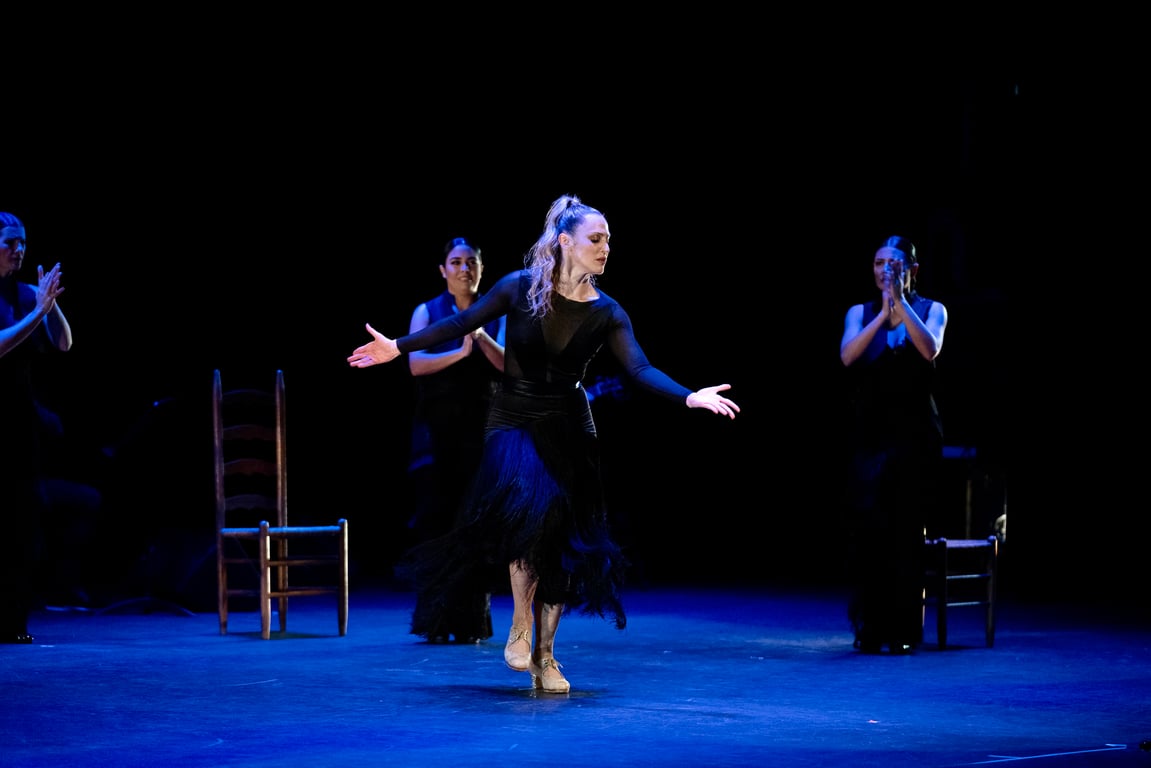
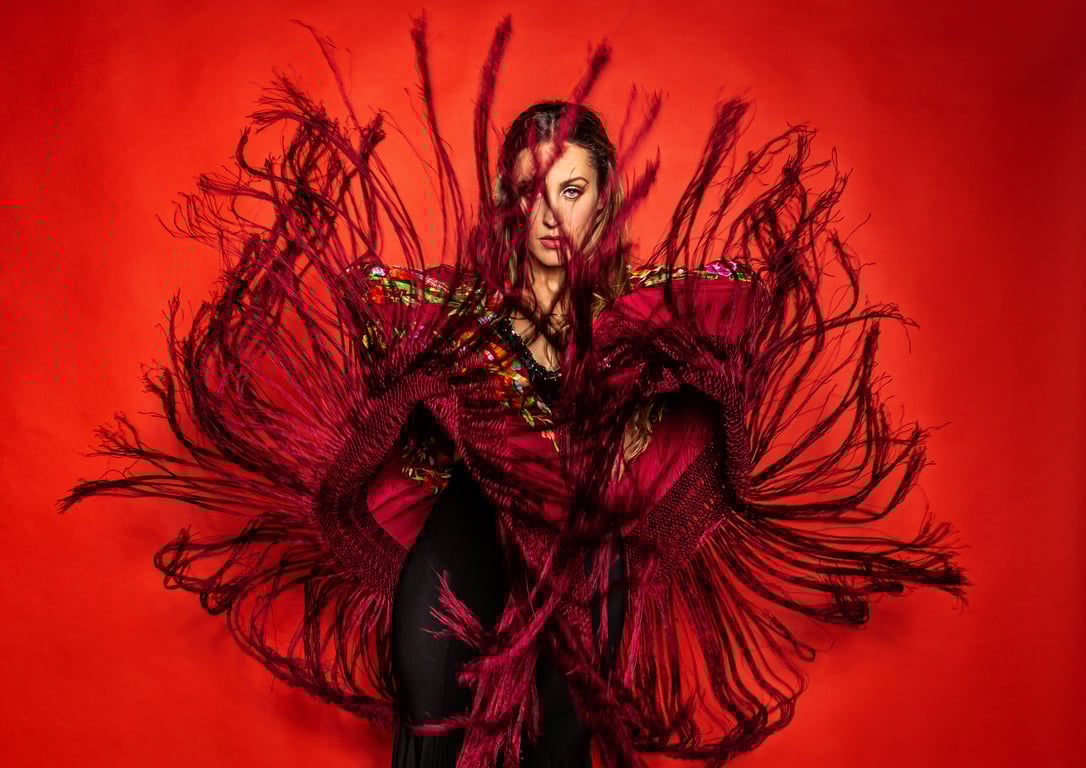
To see why castanets sit at the edge of flamenco rather than at its heart, look at what a flamenco dancer's hands are doing. In the deepest and most serious forms of the art, the hands are not idle and they are not merely decorative. They are an instrument in their own right.
These deepest forms are known as cante jondo (literally deep song), and they include palos such as the soleá, the seguiriya, and the tientos. These are the solemn, weighty styles of flamenco, and in them the dancer's arms and hands carry much of the emotion. Two elements of technique matter here:
- Braceo (braceo) is the movement of the arms, slow, circular, and continuous, tracing shapes in the air above and around the body.
- Floreo (floreo) is the rotation of the wrists and the articulate movement of the fingers, the delicate flowering motion that gives the hands their expressive detail.
Now the reason becomes obvious. To hold a pair of castanets, the fingers must curl around and grip them, and the wrists become the engine for clicking rather than for shaping. That is precisely the freedom a flamenco dancer cannot surrender in the cante jondo forms. Holding castanets would restrict the very braceo and floreo that carry the feeling of the dance. The empty, open hand is not a limitation in flamenco; it is one of its central expressive tools.
Where Castanets Do Belong in Flamenco
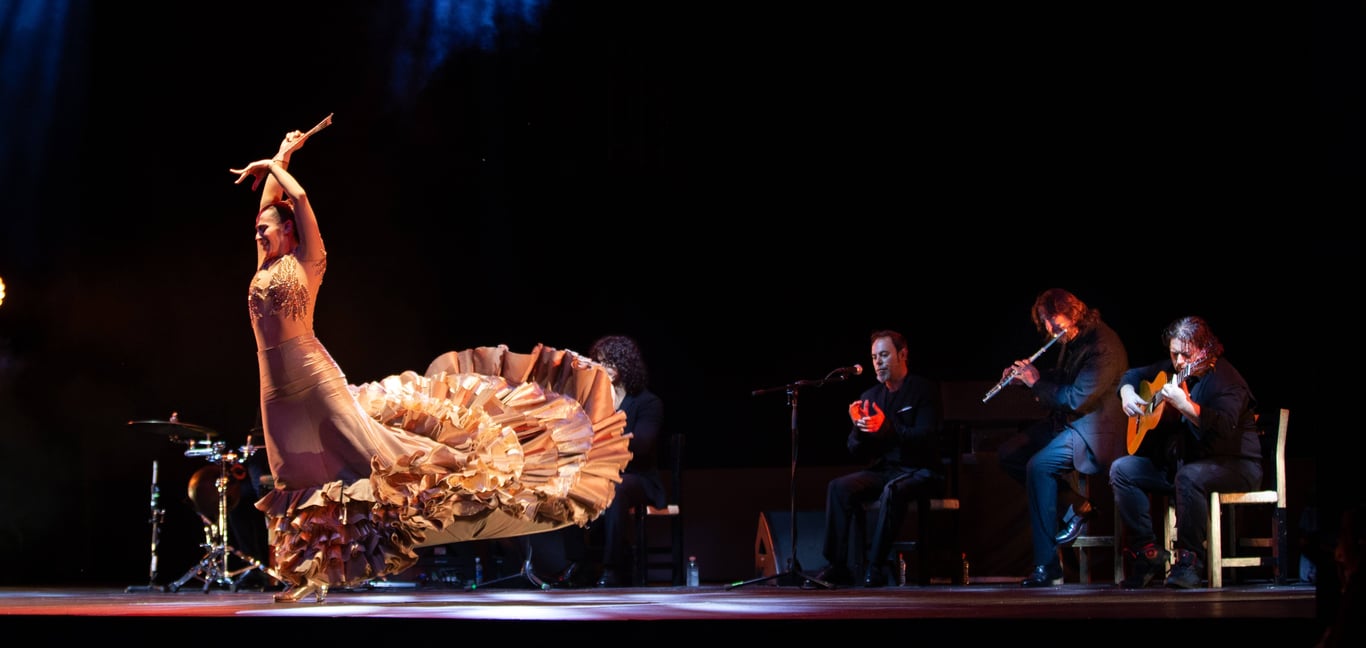
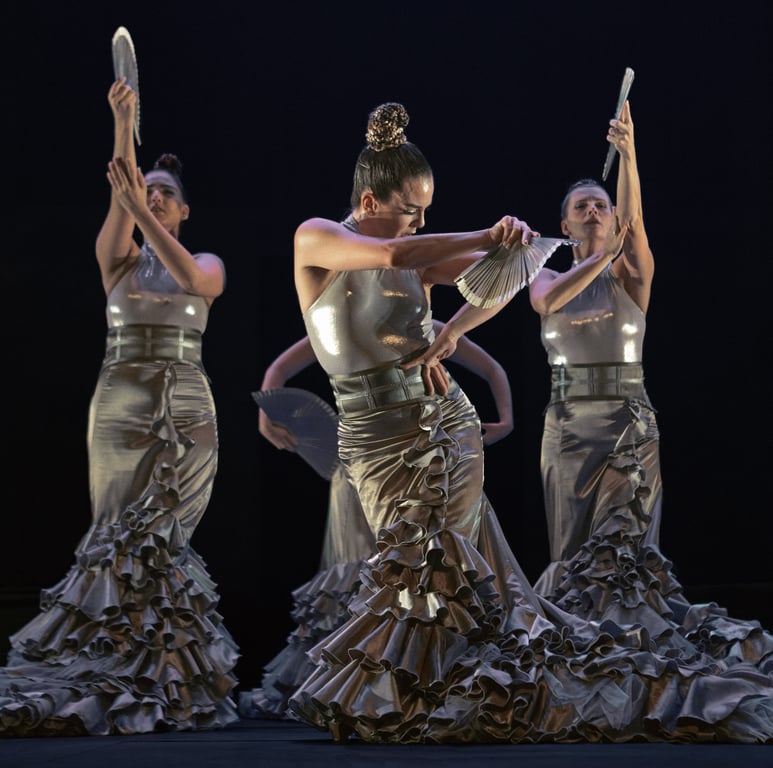
None of this means castanets never touch flamenco at all. The honest picture is that they appear in a specific and limited set of styles, and knowing which ones tells you a great deal about the instrument's place. Castanets show up in the festive, folkloric, and ida y vuelta styles rather than in the grave, introspective palos.
Ready to put this into practice?
Train with Siudy Garrido through our On-Demand Flamenco Courses — structured, professional flamenco instruction you can start today.
The term ida y vuelta (round trip) refers to palos that traveled to the Americas and returned to Spain carrying Latin American influence. In practice, you are most likely to encounter castanets in the following:
- Sevillanas (sevillanas), the bright, social folk dance of Seville, often danced at fairs with castanets in hand.
- Fandangos de Huelva (fandangos de Huelva), a lively regional form.
- Guajira (guajira), an elegant ida y vuelta palo with Cuban roots, staged with graceful, swaying movement.
What these forms share is a lighter, more festive character that has room for the crisp, rhythmic clicking of the instrument, which is the real story behind castanets flamenco. It is worth noting that sevillanas are not, strictly speaking, a flamenco palo at all but a folk dance of Seville that shares a distant ancestor with flamenco; we untangle that relationship in our guide to flamenco versus sevillanas. The pattern holds across all of them: the more solemn the form, the freer the hands; the more festive the form, the more room there is for a prop.
How Castanets Are Made and Held
Having placed castanets correctly within the tradition, it is worth understanding the instrument itself, because its design is more considered than it first appears. In Spanish they are called castañuelas or, more colloquially, palillos (little sticks).
Each castanet is made of two hollowed shells, traditionally of hardwood, though composite materials are also used. The two shells are clicked together with the fingers to produce the sharp, resonant sound. A dancer wears one pair on each hand, tied on so that the fingers can strike the shells while the thumb anchors them.
The most elegant detail is that the two hands are deliberately tuned differently. The higher-pitched castanet, called the hembra (female), sits in the right hand, while the lower-pitched one, the macho (male), sits in the left hand. Because the two hands speak at different pitches, they can answer one another, the right hand rippling brighter notes over the steadier, deeper voice of the left. It is a small piece of instrument design that turns two clicking shells into a genuinely musical pair.
Respecting Both Traditions
If you arrived at this article assuming castanets were the beating heart of flamenco, you are in good company, and there is no shame in the assumption. The stereotype is powerful precisely because castanets are so visually striking and so bound up with the broader idea of Spanish dance. The point of correcting it is not to diminish the instrument but to give each tradition its due.
Castanets are a beautiful and demanding part of classical Spanish dance and the escuela bolera, where generations of dancers have raised their playing to a real art. Flamenco, meanwhile, made a different choice, keeping the hands open so that braceo and floreo could carry its deepest emotion. Both choices are valid; they simply belong to different worlds, and that is the honest picture of castanets flamenco. To see how the instruments that are central to flamenco fit together, read our overview of what instruments are used in flamenco.
Understanding distinctions like this one is part of what it means to move beyond the stereotype and into the real art. If watching flamenco has left you wanting to feel how the hands truly move within it, explore Siudy Garrido's on-demand flamenco classes, where you can see how braceo and floreo are built from the ground up, and browse more guides on our flamenco blog to keep deepening your understanding of the art.
Frequently asked questions
Are castanets used in flamenco?
Why don't flamenco dancers use castanets?
Which flamenco styles do use castanets?
How are castanets made and held?
Start dancing flamenco with Siudy Garrido
On-Demand Flamenco Courses — professional instruction, at your pace.
Explore Courses →