Famous Flamenco Dancers: From Legends to Living Masters
 Part of our guide
Famous Flamenco Artists: The Great Singers, Guitarists, and Dancers →
Part of our guide
Famous Flamenco Artists: The Great Singers, Guitarists, and Dancers →
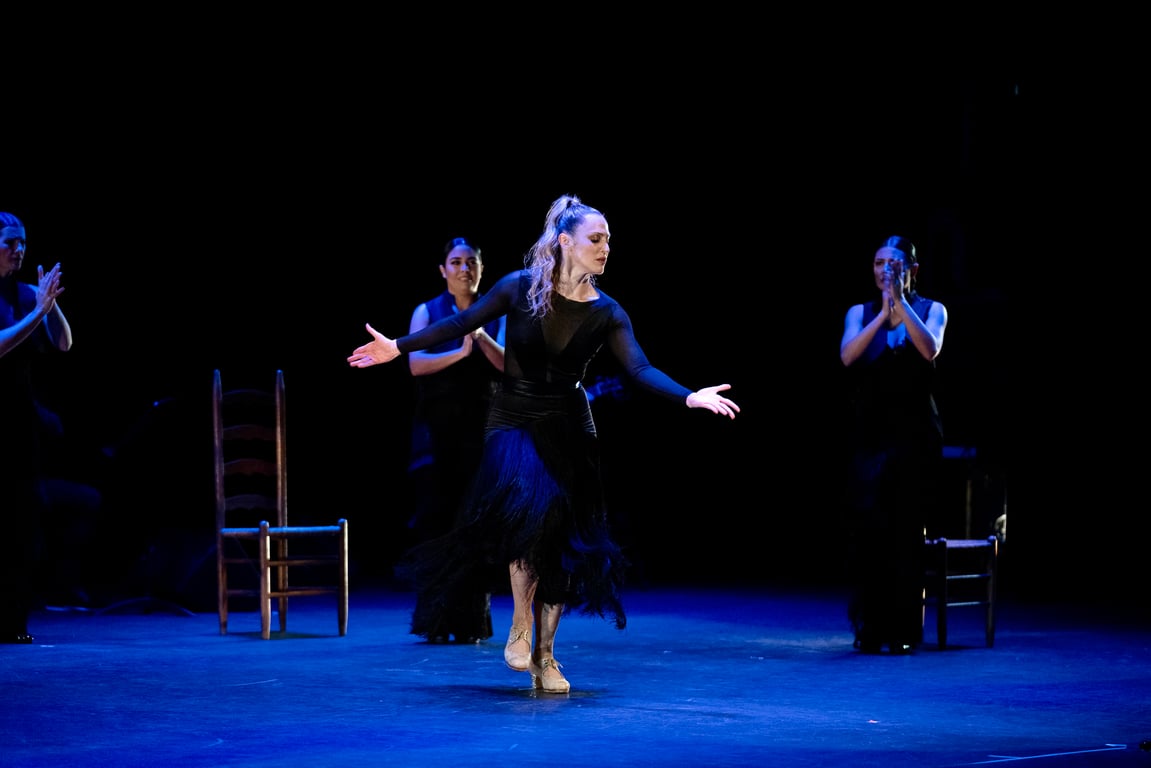
Flamenco is often described through its music, yet for many audiences it is the dancer who first captures the imagination: the storm of percussive footwork, the sculpted arms, the sudden stillness that says as much as any movement. This guide profiles the most famous flamenco dancers in the history of the art, tracing a line from the legends who defined baile (the dance element of flamenco) to the living masters who carry it forward today.
It is part of our wider look at the famous flamenco artists whose names anyone learning the art will encounter, and it sits alongside our introduction to what flamenco is for readers who want the fundamentals first. A note on vocabulary before we begin: a female flamenco dancer is a bailaora and a male dancer a bailaor, terms distinct from the classical Spanish bailarina and bailarín.
The Legends Who Defined Famous Flamenco Dancers
Every living tradition rests on a handful of figures who changed what was thought possible. In flamenco baile, two names stand above almost all others: a Roma bailaora who rewrote the rules of what a woman could do on stage, and a bailaor who lifted flamenco into the fully staged theatrical art it is today.
Carmen Amaya is, for many, the greatest flamenco dancer who ever lived. Born around 1913 in the Somorrostro district of Barcelona — her exact birth year is disputed, with some sources giving 1918 — she came from a Spanish Roma (Gitano) family and rose from poverty to international fame. Her decisive contribution was technical and cultural at once: she was the first woman to master the fast, powerful zapateado (percussive footwork) that had until then been associated almost exclusively with male dancers. Amaya famously danced in high-waisted trousers rather than the traditional bata de cola (the long-trained dress), a choice that suited her ferocious footwork and became part of her legend. She died on 19 November 1963, but her influence on every bailaora who followed is difficult to overstate.
Antonio Gades, born Antonio Esteve Ródenas on 14 November 1936 in Elda, Alicante, did for the staging of flamenco what Amaya did for its footwork. A dancer and choreographer, he helped raise Spanish dance to a fully realized theatrical art, founding his own company in 1962. He is best remembered today for the film trilogy he created with director Carlos Saura — Bodas de sangre (Blood Wedding), Carmen, and El amor brujo — which carried flamenco to cinema audiences around the world and remains a touchstone for how the art can be dramatized without losing its intensity. Gades died on 20 July 2004, leaving a model of theatrical flamenco that later companies still build upon.
Sara Baras and Farruquito: Masters of the Modern Stage
If Amaya and Gades are the towering legends, two figures born a generation or more later show how the tradition renews itself — one through large-scale theatrical production, the other through a fierce commitment to flamenco in its most traditional form.
Ready to put this into practice?
Train with Siudy Garrido through our On-Demand Flamenco Courses — structured, professional flamenco instruction you can start today.
Sara Baras, born Sara Pereyra Baras on 25 April 1971 in San Fernando, Cádiz, is among the most celebrated bailaoras of her generation. In 1998 she founded the Ballet Flamenco Sara Baras, debuting with the show Sensaciones, and she has since become known for both the clarity and force of her footwork and for the scale of her productions. Works such as Sueños, Carmen, Voces, and Sombras have toured internationally, presenting flamenco as full-length, carefully designed theater while keeping the technical demands of the baile at their center. Baras stands as proof that a single dancer can lead a company, shape a repertoire, and carry flamenco to large audiences without diluting it.
Farruquito, born Juan Manuel Fernández Montoya on 15 August 1982 in Seville, represents flamenco's deep family lineages. He is heir to the Farruco dynasty, the grandson of the legendary bailaor known as El Farruco, and he has become a standard-bearer of traditional, puro (pure) flamenco — the art performed close to its roots, driven by cante (song) and improvisation rather than large-scale staging. He debuted as a child in the production Flamenco Puro on Broadway and has spent his career defending an unadorned, intensely rhythmic style. For readers interested in how such lineages pass technique and feeling from one generation to the next, his career is among the clearest examples in the art.
Contemporary Bailaoras and Bailaores to Know
Beyond these four, a number of contemporary dancers have shaped the modern landscape of flamenco baile, each in a distinct direction. Their styles range from the deeply traditional to the frankly experimental, which is part of what keeps the art alive.
- Eva Yerbabuena — a bailaora who founded her own company in 1998 and won Spain's National Dance Award in 2001. She is admired for the emotional depth of her dancing and for her willingness to reinvent familiar material.
- Israel Galván — a leading avant-garde bailaor who has broken with traditional flamenco structures to push the form in radically new directions, and a recipient of Spain's National Dance Award.
- Joaquín Cortés — an internationally famous dancer who began with Spain's National Ballet and went on to bring flamenco to arena-scale, celebrity stardom, blending it with contemporary dance.
- Manuela Carrasco — born in 1954, a bailaora revered for a deeply traditional and powerful style that connects the contemporary stage back to flamenco's older roots.
Taken together, these dancers illustrate the two impulses that have always coexisted in flamenco: the guardianship of tradition and the drive to renew it. Neither is more authentic than the other; the art needs both.
What Makes a Great Flamenco Dancer
Reading these names, it is worth asking what actually distinguishes a great bailaor or bailaora from a merely competent one. It is not raw speed. The most admired dancers share a command of compás (the rhythmic cycle that organizes a piece), a clear and articulate zapateado in which every strike lands with purpose, and a grounded, proud postura (posture) that gives the body its commanding presence. Above all, they possess duende, the heightened emotional authenticity that lifts a performance from technically correct to genuinely moving. Carmen Amaya's footwork thrilled audiences not because it was fast but because it was charged with feeling.
This is also why watching the great famous flamenco dancers is the best possible education for anyone learning the art. Notice how each waits on the singer, how stillness sharpens the moment that follows, how the arms shape the air in slow braceo while the feet drive the rhythm below. These are not separate skills but a single, integrated language.
From Watching to Dancing
Studying the masters is where a love of flamenco often begins, but the art is meant to be moved as much as watched. If these dancers have left you wanting to feel compás in your own body, the path forward is structured instruction that teaches rhythm, posture, and footwork in the right order. Explore on-demand flamenco classes with two-time Latin Grammy–nominated bailaora Siudy Garrido, and continue through our profiles of individual legends — Carmen Amaya, Antonio Gades, Sara Baras, and Farruquito — for a closer look at the artists who defined baile. For the wider world of the music, technique, and history behind the dance, browse the full flamenco blog.
Frequently asked questions
Who is the most famous flamenco dancer of all time?
What is the difference between a bailaora and a bailaor?
Who are the best living flamenco dancers today?
Did any famous flamenco dancers appear in films?
Start dancing flamenco with Siudy Garrido
On-Demand Flamenco Courses — professional instruction, at your pace.
Explore Courses →