Farruquito: Heir to the Farruco Flamenco Dynasty
 Part of our guide
Famous Flamenco Artists: The Great Singers, Guitarists, and Dancers →
Part of our guide
Famous Flamenco Artists: The Great Singers, Guitarists, and Dancers →
Few names in contemporary flamenco carry the weight of Farruquito. To speak it is to invoke not only a single dancer but an entire lineage — a family that has guarded and transmitted the traditional baile (dance) across generations. To understand Farruquito is therefore to understand something larger than one artist: it is to see how flamenco lives and renews itself through families, passed from grandparent to grandchild the way a mother tongue is passed at the dinner table.
Who Is Farruquito?
Farruquito is the stage name of Juan Manuel Fernandez Montoya, born on 15 August 1982 in Seville, at the very heart of Andalusia. The diminutive form of his name is deliberate and meaningful: it links him directly to his grandfather, the dancer known as El Farruco, and marks him as the newest bearer of a distinguished flamenco name. In flamenco, a stage name is rarely arbitrary. It signals belonging, and Farruquito's announces at once that he stands within one of the art's most storied dynasties.
He is widely regarded as a leading standard-bearer of traditional, puro (pure) flamenco — an artist whose work is anchored in the classical language of the dance rather than in fusion or reinvention. Where some dancers seek to push flamenco toward other genres, Farruquito's reputation rests on the opposite instinct: a devotion to the depth, gravity, and rhythmic honesty of the tradition he inherited.
Heir to the Farruco Dynasty
To be a Fernandez Montoya is to be born into flamenco. Farruquito is the grandson of the legendary El Farruco, patriarch of the Farruco dynasty and one of the most revered figures in the history of traditional baile. That inheritance is not incidental to Farruquito's art; it is its foundation. He did not discover flamenco and choose to pursue it. He was raised inside it, surrounded from birth by the sound of palmas (rhythmic hand-clapping), the cadence of the cante (song), and the presence of relatives for whom dancing was simply how the family expressed itself.
This distinction matters. A dynasty like the Farrucos does not merely produce dancers; it transmits an entire way of feeling and moving. The characteristic weight, the grounded postura (posture), the unhurried command of compas (the rhythmic cycle) — these are absorbed early and instinctively, long before they are ever named or taught formally. When observers describe Farruquito as his grandfather's artistic heir, they are pointing to exactly this: a continuity of style and spirit that no conservatory can replicate.
Why Flamenco Family Dynasties Matter
Flamenco has always been, to a remarkable degree, a family art. Long before it entered theaters and conservatories, it lived in homes, courtyards, and gatherings, handed down within Andalusian and Gitano (Roma) communities from one generation to the next. The great family names of flamenco are not simply collections of talented relatives; they are living archives, each preserving a particular regional accent, a repertoire of falsetas and rhythmic turns, and an inherited sense of taste.
Ready to put this into practice?
Train with Siudy Garrido through our On-Demand Flamenco Courses — structured, professional flamenco instruction you can start today.
Within such families, a child learns flamenco the way one learns to speak: by immersion, imitation, and constant exposure. The compas becomes second nature before it is ever consciously studied. The result is an artist whose command of the tradition runs deeper than technique — it is woven into memory and body alike. This is why dynasties such as the Farrucos hold such authority. They embody the unbroken transmission that keeps flamenco anchored to its roots even as the wider art evolves. For a broader view of the individuals who have shaped the tradition, our overview of famous flamenco artists places figures like Farruquito within the larger story, while our survey of famous flamenco dancers looks specifically at the great figures of baile.
A Childhood Debut on Broadway
Farruquito's public life as a performer began remarkably early. As a child, he debuted in the production Flamenco Puro on Broadway, stepping onto an international stage while still very young and appearing alongside members of his own family. For most performers, a Broadway debut would mark the culmination of years of preparation. For a child of the Farruco dynasty, it was something closer to a natural extension of daily life — flamenco carried from the intimacy of the family setting to a grand public stage, without any change in the essential thing being expressed.
That early experience is telling. It underscores how, in the great flamenco families, there is often no clear line between growing up and becoming an artist. The two happen together. By the time Farruquito appeared before international audiences, the tradition was already fully his, and the stage simply gave it a wider room to fill.
The Art of Traditional Baile
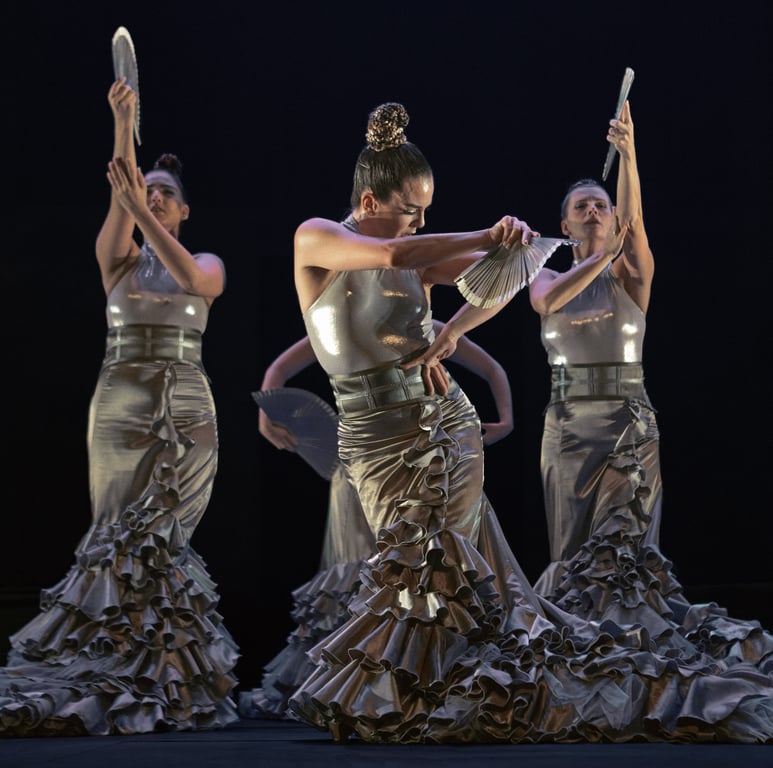
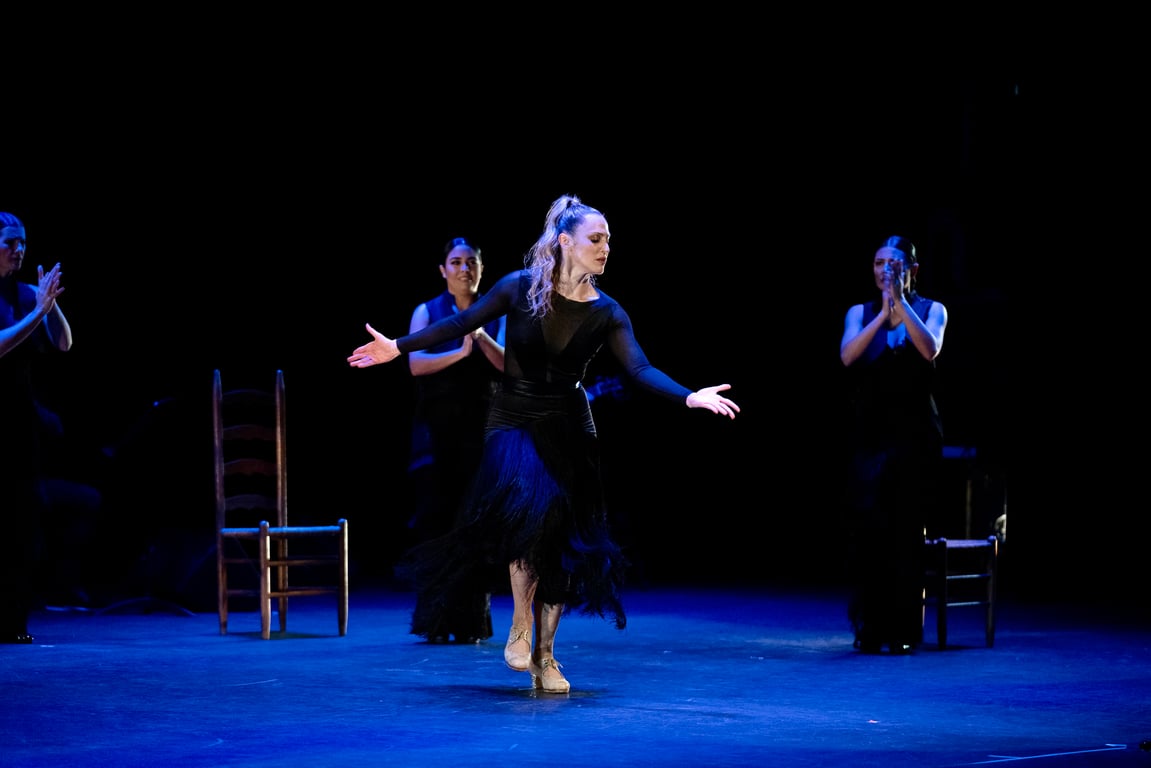
What does it mean to be a standard-bearer of puro flamenco? At its center is a commitment to the classical baile in its most concentrated form. Traditional flamenco dance is built on a proud, grounded postura — a long spine, an open chest, weight rooted into the floor — from which every movement draws its authority. Above the waist, the arms move in slow, circular braceo (arm movement) while the wrists and fingers articulate in floreo (wrist and finger movement); below, the feet answer with zapateado, the percussive footwork whose goal is clarity and fidelity to compas rather than mere speed.
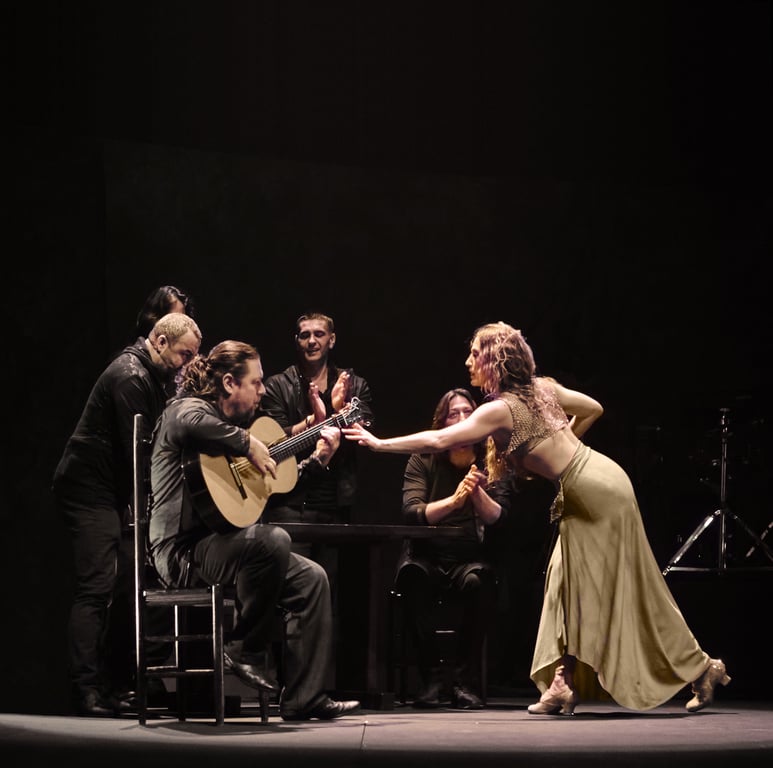
In the traditional aesthetic that Farruquito embodies, the dancer does not dominate the ensemble but converses with it. The cante carries much of the emotion, and the dancer responds to the singer, marking and answering the song as it unfolds. This responsiveness — the sense that the dance is listening as much as it is performing — is a hallmark of the older tradition. It is what separates a display of footwork from a genuine flamenco performance, and it is the quality that dynasties like the Farrucos have worked to preserve. Readers new to these ideas may find our primer on what flamenco is a helpful foundation for the vocabulary above.
A Living Tradition
Farruquito's significance lies not in novelty but in continuity. In an era when flamenco is constantly reinterpreted and fused with other forms, he represents the enduring value of the tradition kept whole — the reminder that flamenco's future depends as much on faithful transmission as on innovation. As grandson of El Farruco and a leading voice of puro flamenco, he carries a lineage forward while keeping it recognizably itself.
That is the deeper lesson of a figure like Farruquito. Flamenco endures because families and teachers pass it, whole and living, into new hands. If his story stirs your own curiosity about the art, you can begin to study the tradition directly through Siudy Garrido's on-demand flamenco classes, or continue exploring the culture, history, and technique behind the dance on our flamenco blog. The tradition that shaped Farruquito is the same one open to anyone willing to listen for its compas.
Frequently asked questions
What is Farruquito's real name?
Who was El Farruco?
What kind of flamenco does Farruquito perform?
When did Farruquito first perform on stage?
Start dancing flamenco with Siudy Garrido
On-Demand Flamenco Courses — professional instruction, at your pace.
Explore Courses →