Famous Flamenco Artists: The Great Singers, Guitarists, and Dancers
Flamenco is often described as an art of anonymous, communal origin, and in one sense it is. Yet its history is also the history of extraordinary individuals whose voices, hands, and feet redefined what the art could be. To understand flamenco is, in part, to know its great practitioners. This guide introduces the most famous flamenco artists across the tradition's three disciplines, and explains the system of masters and family dynasties through which their knowledge has passed. It serves as a starting point; from here you can follow the links to fuller roundups and individual biographies.
The Three Disciplines That Shape Famous Flamenco Artists
Before naming individuals, it helps to recall how flamenco is organized. The art fuses three intertwined disciplines: cante (song), toque (the guitar and musicianship), and baile (dance). The great majority of famous flamenco artists are celebrated as masters of one of these three, and understanding which discipline a figure belongs to is the first step to placing them within the tradition. If you are new to the art itself, our overview of what flamenco is lays out these foundations in full.
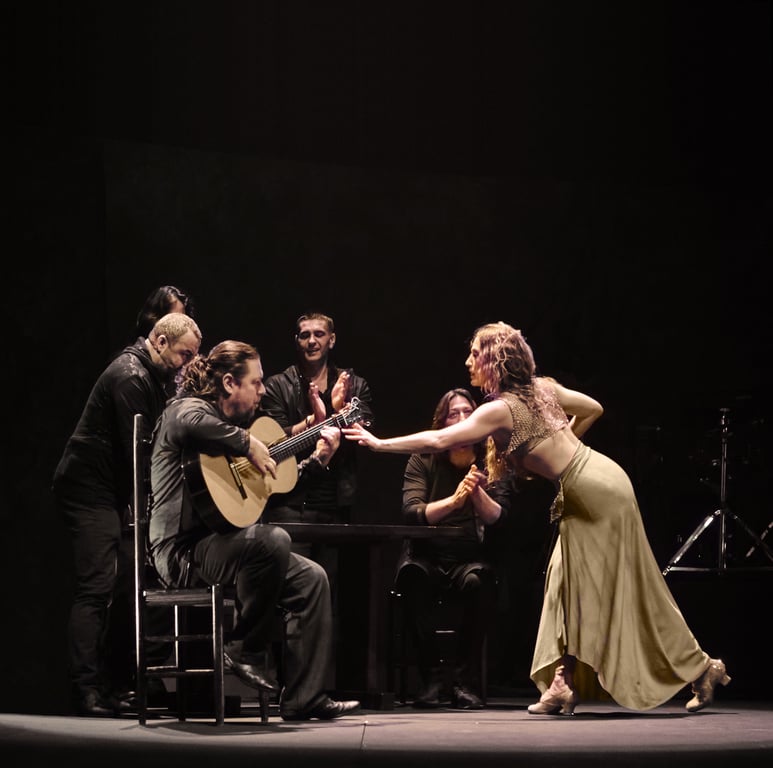
The three disciplines are not equal partners performing in parallel; they converse. Traditionally the singer sets the emotional current, the guitarist shapes harmony and rhythm beneath it, and the dancer responds to the voice rather than the other way around. A performer's greatness is therefore measured not only by individual virtuosity but by how deeply they serve, and are served by, the others on stage. The sections that follow introduce the towering figures of each discipline in turn.
Cante: The Great Flamenco Singers
The cante, or song, is often called the heart of flamenco, and it carries much of the art's emotion. A male singer is a cantaor and a female singer a cantaora. The voice in flamenco is not prized for conventional beauty but for its power to convey feeling, and the tradition's most revered singers are those who could summon raw human emotion from a single line.
Chief among them is Camaron de la Isla, born Jose Monje Cruz in 1950 in San Fernando, Cadiz, and widely regarded as the greatest modern cantaor. Born into a Spanish Roma family, he transformed the art through his collaborations with the guitarists Paco de Lucia and Tomatito. His 1979 album La leyenda del tiempo, which set poetry by Federico Garcia Lorca to non-traditional instrumentation, helped launch the movement known as nuevo flamenco. When he died of lung cancer in 1992, an estimated hundred thousand people attended his funeral. His story is told in full in our biography of Camaron de la Isla.
Camaron stands within a long line of masters. La Nina de los Peines, born Pastora Pavon Cruz in Seville in 1890, is counted among the greatest cantaoras in history; both Lorca and the composer Manuel de Falla admired her, and Lorca linked his celebrated idea of duende to the experience of hearing her sing. Antonio Mairena, born in 1909, served as a guardian of traditional cante, documenting palos, or flamenco styles, that were in danger of being lost, and in 1962 he received the Llave de Oro del Cante, the Golden Key of Song. In the later twentieth century, Enrique Morente, born in Granada in 1942, became a revolutionary figure who fused flamenco with other genres, notably on his album Omega, recorded with a rock band and drawing on Lorca's poetry. His daughter, Estrella Morente, is a leading contemporary cantaora and a recipient of Spain's National Music Award. For a fuller survey, see our roundup of famous flamenco singers.
Toque: The Great Flamenco Guitarists
The toque is the guitar and musicianship of flamenco. The flamenco guitar is lighter than a classical instrument and often fitted with a golpeador, a tap plate that protects the soundboard from percussive finger taps. Traditionally the guitarist accompanies the singer and dancer, holding harmony and compas, the rhythmic cycle, while also weaving in falsetas, the melodic interludes between sung verses. Over the twentieth century, the toque also grew into a solo concert art.
The pivotal figure is Paco de Lucia, born Francisco Gustavo Sanchez Gomez in 1947 in Algeciras, Cadiz. He is the most influential flamenco guitarist in the history of the art, and he modernized it decisively. He recorded roughly ten landmark albums with Camaron de la Isla during the 1970s, pioneered flamenco-jazz fusion in collaborations with musicians such as John McLaughlin and Al Di Meola, formed the Paco de Lucia Sextet in 1981, and introduced the Peruvian cajon, now a standard part of the flamenco ensemble, to the art in 1977. He died of a heart attack in 2014. His life and legacy are covered in our biography of Paco de Lucia.
Ready to put this into practice?
Train with Siudy Garrido through our On-Demand Flamenco Courses — structured, professional flamenco instruction you can start today.
The solo guitar tradition that Paco de Lucia inherited was built by earlier pioneers. Ramon Montoya, working in the early twentieth century, helped establish the flamenco guitar as a solo concert instrument. Sabicas, born Agustin Castellon Campos in Pamplona in 1912 and a relative of Montoya, further elevated the solo guitar and expanded its technical vocabulary. Manolo Sanlucar, born in 1943, extended flamenco toward classical and orchestral forms as both guitarist and composer. Among the artists who followed, Tomatito, born in 1958, first rose to prominence as Camaron's accompanist before becoming a leading soloist in his own right, while Vicente Amigo, born in 1967 and a student of Manolo Sanlucar, is celebrated for his lyrical, virtuosic style. A wider survey appears in our roundup of famous flamenco guitarists.
Baile: The Great Flamenco Dancers
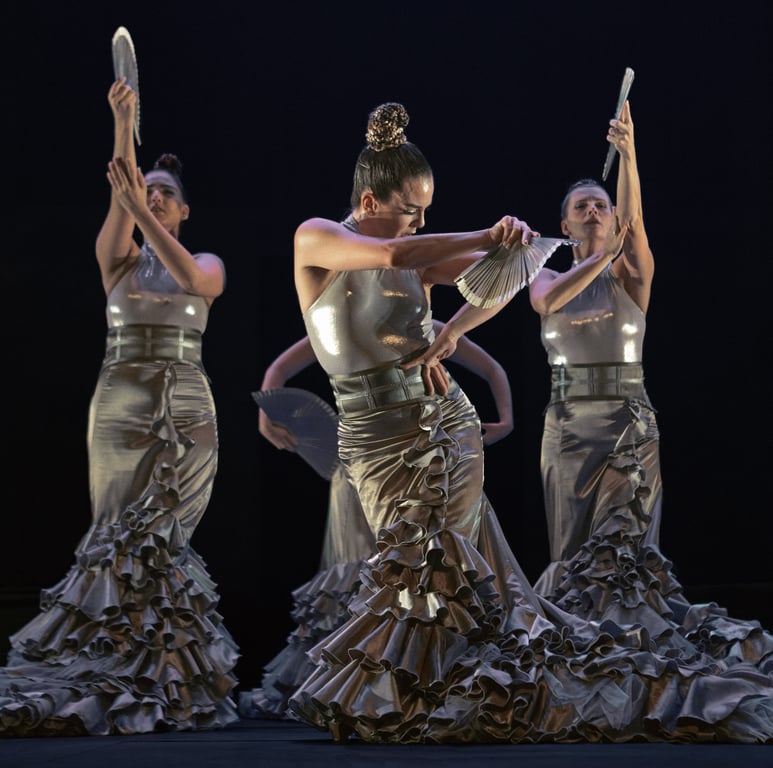
The baile is the dance, with its sculpted arms, proud posture, and famous percussive footwork, or zapateado. A male dancer is a bailaor and a female dancer a bailaora. The dance draws its power not from speed for its own sake but from clarity, control, and a grounded carriage the tradition calls postura.
The dancer most often named the greatest of all is Carmen Amaya, a Spanish Roma born around 1913 in the Somorrostro district of Barcelona. She was the first woman to master the fast, powerful zapateado that had previously been associated with male dancers, and she famously danced in high-waisted trousers, breaking with the expectations of her time. She died in 1963. Her story is told in our biography of Carmen Amaya. A generation later, Antonio Gades, born in 1936, helped raise Spanish dance to a fully staged theatrical art; his collaborations with the director Carlos Saura produced a film trilogy, Bodas de sangre, Carmen, and El amor brujo, that carried flamenco to audiences worldwide. His work is covered in our biography of Antonio Gades.
Contemporary baile is rich with acclaimed figures. Sara Baras, born in 1971 in San Fernando, Cadiz, founded Ballet Flamenco Sara Baras in 1998 and is admired for her footwork and her large-scale productions; read more in our biography of Sara Baras. Farruquito, born in 1982 in Seville, is a standard-bearer of traditional, puro flamenco and heir to the Farruco dynasty, as our biography of Farruquito explains. Other leading names include Eva Yerbabuena, who won Spain's National Dance Award in 2001; Israel Galvan, an avant-garde dancer, also a National Dance Award recipient, who broke traditional flamenco structures; and Joaquin Cortes, who brought flamenco to arena-scale, celebrity stardom. For the full picture, see our roundup of famous flamenco dancers.
Maestros and Family Dynasties
One reason so many famous flamenco artists share surnames is that flamenco has always transmitted itself through masters and family dynasties. Knowledge in this art is rarely learned from notation; it passes from maestro to student and, very often, from elder to child within a single lineage. A family that carries flamenco across generations accumulates a distinctive style, and the responsibility of preserving it falls to whoever inherits the name.
The clearest living example is the Farruco dynasty. Farruquito, the grandson of the legendary dancer known as El Farruco, is today its standard-bearer, and he is celebrated precisely for guarding a traditional, puro flamenco handed down within his family. A parallel case is found in cante: Estrella Morente, one of the leading singers of her generation, is the daughter of Enrique Morente, and she carries forward a musical inheritance that is at once deeply traditional and boldly innovative.
This dynastic structure explains why flamenco has remained continuous rather than fragmenting into disconnected revivals. The greatest partnerships also crossed these lines: the decade-long collaboration between the singer Camaron de la Isla and the guitarist Paco de Lucia, for instance, shows how cante and toque advance together when two masters commit to one another's art. To understand any individual figure fully, it helps to see them within this web of lineage, apprenticeship, and partnership.
Where to Go From Here
The artists introduced here are a doorway rather than a complete map. Each discipline has produced more masters than a single guide can hold, and each towering figure deserves a fuller telling than a paragraph allows. To go deeper, explore our discipline roundups of famous flamenco singers, famous flamenco guitarists, and famous flamenco dancers, or read the individual biographies of the figures whose stories most intrigue you.
Understanding the great famous flamenco artists deepens every performance you will ever watch, because you begin to hear the tradition they inherited and the choices they made within it. If studying these masters has left you wanting to move as they did, you can begin your own path with on-demand flamenco classes led by two-time Latin Grammy-nominated artist Siudy Garrido, or continue reading across our flamenco blog for more on the culture, technique, and history behind the art.
Frequently asked questions
Who is the most famous flamenco artist?
What are the three disciplines of flamenco?
Who was Camaron de la Isla?
Are flamenco artists often related to one another?
Which flamenco dancers are famous today?
Start dancing flamenco with Siudy Garrido
On-Demand Flamenco Courses — professional instruction, at your pace.
Explore Courses →