What Is a Tablao? The Stage and the Venue of Live Flamenco
 Part of our guide
What Is Flamenco? Meaning, Origins, and the Art Explained →
Part of our guide
What Is Flamenco? Meaning, Origins, and the Art Explained →
If you have ever tried to picture where flamenco actually happens — not on a concert-hall stage, but in the small, charged rooms where it feels most alive — you have arrived at the tablao. Yet the word is more slippery than it first appears, because it names two different things at once. This guide, part of our wider look at what flamenco is, explains both meanings of what is a tablao, traces where the tablao came from, introduces the ensemble that performs there, and prepares you for what a live show is really like.
What Is a Tablao? The Two Meanings
When people ask what is a tablao, the honest answer is that the term carries two related senses, and flamenco uses both freely.
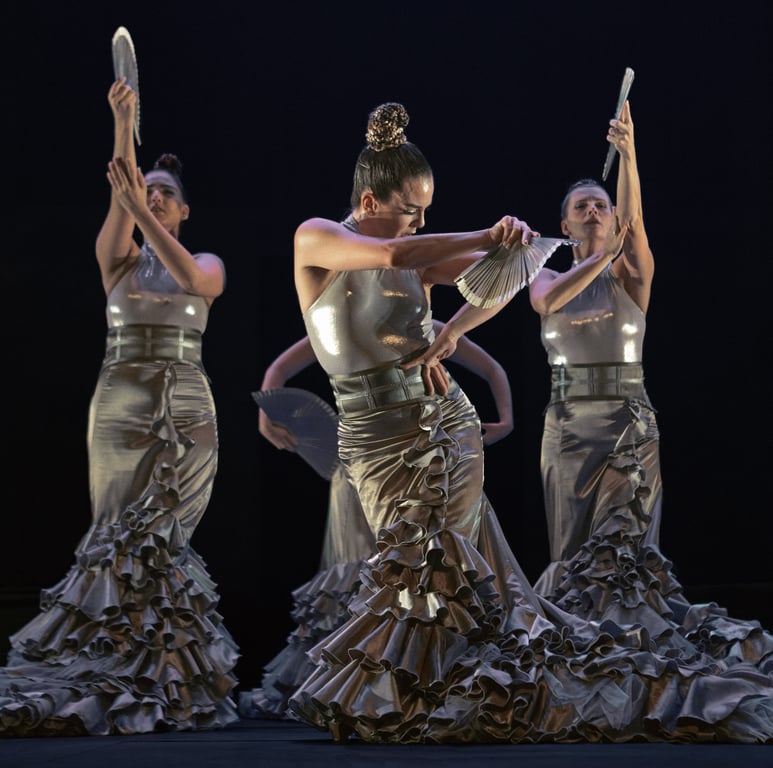
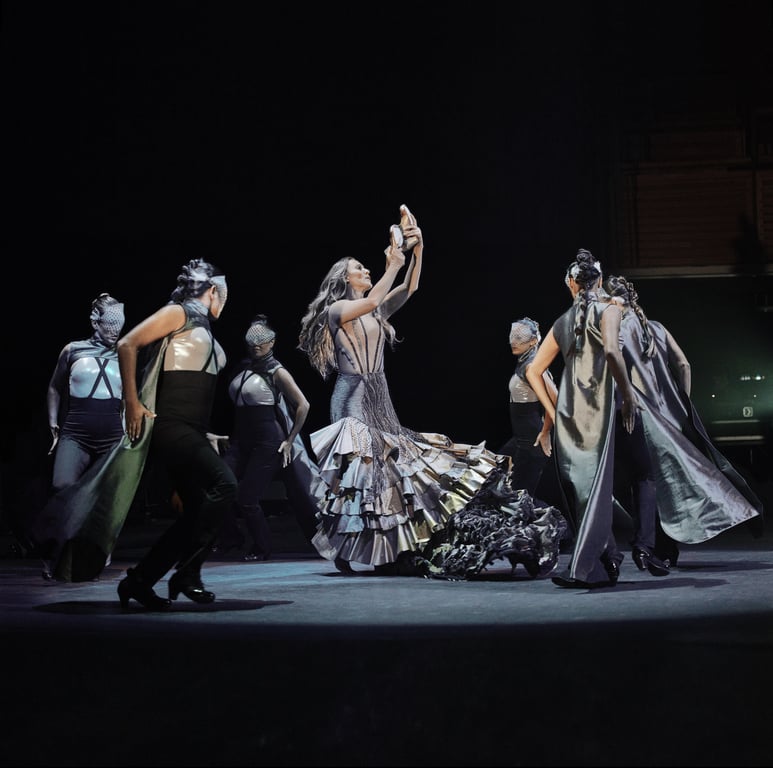
In its first and most literal meaning, a tablao is the wooden platform, or stage, that a dancer dances upon. The choice of wood is not decoration; it is functional. Wood gives the percussive footwork — the zapateado — a full, resonant sound, letting each heel and toe strike ring out clearly, and it also cushions the impact, helping to protect the dancer's joints across the punishing demands of a performance. A flamenco dancer spends an evening driving the feet into the floor thousands of times; the board beneath matters.
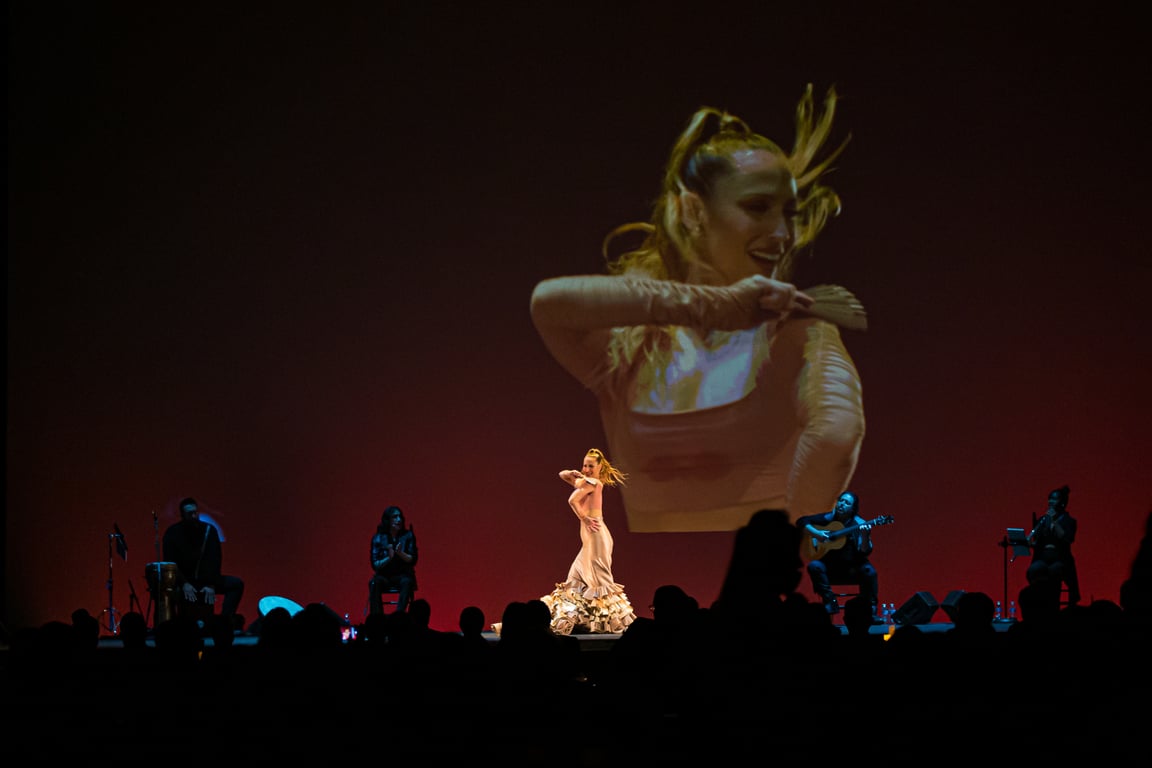
In its second meaning, tablao extends outward from that platform to name the venue itself — the intimate room, often small and close, where flamenco is performed live before an audience seated only steps away. These rooms are sometimes called, with affection, “cathedrals of duende,” the felt soul of flamenco. So a single word points at once to the wood under the feet and the whole place built around it.
Where the Tablao Came From
The tablao as we know it is a relatively recent chapter in a long story. Tablaos spread across Spain in the 1960s, and in doing so they succeeded an older kind of establishment: the cafés cantantes.
The cafés cantantes were the venues in which flamenco first became public and professional, roughly from the 1860s into the 1910s. Before them, much flamenco had unfolded at private gatherings; in the cafés, artists earned fixed pay and performed for a paying room, and this era is commonly remembered as flamenco's “Golden Age.” When that world eventually gave way, the tablaos rose in its place, quickly becoming centers of cultural life and, in time, a significant draw for visitors to Spain. We trace this earlier world in depth in our guide to the cafés cantantes and flamenco's Golden Age. Understanding that lineage is part of understanding what a tablao is: it is the modern inheritor of the first stages that made flamenco a public art.
The Cuadro Flamenco: Who Performs at a Tablao
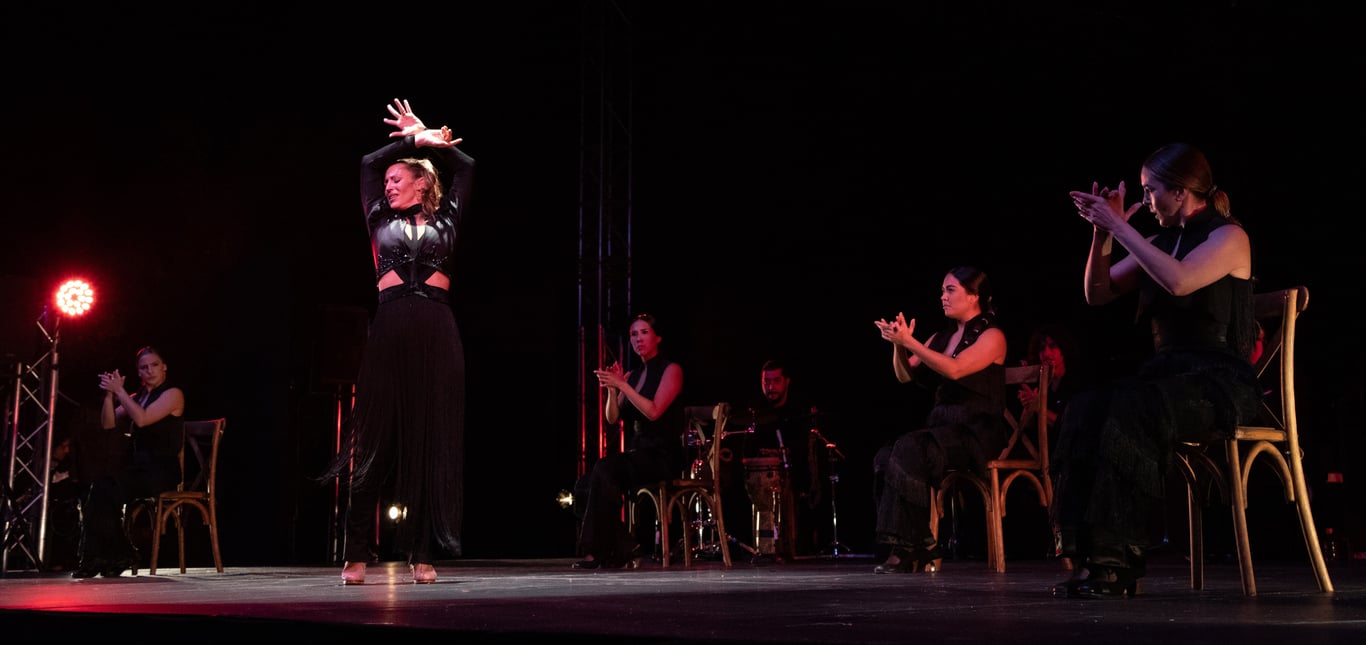
A tablao is nothing without the people on and around its boards, and in flamenco that group has a name: the cuadro flamenco. The cuadro is the performing ensemble, and it is built from a small set of essential roles that lean on one another completely.
Ready to put this into practice?
Train with Siudy Garrido through our On-Demand Flamenco Courses — structured, professional flamenco instruction you can start today.
At its minimum, a cuadro flamenco is made of four elements:
- The singer — the cantaor (or cantaora), whose voice carries much of flamenco's emotion and to whom the dancer traditionally responds.
- The guitarist — the tocaor (or tocaora), who holds the harmony and the rhythm and weaves melodic phrases between the sung lines.
- The dancer — the bailaor (or bailaora), who translates the music into movement and footwork on the wooden platform.
- Palmas — the rhythmic hand-clapping that keeps the pulse and binds the group to a shared compás.
Larger cuadros simply expand this core, adding more singers, more guitarists, and more dancers, but the principle stays the same: a tight, interdependent group in which everyone is listening to everyone else. To understand how the singing, the guitar, and the dance function as three distinct-yet-woven strands, our guide to the elements of flamenco takes each one in turn.
What to Expect at a Live Flamenco Show
If you have never attended one, the most important thing to know about a tablao flamenco show is that it is not a fixed, rehearsed routine playing out the same way every night. A tablao performance is largely improvised. It is driven by compás — the rhythmic cycle underpinning each style — by the personalities of the artists, and above all by the live connection among them in the moment. The singer offers a phrase, the guitarist answers, the dancer responds, and the room shifts with them. No two evenings are ever quite alike.
That live, unscripted quality also means the audience is not a passive spectator. A flamenco audience participates, contributing palmas and jaleo — the encouraging shouts of ¡olé! and ¡vamos! that rise from the tables and lift the artists. This exchange between stage and room is part of the art, not an interruption of it; it is one of the reasons flamenco feels so different heard live rather than through a recording.
Shows frequently open festively, with jaleos por bulerías — bulerías being among flamenco's fastest, most syncopated, and most celebratory forms, a natural way to warm both performers and audience. From there, an evening may move through a range of moods and styles, the tone rising and falling as the artists lead one another and the room. Come ready to listen as much as to watch: notice how the dancer waits on the singer, how the guitarist shapes each turn, and how the whole space leans in when duende takes hold.
Experiencing the Tablao Today
The tablao remains the setting where flamenco is arguably most itself — close, live, and unrepeatable. In Miami, that living tradition continues on stage; if you would like to experience it near you, our guide to flamenco shows in Miami points the way to seeing a cuadro flamenco perform in person.
And if watching the wooden platform beneath a dancer's feet makes you want to stand on one yourself, the path begins with rhythm and technique studied in the right order. Explore on-demand flamenco classes with two-time Latin Grammy–nominated artist Siudy Garrido to build the compás and footwork that the tablao is built upon, or browse more culture and technique guides across our flamenco blog. The more you understand about the tablao, the more a single evening of live flamenco has to give.
Frequently asked questions
What is a tablao in flamenco?
What is the difference between a tablao and a cafe cantante?
What is a cuadro flamenco?
What should I expect at a live flamenco show?
Start dancing flamenco with Siudy Garrido
On-Demand Flamenco Courses — professional instruction, at your pace.
Explore Courses →