What Is Taranto? The Danceable Mining Palo Explained
 Part of our guide
The Palos of Flamenco: A Guide to the Styles and Forms →
Part of our guide
The Palos of Flamenco: A Guide to the Styles and Forms →
Within the vast family of flamenco styles, a handful of forms carry the weight of a specific place and its people. Taranto is one of them. Born of the mining communities of eastern Andalusia, it is a somber, dramatic palo whose sound seems to rise from deep underground. This guide explains what taranto is, how it relates to its free-rhythm sibling tarantas, and why, unlike so many mining songs, it can be danced.
Taranto is part of our wider survey of the palos of flamenco, the distinct styles or forms into which the art is organized, each with its own rhythm and emotional character.
What Is Taranto? A Clear Definition
Taranto is a flamenco palo from the mining regions of eastern Andalusia, distinguished by a somber, dramatic character and, crucially, a measured rhythm that allows it to be danced. A palo is a flamenco style or form, each carrying its own compás (rhythmic cycle), tempo, and emotional world. Taranto sits among the darker, weightier corners of that family.
What makes taranto especially worth understanding is that it is a danceable member of a group of songs that were, at their origin, sung freely and without a fixed beat. To grasp taranto fully, you first have to meet its closer relative, tarantas.
Taranto and the Cantes de las Minas
Both taranto and tarantas belong to a group of flamenco styles known as the cantes de las minas — the mining songs. These forms are tied to the mining communities of eastern Andalusia, associated with provinces such as Almería and Jaén. Rather than emerging from the celebratory settings of much flamenco, they carry the atmosphere of hard labor, danger, and hardship that marked life in and around the mines.
That heritage is audible in the music itself. The cantes de las minas tend toward a heavy, brooding, and dramatic expression, and taranto inherits this fully. Where a festive palo lifts a room, taranto broods; its emotional register is closer to lament than to celebration, and it draws much of its power from that gravity.
Tarantas vs. Taranto: Free Rhythm and Measured Form
The single most important distinction to understand is the relationship between tarantas and taranto, because it turns on rhythm.
Ready to put this into practice?
Train with Siudy Garrido through our On-Demand Flamenco Courses — structured, professional flamenco instruction you can start today.
Tarantas is a free-rhythm cante — in Spanish, a form sung libre, meaning it flows without a fixed metrical count. The singer is not locked to a repeating cycle of beats; instead, the phrasing expands and contracts to follow the emotion and the breath of the voice. This arrhythmic freedom gives tarantas its searching, unbound quality, but it also makes the form difficult to dance to, since there is no steady pulse for a dancer to lock into.
Taranto is the answer to that limitation. It takes the melodic and emotional world of tarantas and sets it to a measured, binary rhythm — a four-count feel with a steady, danceable pulse. In other words, taranto is the measured, danceable form of the same musical material that tarantas sings freely. The distinction is worth holding onto: tarantas is sung libre, following the voice, while taranto gives that voice a beat, and with a beat comes the possibility of the baile, the dance.
The Character and Feel of Taranto
Because it grows from the cantes de las minas, taranto keeps the somber, dramatic character of its origins even once it is given a rhythm. It is not a bright or festive palo. Its mood is heavy and intense, shaped by the hardship of the mining world it comes from, and a performance leans into that weight rather than escaping it.
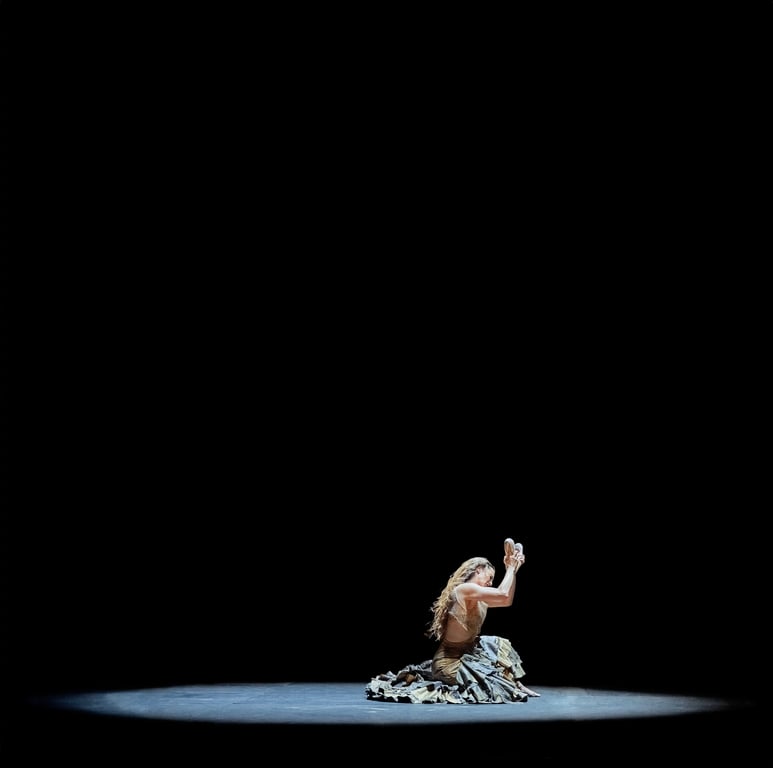
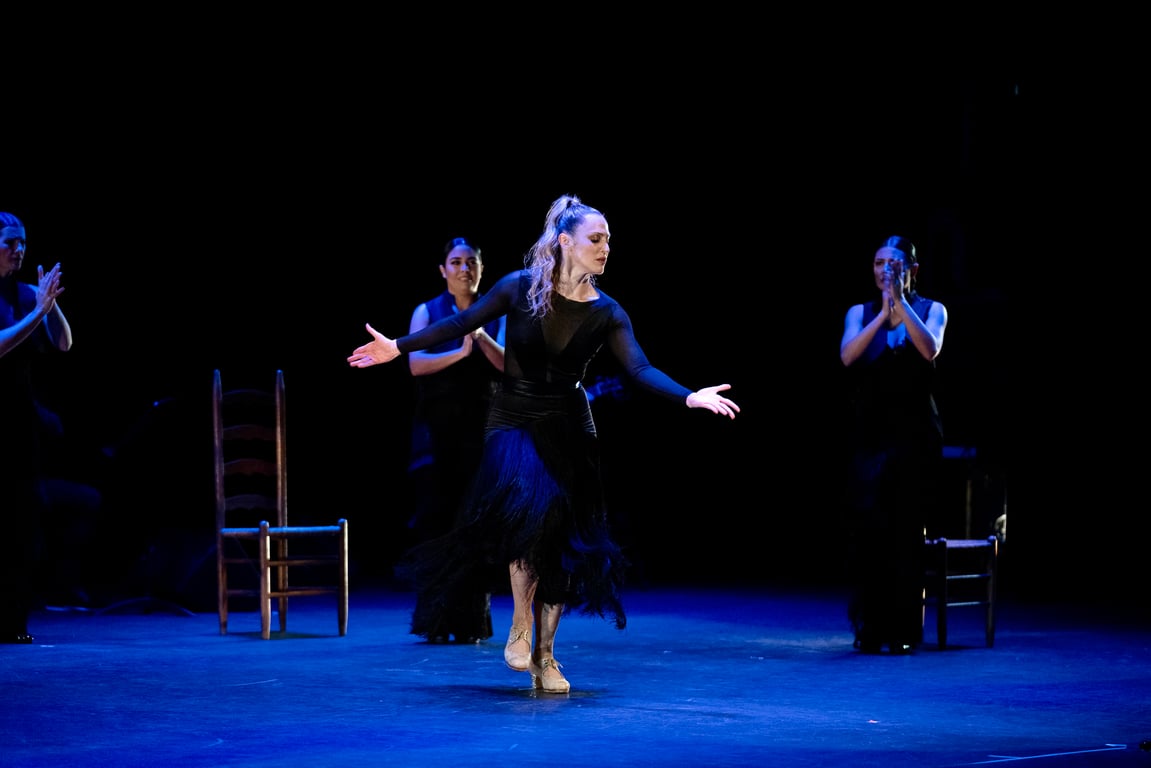
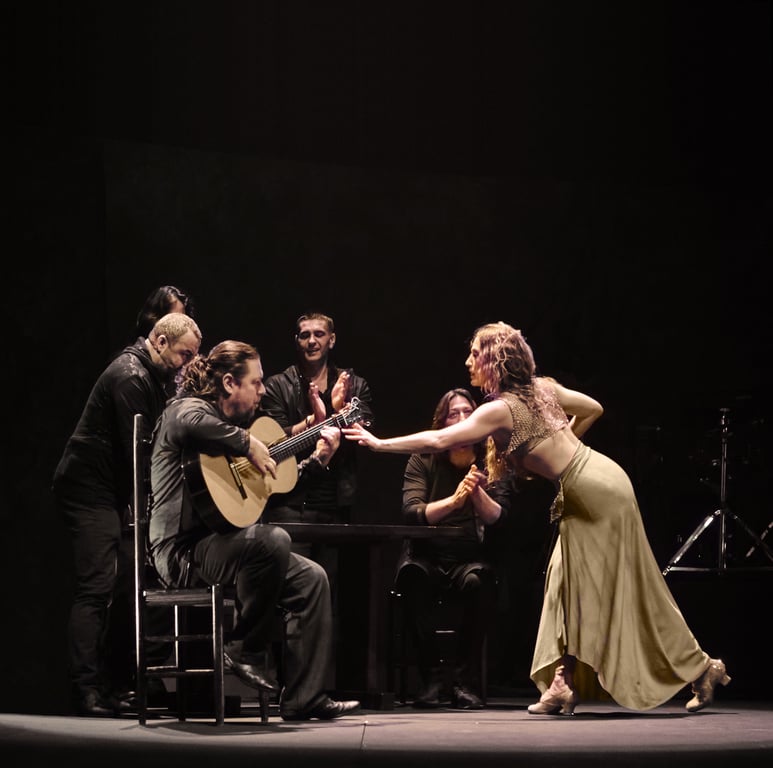
This character shapes how taranto is danced. A baile por taranto tends to be grounded and dramatic, using the measured binary pulse to build tension and release with deliberate, weighty movement rather than lightness or speed. The percussive footwork — the zapateado that flamenco is known for — can be marshaled here to underline the palo's brooding gravity. The result is a dance that feels rooted and serious, faithful to the emotional world of the mining songs from which it sprang.
If the grave, tragic register of taranto draws you, it shares that emotional territory with other solemn forms. Our guide to seguiriyas, one of flamenco's most tragic palos, explores a related seriousness of tone, and reading the two side by side illuminates how flamenco expresses depth and sorrow in more than one way.
Why the Distinction Matters
For anyone learning to listen to flamenco, the taranto–tarantas pairing is a small but revealing lesson in how the art works. Flamenco does not treat rhythm as fixed once and for all; a single melodic tradition can exist both as a free, unmeasured cante and as a measured, danceable palo. Understanding that tarantas flows libre while taranto keeps a binary pulse trains your ear to hear the difference between a song that follows the voice and one that follows a beat.
It also explains why you are far more likely to see a dancer perform taranto than tarantas. The presence or absence of a steady compás determines what a dancer can do, and taranto's measured form is precisely what opens the door to the baile. This is a pattern worth watching for across flamenco: the rhythm of a palo is not a detail, but the very thing that decides how the form can be performed and experienced.
Where to Go From Here
Taranto is a reminder that flamenco's darker, place-rooted palos carry some of its deepest emotion — and that the difference between a free cante and a danceable one can be as important as the melody itself. To see how taranto fits within the full landscape of flamenco styles, return to our overview of the palos of flamenco, and to feel how compás and character come together in movement, explore on-demand flamenco classes with two-time Latin Grammy–nominated artist Siudy Garrido. For more on the culture, history, and technique behind the art, browse the full flamenco blog.
Frequently asked questions
What is taranto in flamenco?
What is the difference between taranto and tarantas?
Where does taranto come from?
Can you dance to taranto?
Start dancing flamenco with Siudy Garrido
On-Demand Flamenco Courses — professional instruction, at your pace.
Explore Courses →