What Is Rumba Flamenca? Flamenco's Most Accessible Palo
 Part of our guide
The Palos of Flamenco: A Guide to the Styles and Forms →
Part of our guide
The Palos of Flamenco: A Guide to the Styles and Forms →
If your first encounter with flamenco was a sunny, hand-clapping song that made a whole room want to move, there is a good chance you were hearing rumba flamenca. Of all the flamenco styles, this is the one most likely to reach beyond the tablao and onto the radio, into films, and across dance floors far from Andalusia. This guide explains what rumba flamenca is, where its infectious rhythm comes from, and why it is often the friendliest door into the whole art.
Rumba flamenca is one of the many palos, or flamenco styles, that we map in our overview of the palos of flamenco. Here we look at it on its own terms.
What Is Rumba Flamenca?
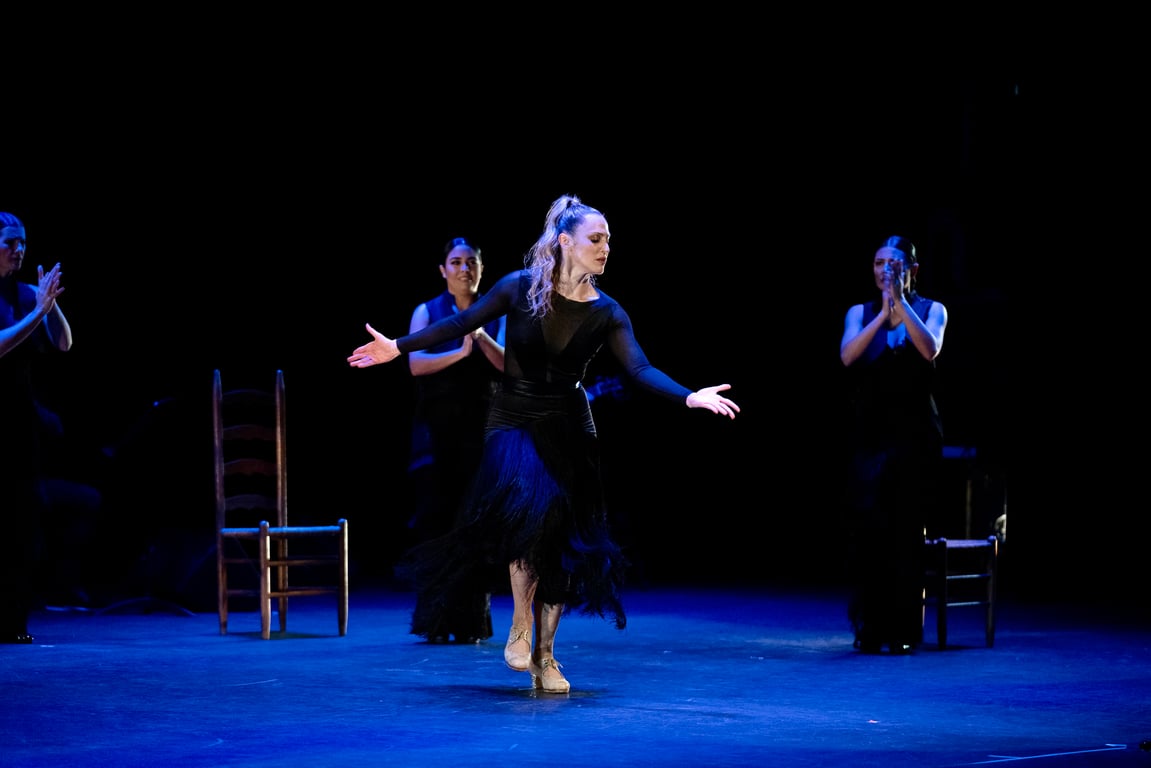
Rumba flamenca is a festive flamenco palo built on a bright, danceable four-beat rhythm. Where much of flamenco is grave, introspective, and demanding, this palo is celebratory and open. It is the sound of flamenco at its most sociable — music made to lift a gathering rather than to sit in solemn stillness. For that reason it is widely regarded as the most accessible and pop-friendly form of flamenco, the one non-specialists recognize most readily.
Like every palo, the form is defined by its compás (the rhythmic cycle that organizes a piece) and by its emotional character. Its compás is a straightforward four-beat feel, and its character is unmistakably festive. That combination — a simple pulse and a joyful mood — is exactly what makes it so approachable.
The Ida y Vuelta Story: Cuban Roots
To understand rumba flamenca, you have to follow it across an ocean and back. It belongs to a special group of flamenco forms known as ida y vuelta, which translates as “round-trip.” These are palos that traveled from Spain to the Americas, absorbed Latin American musical influence there, and then returned home to Spain transformed. Alongside it, the ida y vuelta family includes colombianas, guajiras, milongas, and vidalitas.
This palo's round trip runs through the Caribbean. It draws its spirit from Cuban rumba, a music whose very name carries the sense of a party or celebration. When that festive Cuban energy met the flamenco tradition on its return, the result was a palo that keeps flamenco's guitar, palmas (rhythmic hand-clapping), and phrasing while trading solemnity for celebration. If you would like to see how another member of this family took shape, our guide to guajiras traces a related round-trip journey, one with its own graceful, swaying character.
The Four-Beat Compas
One of the clearest ways to place this palo among the others is through its rhythm. Much of flamenco lives in a distinctive twelve-beat cycle — the family that includes soleá, alegrías, and bulerías, which differ less in the count itself than in tempo and mood. That twelve-beat compás is one of the genuine challenges of learning flamenco, and it takes time for the body to internalize.
Ready to put this into practice?
Train with Siudy Garrido through our On-Demand Flamenco Courses — structured, professional flamenco instruction you can start today.
Rumba flamenca does not ask that of a newcomer. It sits instead in a simpler binary, four-count feel — the same broad rhythmic family as tangos — where the pulse is even, steady, and quick to find. You can clap along almost immediately. That directness is central to the palo's identity: the rhythm is meant to include the listener, not to hold them at a respectful distance.
Flamenco's Pop-Crossover Form
Because it is festive and rhythmically direct, rumba flamenca became the flamenco style most able to cross over into popular music. In the late twentieth century it was carried to wide international audiences by artists such as the guitarist Paco de Lucía and by groups like the Gipsy Kings, whose recordings brought a rumba-inflected flamenco sound to listeners who had never set foot in a tablao. Through them, the palo became, for many people around the world, the first and most familiar face of flamenco.
This crossover appeal is a double gift. For casual listeners, the form is an easy and joyful entry point into a tradition that can otherwise feel intimidating. For students of the art, it is a reminder that flamenco is a living tradition — one that has always absorbed new influences and continues to evolve, rather than a fixed museum piece.
Why Rumba Flamenca Is Beginner-Friendly
If you are just starting out, rumba flamenca is one of the most encouraging palos to meet first, and it is worth understanding exactly why.
- The rhythm is simple to find. A steady four-beat compás is far easier for a newcomer to feel and hold than the twelve-beat cycle of soleá or bulerías. You can lock into the pulse and clap palmas almost from the first listen.
- The mood invites participation. Rumba flamenca is festive by nature. It is built to be shared, not performed in solemn precision, which lowers the pressure that more serious palos can place on a beginner.
- It builds real flamenco fundamentals. Even in its relaxed form, the palo trains the same essentials the deeper palos demand — a secure sense of compás, clean palmas, and an ear for how guitar and rhythm lock together.
None of this makes rumba flamenca a lesser form. It simply means it lets you experience the pleasure of moving in compás early, before you take on the more demanding cycles — and that early success is often what keeps a beginner coming back.
Where to Go From Here
Rumba flamenca is proof that flamenco can be joyful and approachable without ceasing to be flamenco. It is festive, rooted in a round-trip history that reaches from Andalusia to Cuba and home again, and gentle enough on the ear that anyone can begin to feel its pulse. For many students, it is the palo that turns curiosity into commitment.
If its rhythm has you wanting to move, the next step is structured guidance. Explore on-demand flamenco classes with two-time Latin Grammy–nominated artist Siudy Garrido to build your sense of compás from the ground up, and browse our flamenco blog for more on the palos, technique, and culture behind the art.
Frequently asked questions
What is rumba flamenca?
Where does rumba flamenca come from?
Is rumba flamenca good for beginners?
What is the difference between rumba flamenca and other flamenco palos?
Start dancing flamenco with Siudy Garrido
On-Demand Flamenco Courses — professional instruction, at your pace.
Explore Courses →