What Are Guajiras? The Elegant Ida y Vuelta Palo Explained
 Part of our guide
The Palos of Flamenco: A Guide to the Styles and Forms →
Part of our guide
The Palos of Flamenco: A Guide to the Styles and Forms →
Not every flamenco palo is fierce or tragic. Among the many styles that make up the art, a few are defined instead by grace, leisure, and a gentle swaying pulse. The guajira is one of these, and it carries a story that reaches far beyond Andalusia. To understand it is to understand one of the most fascinating chapters in flamenco's history: the moment the art crossed an ocean and came home changed.
This guide is part of our wider overview of the palos of flamenco. Here we look specifically at what makes the guajira distinctive: its Cuban roots, its elegant character, its traditional staging with a fan, and the family of traveling palos it belongs to.
What Is a Guajira in Flamenco?
A guajira is a flamenco palo, or style, known above all for its elegant, swaying, and graceful character. Where forms such as soleá or siguiriyas are grave and weighty, guajiras feel unhurried and refined, closer to a leisurely sway than a storm. The mood is gentle and picturesque, and in traditional staging it has long been considered a feminine, poised form.
The name itself points to the palo's origins. It comes from the guajiros, the country farmers of the Cuban countryside, and the earliest lyrics often evoke rural life, the land, and an idealized image of the Cuban campo. This is a palo that carries the flavor of somewhere far from Spain, and that is exactly the point.
The Ida y Vuelta Family: Palos That Traveled and Returned
To place the guajira properly, you need to understand a special category of flamenco styles known as the cantes de ida y vuelta. The phrase ida y vuelta translates as “round-trip,” or “there and back,” and it describes palos that made a remarkable journey.
During the long period of contact between Spain and its territories in the Americas, musical forms crossed the Atlantic in both directions. Songs and rhythms carried from Spain took on the color and feel of Latin America, and then made the return voyage to Andalusia, where flamenco absorbed them into its own family of styles. The result is a small group of palos that sound recognizably flamenco yet carry an unmistakable Latin American lilt.
The ida y vuelta palos include:
- Colombianas — a lyrical, relatively modern form with a warm, melodic character.
- Guajiras — the elegant, swaying palo with Cuban roots that is our subject here.
- Rumba flamenca — the festive, upbeat, and most pop-crossover of the group, drawn from Cuban rumba.
- Milongas — a slower, more melancholy form connected to the music of the Río de la Plata region.
What unites them is that shared history of travel and return. What distinguishes them is mood: from the melancholy of milongas to the celebration of rumba, each carries its own emotional weight. The guajira sits toward the graceful, leisurely end of that spectrum.
The Cuban Roots of the Guajira
Of all the ida y vuelta palos, the guajira wears its Cuban roots most openly. Its very name honors the guajiros, the rural farmers of Cuba, and its imagery and atmosphere evoke the island's countryside. When flamenco adopted the form, it kept that sense of somewhere warm, open, and unhurried.
Ready to put this into practice?
Train with Siudy Garrido through our On-Demand Flamenco Courses — structured, professional flamenco instruction you can start today.
This heritage is audible in the palo's gentle, rocking quality. Rather than the driving intensity of the older Andalusian cante forms, the guajira offers something more relaxed and lyrical, a musical postcard of an idealized rural life carried back across the ocean and woven into the flamenco repertoire.
The Character and Compas of the Guajira
The defining feeling of the guajira is its lilting sway. The compás, or rhythmic cycle, has a rolling, gently rocking quality that invites elegant, flowing movement rather than sharp, percussive attack. It feels leisurely and graceful, a rhythm you might describe as swinging softly rather than pounding.
Because that lilt is the heart of the palo, dancers and musicians tend to emphasize smoothness and continuity over aggressive footwork. The zapateado, or footwork, when it appears, is placed with poise, and the overall impression is one of refinement. Rather than reducing the guajira to a rigid beat count, it is more honest and more useful to describe it by its feel: unhurried, swaying, and graceful, a palo built for elegance rather than force.
Dancing the Guajira with a Fan
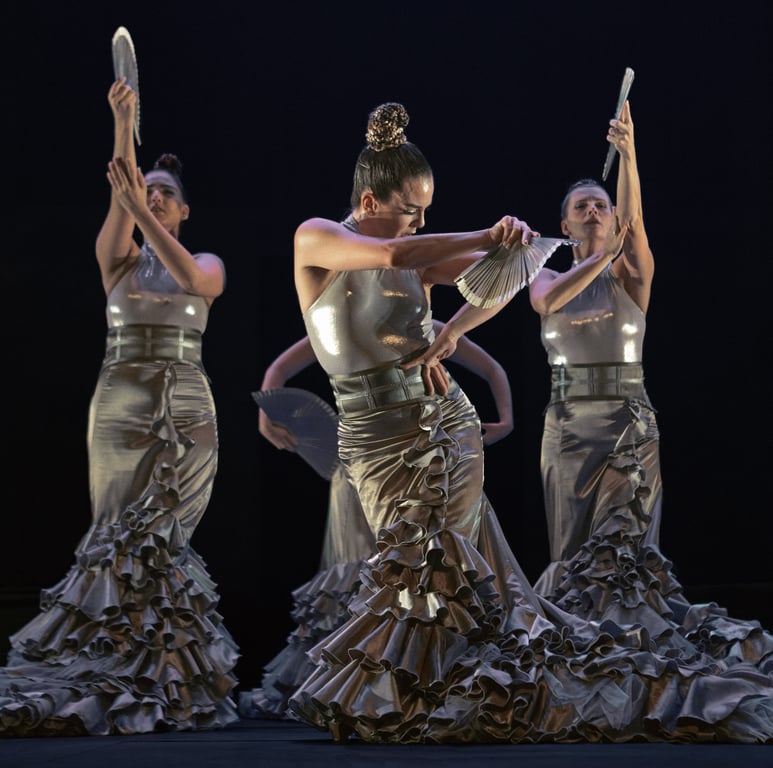
Perhaps the most recognizable feature of the guajira in performance is its traditional staging with an abanico, or fan. The fan is not a mere decoration; it becomes a genuine extension of the dancer's expression, opening, closing, and sweeping in time with the palo's leisurely sway.
The abanico suits the guajira perfectly. In flamenco, the arms move in slow, circular braceo, and the wrists and fingers articulate in floreo; the fan extends and dramatizes that upper-body grace, adding a sense of leisure and refinement that matches the music. This is why the fan has become so closely associated with the guajira in particular, a visual signature of the palo's elegant, unhurried character. It is worth noting that some other festive and folkloric styles occasionally use props of their own, but the guajira's marriage of fan and sway is especially iconic.
The Guajira Among Its Cousins
It helps to hear the guajira alongside its ida y vuelta relatives to appreciate what makes it distinct. The rumba flamenca, its most famous cousin, is festive, immediately accessible, and built for celebration, sitting in a straightforward four-count feel. The guajira, by contrast, trades that party energy for poise and grace.
Set beside the melancholy of milongas or the lyricism of colombianas, the guajira occupies its own niche: neither sorrowful nor exuberant, but elegant and serene. Understanding these family resemblances and differences is one of the great pleasures of studying flamenco's palos, and it turns a blur of styles into a landscape you can actually navigate.
Where to Go From Here
The guajira is a reminder that flamenco is not a fixed, closed tradition but a living art that has always absorbed influence, even from across an ocean, and made it unmistakably its own. Its grace, its Cuban roots, and its traditional fan give it a character quite unlike the deeper cante forms, and yet it belongs fully to the flamenco family.
If the elegance of palos like this makes you want to move, the best way to feel how each style carries its own character is to study them properly. Explore Siudy Garrido's on-demand flamenco classes to build the foundation that lets you inhabit any palo, and browse more guides on our flamenco blog to keep exploring the styles that make up this remarkable art.
Frequently asked questions
What is a guajira in flamenco?
What does ida y vuelta mean?
Why is the guajira danced with a fan?
How does the guajira differ from rumba flamenca?
Start dancing flamenco with Siudy Garrido
On-Demand Flamenco Courses — professional instruction, at your pace.
Explore Courses →