What Is a Bata de Cola? The Flamenco Dress With a Train
 Part of our guide
Flamenco Dress and Attire: A Complete Guide to What Flamenco Dancers Wear →
Part of our guide
Flamenco Dress and Attire: A Complete Guide to What Flamenco Dancers Wear →
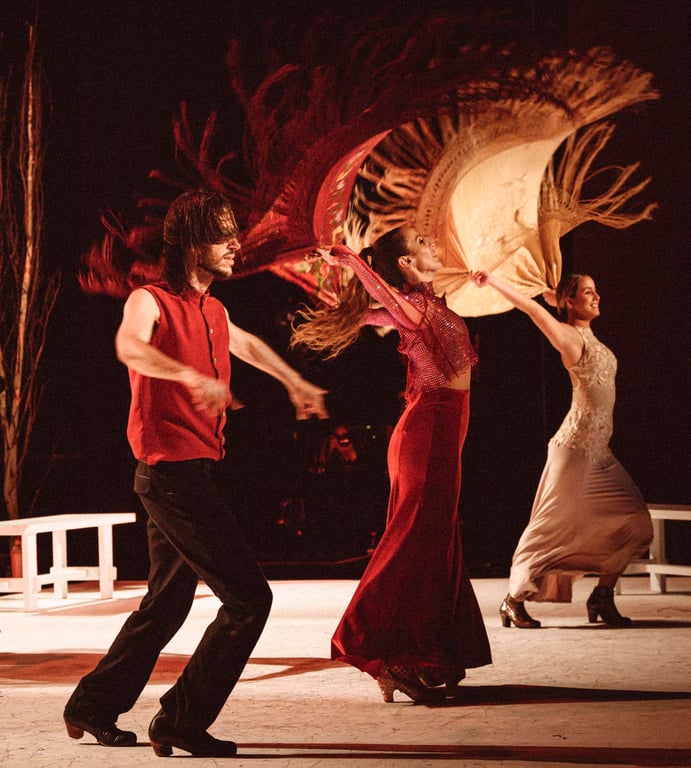
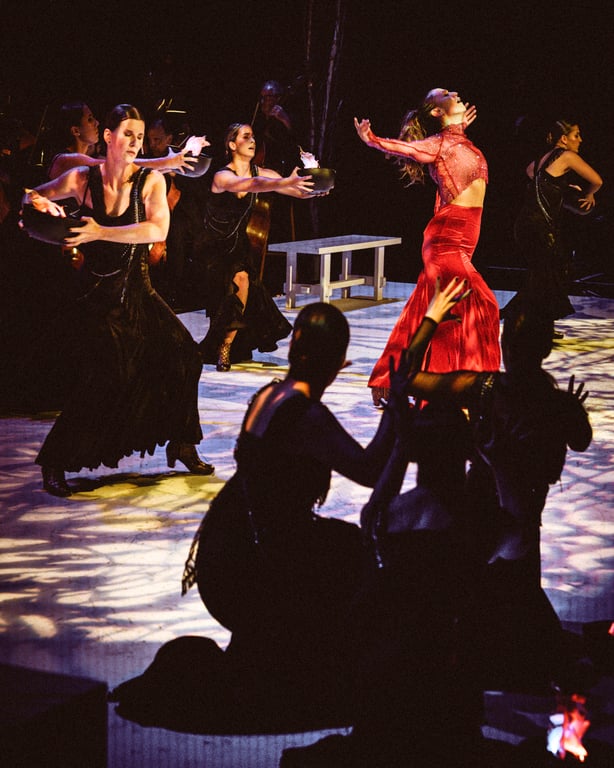
Watch a flamenco dancer sweep a long ruffled train across the stage in a single commanding turn, and you are watching one of the art form's most theatrical images. That trailing skirt has a name, a tradition, and a technique all its own. This guide explains what the garment is, why it is so difficult, and where it fits in a dancer's development.
What Is a Bata de Cola?
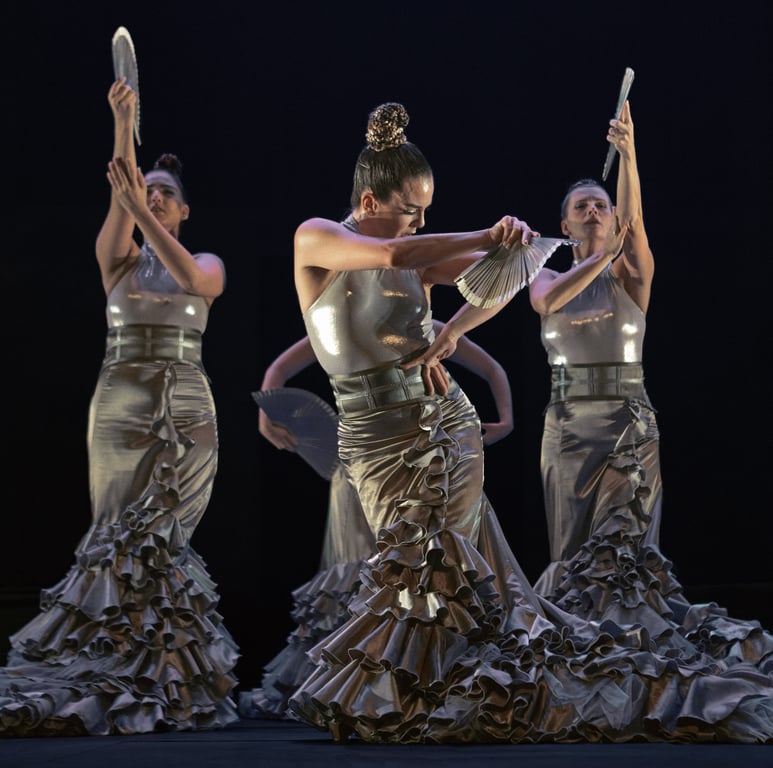
The bata de cola is a flamenco dress or skirt with a long, ruffled train that trails behind the dancer. The word cola means "tail," and that is exactly what the garment adds: an extended fall of fabric, tiered with the flounced ruffles known as volantes, that sweeps the floor and follows the body. It is unmistakably dramatic — but it is far more than decoration. A bata de cola is a piece of equipment the dancer must learn to operate.
As part of the wider world of flamenco dress and attire, the bata de cola sits at the demanding end of the wardrobe. Where a festive dress moves freely with the body, the train of a bata de cola has a weight and a momentum of its own, and that changes everything about how the dancer moves.
A Garment That Fights Back
The defining challenge of the bata de cola is simple to state and hard to master: the train is heavy, and it does not simply follow you. Left to itself, that long tail of ruffled fabric would drag, tangle underfoot, and pull against every step and turn. The dancer cannot ignore it or merely tow it along. She has to command it.
This is what separates the bata de cola flamenco tradition from ordinary skirt work. The dancer learns to move the cola deliberately — to kick it forward and out of the way, to sweep it into an arc, to gather and throw it so that it lands where she intends. These are precise actions of the feet and legs, timed to the choreography, so that the train travels with the dance instead of dragging behind it. Done well, the effect looks effortless, as if the fabric were reading the dancer's mind. That ease is the product of long, dedicated work.
The Train as Part of the Choreography
What elevates the bata de cola from costume to craft is that the train becomes a partner in the dance rather than a hindrance to it. A well-controlled cola sculpts shapes in space: it flares on a turn, snaps into a sharp line on an accent, and settles quietly when the dancer marks the music. The audience reads the movement of the fabric as an extension of the body — the sweep of the train amplifying the sweep of a step, the flick of the cola punctuating a remate. In the hands of an experienced dancer, the garment stops being something worn and becomes something danced.
This is why the bata de cola is so closely tied to the expressive side of flamenco. The train adds volume, drama, and a sense of scale to the movement, letting a single dancer fill a stage. But every bit of that impact depends on control. A train that is fought rather than led simply looks like a struggle with heavy fabric.
Ready to put this into practice?
Train with Siudy Garrido through our On-Demand Flamenco Courses — structured, professional flamenco instruction you can start today.
An Advanced, Performance Garment
For all its beauty, the bata de cola is not where a flamenco journey begins. It is a performance garment and an advanced skill, not beginner practice wear. There is a clear reason for this order. Before a dancer can add the weight and unpredictability of a train, she needs a secure foundation: reliable compás, grounded postura, and clean zapateado. Ask the feet and legs to manage a heavy cola before those fundamentals are solid, and both the technique and the train suffer.
So dancers spend considerable time learning to control the bata de cola only after the basics are in place. The work is incremental — coaxing the train through one movement at a time, building the specific muscle memory that lets the legs speak to the fabric. What looks like a single glorious sweep on stage is the visible tip of a great deal of patient rehearsal.
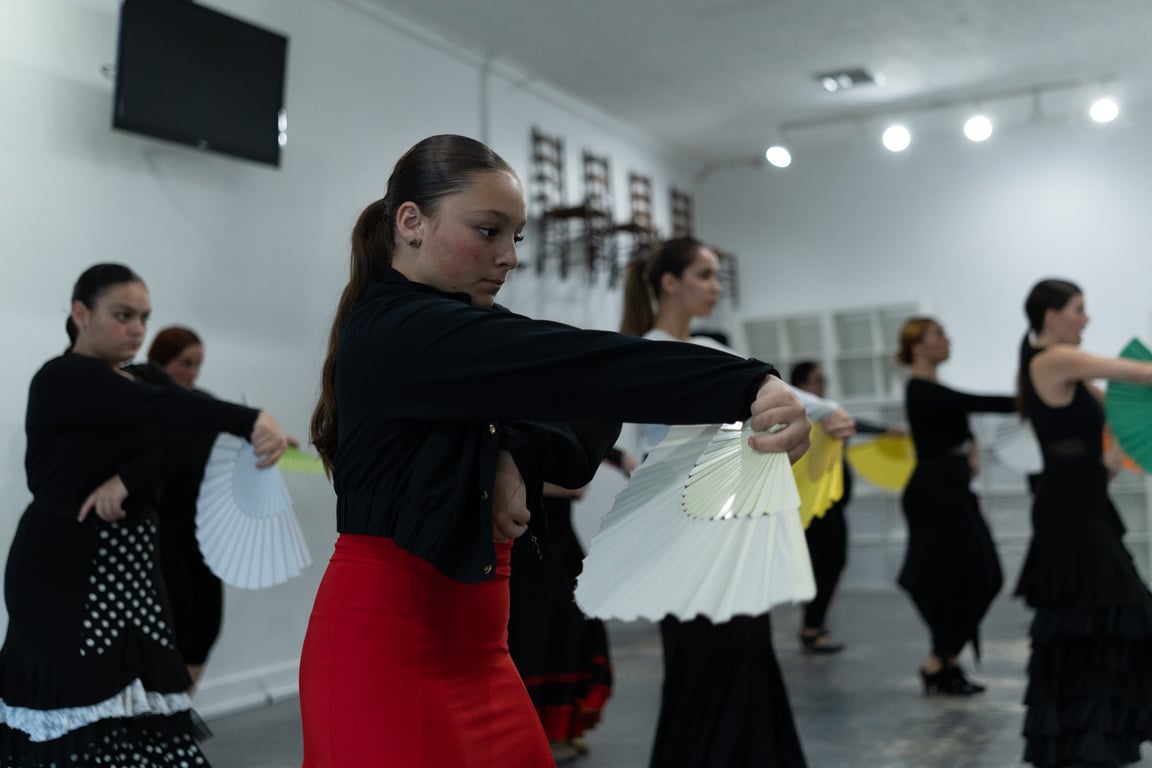
None of this is meant to intimidate a newcomer. It is simply the natural sequence of the art. If you are starting out, our overview of what flamenco dancers wear lays out the practical progression: comfortable clothing, a light practice skirt, and practice shoes come first. That simple practice skirt is not a lesser version of the bata de cola — it is preparation for it, teaching a beginner to feel and see how fabric responds to movement long before any train is involved.
Tradition and Effect
The bata de cola belongs to the theatrical, performance side of flamenco, an art from Andalusia in southern Spain that UNESCO inscribed in 2010 on its Representative List of the Intangible Cultural Heritage of Humanity. Like the fringed mantón that a dancer opens and spins, the bata de cola is a specialized element that rewards mastery. Both share the same principle: an object that would be an encumbrance in untrained hands becomes, through technique, a vehicle for expression.
That is the heart of the bata de cola's appeal. Its dramatic visual effect — the long train carving shapes through the air, the ruffles catching the light as the dancer turns — is inseparable from the discipline required to produce it. When you watch a dancer command the cola with apparent ease, you are seeing tradition, strength, and control fused into a single image.
From Watching to Dancing
Understanding the bata de cola changes how you see a performance. What might look like a beautiful costume is in fact a demanding instrument, and the grace on display is hard-won. Whether you are in the audience or dreaming of one day dancing with a train of your own, appreciating that difficulty deepens your respect for the art.
If you want to build toward that skill, the path runs through the fundamentals first. Explore the full guide to flamenco dress and attire to see how the bata de cola fits alongside the rest of a dancer's wardrobe, and when you are ready to move, Siudy Garrido's on-demand flamenco classes will help you build the compás, posture and footwork that every advanced garment depends on. You can find more guides on our flamenco blog.
Frequently asked questions
What is a bata de cola?
Is the bata de cola for beginners?
How does a dancer move the bata de cola?
Why is the bata de cola so difficult to dance in?
Start dancing flamenco with Siudy Garrido
On-Demand Flamenco Courses — professional instruction, at your pace.
Explore Courses →