What Do Flamenco Dancers Wear? Dress, Shoes, and Accessories
 Part of our guide
Flamenco Dress and Attire: A Complete Guide to What Flamenco Dancers Wear →
Part of our guide
Flamenco Dress and Attire: A Complete Guide to What Flamenco Dancers Wear →
The short answer to what do flamenco dancers wear is that it depends entirely on whether they are performing or practicing. On stage, flamenco attire is elaborate and purposeful; in class, it is simple and comfortable. This guide gives you the quick, factual version of each piece and points you to deeper guides when you want more. For the full picture, our pillar on flamenco dress and attire covers everything in detail.
What Do Flamenco Dancers Wear on Stage?
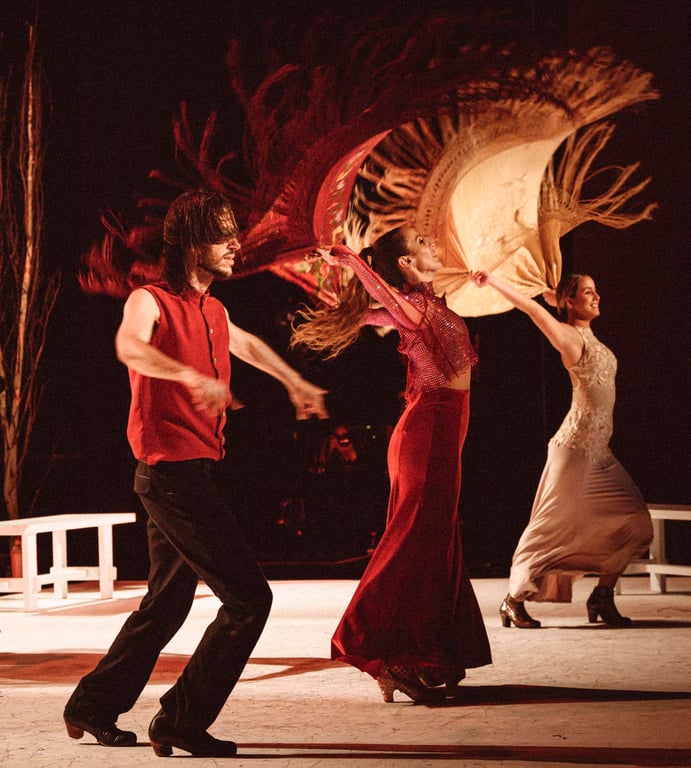
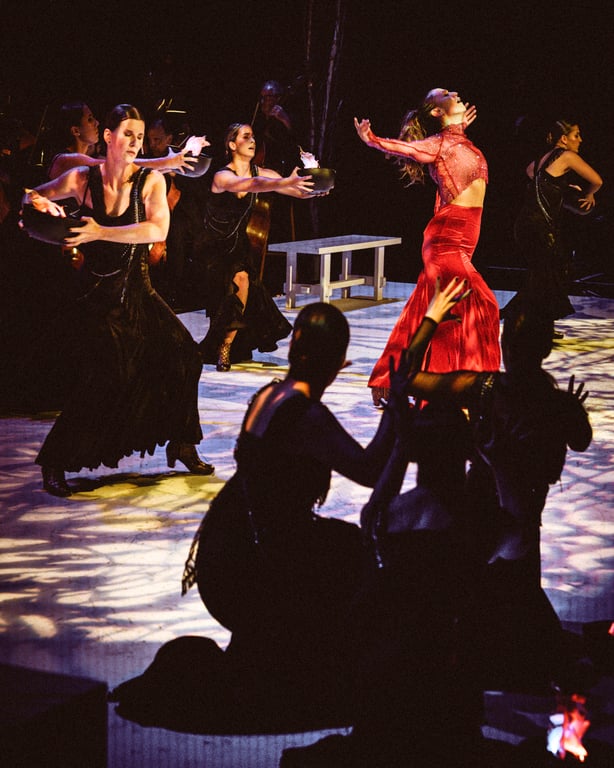
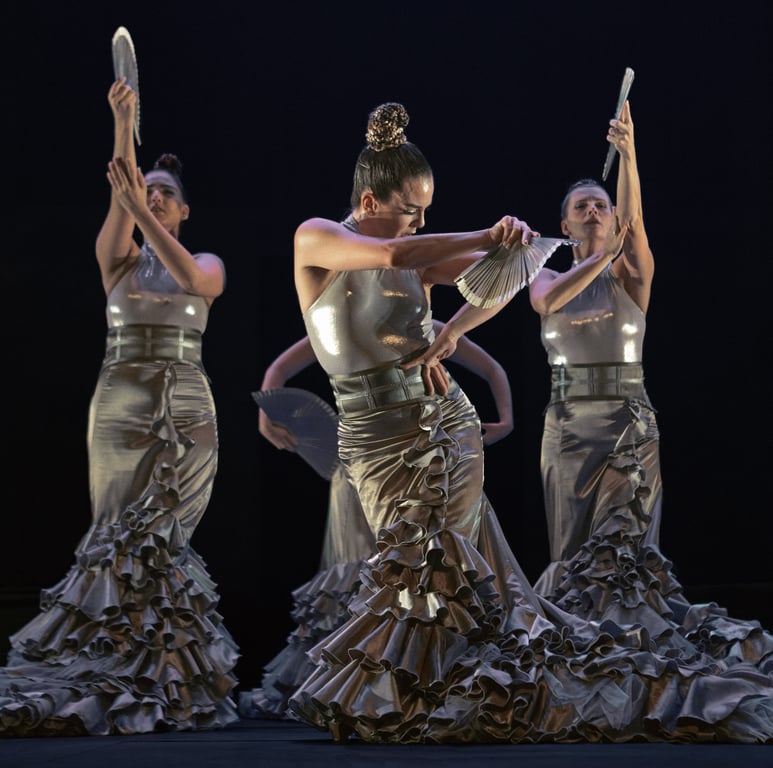
When we ask what do flamenco dancers wear in performance, the most iconic answer for women is the traje de flamenca, the flamenco dress. It grew out of the festive dress worn by women at the feria of Seville and was gradually refined into the fitted, dramatically flared garment recognized today. Its two defining features are its ruffles, or volantes — the tiers of flounced fabric that flare when the dancer turns — and its frequent decoration with polka dots, or lunares. Not every dress has dots, and they come in every color and scale, but the volantes are what make the silhouette unmistakable.
Some dancers also wear a skirt (a falda) rather than a full dress, giving the lower body volume and movement without the fitted bodice of the traje de flamenca. For performance specifically, two further garments turn clothing into choreography:
- The bata de cola — a dress or skirt with a long, ruffled train that trails behind the dancer. It is heavy and demanding: the dancer learns to kick, sweep and throw the train with the feet and legs so it becomes part of the dance. Because of that difficulty, it is an advanced, performance-focused garment. Our guide on what a bata de cola is explains its construction and technique.
- The mantón — a large, fringed shawl draped across the shoulders and back. In performance the dancer opens, folds and spins it so the fringe traces the movement and extends the line of the arms. A smaller version, the mantoncillo, is tied over the shoulders as part of the everyday silhouette.
Flamenco Shoes: The One Piece Everyone Wears
Whatever else changes, one item is constant: flamenco shoes. Flamenco footwork, or zapateado, is percussive — the dancer strikes the floor like a musician — and ordinary shoes cannot produce its sound. Flamenco shoes are built with small nails, or clavos, driven into the heel and the toe of the sole. When the dancer strikes with the ball of the foot, the heel, or the whole flat foot, those nails sharpen and project the sound, giving zapateado its bright, cutting attack. The shoes also have a low, sturdy heel — high enough to shift weight onto for heelwork, but strong and stable enough to withstand thousands of strikes.
This is exactly why sneakers, street shoes and fashion heels do not work: they muffle the sound or are too tall and fragile to strike cleanly and safely. For the full breakdown of construction, fit and choosing a pair, see our guide to flamenco shoes.
Ready to put this into practice?
Train with Siudy Garrido through our On-Demand Flamenco Courses — structured, professional flamenco instruction you can start today.
Accessories
Several accessories complete the traditional look, each chosen to read clearly under stage light:
- Peineta — a decorative comb worn in the hair, often to support and shape a hairstyle.
- Flor — a flower worn in the hair, one of flamenco's most recognizable finishing touches.
- Pendientes — earrings, frequently large and eye-catching to match the boldness of the dress.
What Do Male Flamenco Dancers Wear?
Flamenco is not only a women's art. The classic men's look is the traje corto — literally the "short suit" — built around a short, fitted jacket worn with high-waisted trousers and boots. The silhouette emphasizes a long, upright line and proud carriage: where the women's dress moves with volume and ruffle, the men's traje corto reads as sharp, clean and grounded, letting the footwork and posture take center stage. Male dancers wear the same purpose-built flamenco shoes, since the demands of zapateado are identical.
What Do Flamenco Dancers Wear to Class?
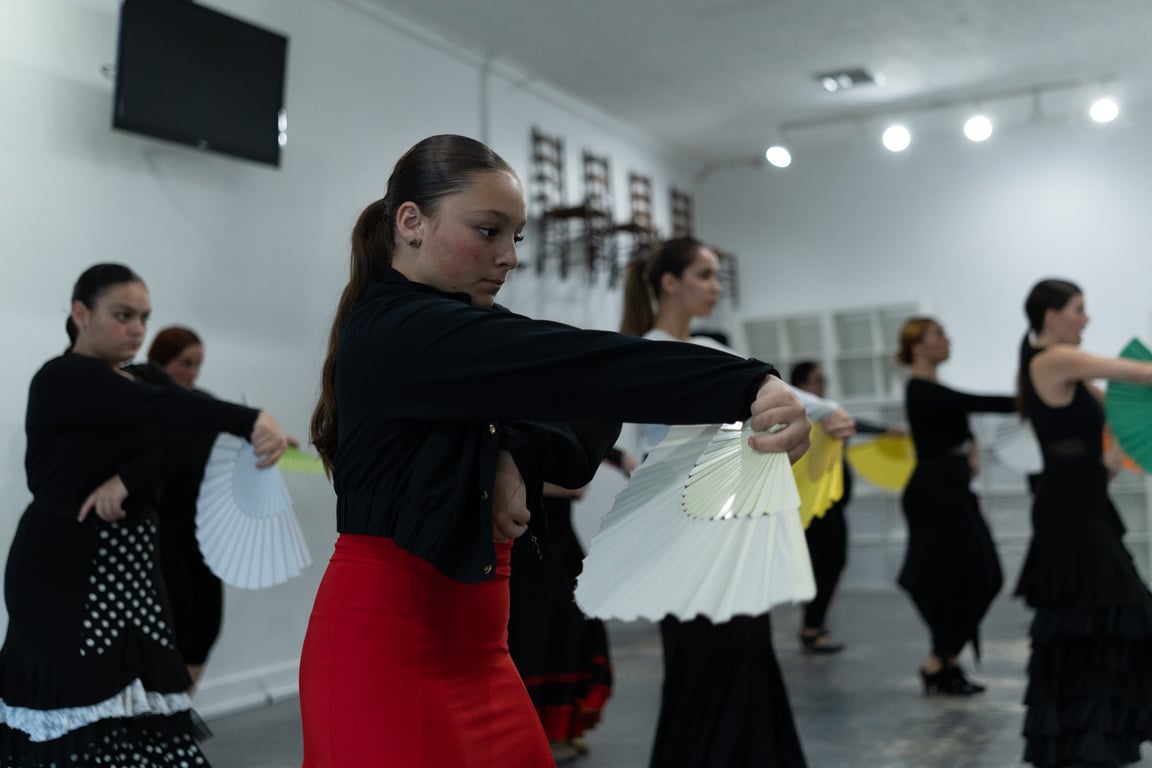
Here is the reassuring part for newcomers: what dancers wear on stage is not what they wear to class. The full traje de flamenca, the bata de cola and the manipulated mantón are performance garments — you need none of them to begin. For practice and a first lesson, dancers wear:
- Comfortable clothing you can move freely in, such as leggings or fitted trousers and a top that lets you see your posture.
- A practice skirt — a simple skirt, without the weight of a costume, that lets you feel and see how fabric responds to movement.
- Practice shoes — flamenco shoes with a low, sturdy heel so you can build footwork with the correct sound and mechanics from the start.
There is no need to buy a costume before your first class. Starting in appropriate practice wear lets you focus on the real work — compás, posture and clean zapateado — long before any thought of a costume. As your technique grows, the specialized garments become tools you learn to dance with, rather than decorations you simply put on.
Bringing It Together
So, what do flamenco dancers wear? On stage, women often wear the ruffled traje de flamenca, sometimes a bata de cola and a fringed mantón, finished with a peineta, flor and pendientes; men wear the traje corto with boots; and everyone dances in nail-soled flamenco shoes that make the body an instrument. In class, all of that gives way to comfortable clothing, a practice skirt and practice shoes. To go deeper, read the full flamenco dress and attire pillar, explore flamenco shoes and the bata de cola, browse more on our flamenco blog, or start moving with Siudy Garrido's on-demand flamenco classes.
Frequently asked questions
What do flamenco dancers wear?
Do flamenco dancers always wear polka dots?
What shoes do flamenco dancers wear?
What should I wear to my first flamenco class?
Start dancing flamenco with Siudy Garrido
On-Demand Flamenco Courses — professional instruction, at your pace.
Explore Courses →