The Traje de Flamenca: Meaning, Origins, and Features of the Flamenco Dress
 Part of our guide
Flamenco Dress and Attire: A Complete Guide to What Flamenco Dancers Wear →
Part of our guide
Flamenco Dress and Attire: A Complete Guide to What Flamenco Dancers Wear →
Few garments are as instantly recognizable as the flamenco dress: the tiers of ruffled fabric, the scattering of polka dots, the fitted body that blooms outward into a sweep of flounces. Yet the traje de flamenca is often misunderstood. It did not begin on a stage, and the dress worn at a fair in Seville is not quite the same thing as a dancer's performance costume. This guide explains where the flamenco dress comes from, what defines it, and what it actually means.
As with flamenco itself — a living art from Andalusia in southern Spain, inscribed by UNESCO in 2010 on the Representative List of the Intangible Cultural Heritage of Humanity — the attire evolved over time rather than being invented in a single moment. Understanding that evolution is the key to reading the traje de flamenca correctly.
What Is the Traje de Flamenca?
The traje de flamenca is the flamenco dress most people picture: close-fitting through the body and then flaring outward below into a cascade of ruffles. Its origin, though, is not the theater but the fair. It grew out of the festive dress worn by women at the feria of Seville, the city's great spring fair — the Feria de Abril. What began as celebratory, party-going clothing was gradually refined and elaborated until it became the dramatic, ruffled dress associated with flamenco today.
That origin matters for the flamenco dress meaning. At heart, this is celebration dress: it belongs to the community atmosphere of the feria, worn by women of all ages strolling, greeting friends and dancing sevillanas at the fair. Its spread from a regional fair costume to a worldwide symbol of flamenco and Andalusian style is part of what makes it so iconic.
Volantes and Lunares: The Signature Features
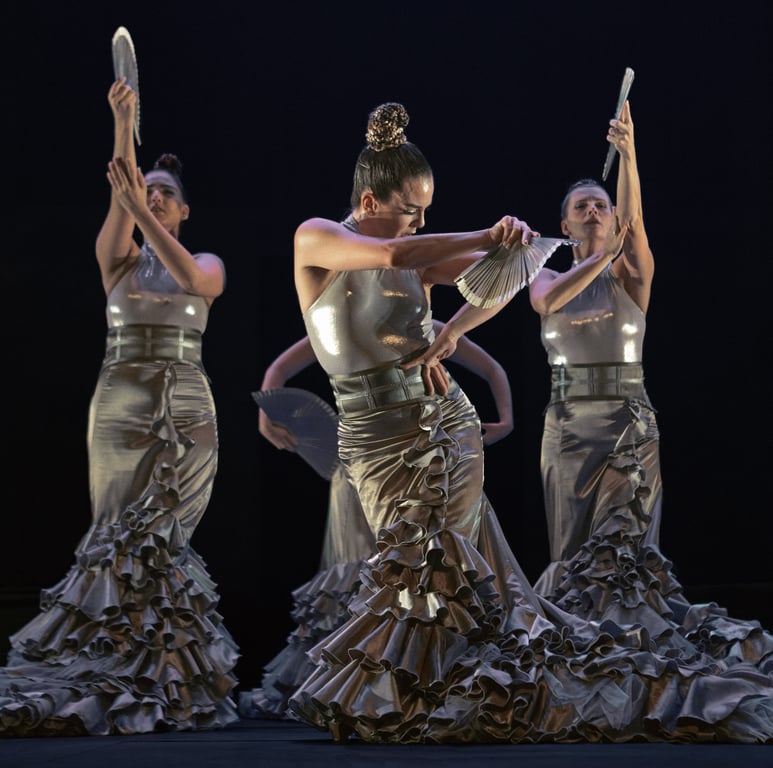
Two features define the classic traje de flamenca. The first is its ruffles, or volantes — the tiers of flounced fabric that fall along the skirt and often the sleeves, flaring and rippling when the wearer moves. The number and placement of volantes vary widely from dress to dress, but it is the volantes that give the flamenco dress its unmistakable volume and movement.
The second is its frequent decoration with polka dots, or lunares — the round spots that have become shorthand for flamenco style around the world. Lunares appear in every scale and color, from tiny dots to bold coins, and not every dress has them; but the polka-dotted flamenco dress is the image most people carry in their minds. Because volantes and lunares can be combined in so many ways, no two flamenco dresses look quite alike even when they share the same instantly recognizable spirit.
The traje de flamenca is also often described as unusually fashion-driven — a commonly-noted observation is that its styles are said to evolve from year to year, with silhouettes, ruffle placement and colors shifting the way other fashions do. Whether or not one calls it a formal trend cycle, the dress has clearly changed and been reinterpreted over its history rather than staying frozen.
Ready to put this into practice?
Train with Siudy Garrido through our On-Demand Flamenco Courses — structured, professional flamenco instruction you can start today.
The Complementos: Accessories of the Flamenco Dress
A traje de flamenca is rarely worn alone. It is completed by a set of complementos — accessories, each with its own name and place — that give the flamenco look its unified, deliberate impact:
- Mantoncillo — a smaller shawl tied over the shoulders and front of the dress, part of the everyday flamenco silhouette.
- Flor — a flower worn in the hair, one of the most recognizable finishing touches of flamenco style.
- Peineta — a decorative comb worn in the hair, often to support and shape a hairstyle.
- Pendientes — earrings, frequently large and eye-catching to match the boldness of the dress.
Nothing here is accidental. The silhouette, the hair, the flower and the earrings are chosen to work together, reading clearly and boldly as a complete look. It is the combination — dress plus complementos — that people recognize as flamenco attire, not the dress in isolation.
The Feria Dress vs. the Stage Costume
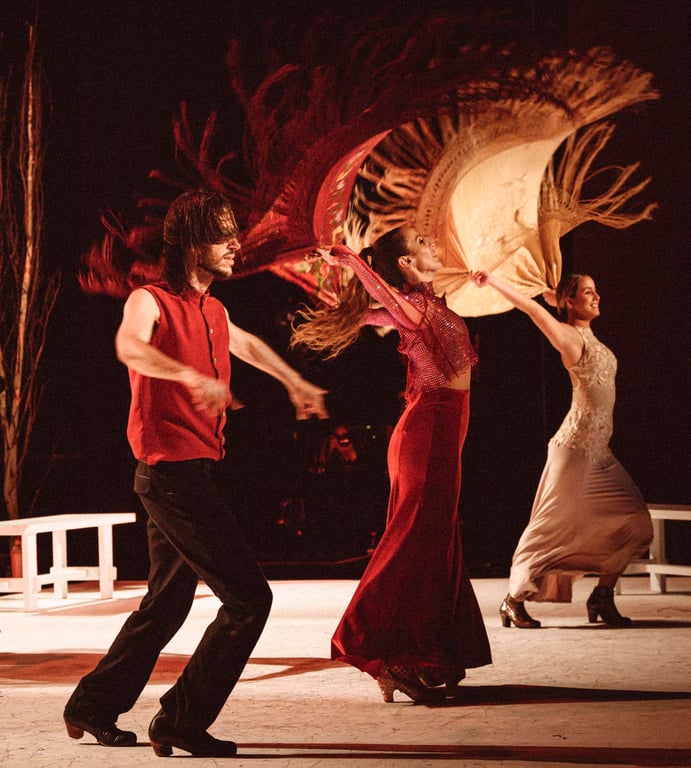
One distinction is worth drawing carefully, because it is easily blurred. The festive traje de flamenca of the feria is social, celebratory dress — worn to attend a fair, greet friends and dance sevillanas. A flamenco performance costume, by contrast, is chosen and constructed for the demands of a specific dance and choreography.
The feria dress and the stage costume share a common root and an obvious family resemblance, but they are not the same thing. A stage garment is built to move with the dancer, to catch the light and to serve the choreography; some performance pieces, such as the long-trained bata de cola, are demanding tools that dancers train with for years. The feria dress, meanwhile, is simply beautiful party dress. Keeping the two apart helps explain why the traje de flamenca can be both an everyday fair costume and a symbol of a professional stage art.
What the Flamenco Dress Means Today
So what is the flamenco dress meaning, in the end? The dress carries the celebratory spirit of the Seville feria: the volantes that move with the body, the lunares that spot the fabric, the mantoncillo, flor, peineta and pendientes that complete the look. It is at once a regional fair tradition and a worldwide emblem of flamenco and Andalusian identity.
Understanding the dress this way — celebration first, symbol second — deepens your appreciation of flamenco whether you are admiring the fair, watching a performance, or beginning to study the art yourself. The traje de flamenca is one thread in a larger fabric of flamenco attire, and it fits into the wider picture of flamenco dress and attire that includes performance garments, shoes and men's dress.
If you would like to go further, explore our overview of what flamenco dancers wear, and when you are ready to move rather than simply admire, Siudy Garrido's on-demand flamenco classes will help you begin. You can browse more on our flamenco blog.
Frequently asked questions
What is the traje de flamenca?
What is the meaning of the flamenco dress?
What accessories are worn with a traje de flamenca?
Is the traje de flamenca the same as a stage costume?
Start dancing flamenco with Siudy Garrido
On-Demand Flamenco Courses — professional instruction, at your pace.
Explore Courses →