Where Did Flamenco Come From? Andalusia and Its Roots
 Part of our guide
The History of Flamenco: From Andalusian Roots to World Heritage →
Part of our guide
The History of Flamenco: From Andalusian Roots to World Heritage →
If you have ever watched a flamenco performance and wondered about its deep, layered sound, you have probably asked the obvious question: where did flamenco come from? The short answer is that flamenco came from Andalusia, the sun-baked southern region of Spain, with additional roots reaching into the neighboring regions of Murcia and Extremadura. But the fuller answer is far more interesting, because flamenco did not come from one place, one people, or one moment. It grew slowly out of a meeting of cultures. This guide looks closely at the geographic and cultural origins of flamenco, and how they came together.
Where Did Flamenco Come From? Andalusia at the Heart
To answer where did flamenco come from, we have to start with a place. Flamenco's heartland is Andalusia, the southernmost region of Spain, home to cities such as Seville, Cádiz, Jerez, and Granada. This is where the art took shape and where its living traditions remain strongest today. Alongside Andalusia, the regions of Murcia and Extremadura also carry genuine flamenco roots, so it is most accurate to speak of a broad swath of southern Spain rather than a single city.
Yet geography alone does not explain the flamenco origin story. Andalusia was not simply the birthplace of flamenco; it was the meeting ground where several very different cultural traditions overlapped, exchanged, and slowly fused. The land gave flamenco a home, but the people who passed through and settled there gave it its voice.
A Fusion of Cultures, Not a Single Source
The most important thing to understand about the origins of flamenco is that it was never invented. It evolved, gradually and communally, from the blending of several traditions that lived side by side across the Iberian Peninsula for centuries. Four main currents fed into the art:
- Andalusian folklore — the songs, dances, and festive customs of southern Spain provided the ground in which flamenco took root.
- Moorish and Arabic melodies — centuries of Muslim presence in Iberia left a deep melodic and ornamental imprint still audible in flamenco singing.
- Gitano (Roma) rhythms and vocal technique — the Roma people contributed much of flamenco's rhythmic drive, its raw expressiveness, and its distinctive way of singing.
- Jewish and Sephardic influence — the Sephardic communities of medieval Spain added their own thread to the melodic and emotional weave.
No one of these traditions is flamenco on its own. It is precisely their meeting, over many generations, that produced something new. This is why the question of where flamenco came from can never have a one-word answer. The art is, by its very nature, a fusion. For the full chronological story, from these roots through to today, see our pillar guide to the history of flamenco.
The Roma Migration and the Roots of Flamenco
One current in the flamenco origin story deserves special attention: the arrival of the Roma, known in Spain as Gitanos. Originating in the Indian subcontinent, in the region of Rajasthan, the Roma migrated westward across Asia and Europe over the course of centuries. They reached the Iberian Peninsula in the early 15th century, around 1425.
Settling especially in Andalusia, the Gitano communities absorbed the local traditions around them and, in turn, gave the emerging art much of its character: its rhythmic vitality, its emotional intensity, and a manner of singing that prizes feeling above polish. Their contribution was so profound that people still debate whether flamenco is Spanish or Gypsy in origin. The truth is that it is genuinely both, a Spanish art profoundly shaped by the Roma who helped forge it. We explore that specific question in our companion guide, is flamenco Spanish or Gypsy.
Ready to put this into practice?
Train with Siudy Garrido through our On-Demand Flamenco Courses — structured, professional flamenco instruction you can start today.
It is worth pausing on how slowly this all worked. The Roma did not arrive and hand over a finished art form. Instead, generation after generation, families in Andalusia, Murcia, and Extremadura sang at home, at work, and at celebrations, blending what they carried with what they found around them. That daily, communal music-making is what gradually crystallized into flamenco.
Why There Is No Single Birthplace or Inventor
People often want a tidy answer to where flamenco came from: a founding town, a founding figure, a founding year. But the honest response is that no such thing exists, and understanding why reveals something essential about the art.
Flamenco emerged from ordinary life rather than from a deliberate act of creation. It was sung in kitchens and courtyards, at weddings and in workshops, long before anyone wrote it down or gave it a name. Because it grew this way, its beginnings are gradual and, in places, genuinely uncertain. What we can say with confidence is where it came together, southern Spain, and from what, the fusion of Andalusian, Moorish, Gitano, and Sephardic traditions. Pinning it to a single date is another matter, and one we take up separately in when did flamenco start.
This absence of a single inventor is not a gap in the record so much as the very nature of the thing. Flamenco is a communal inheritance. It belongs to the many voices that shaped it, not to any one of them.
How the Origins Still Live in the Art
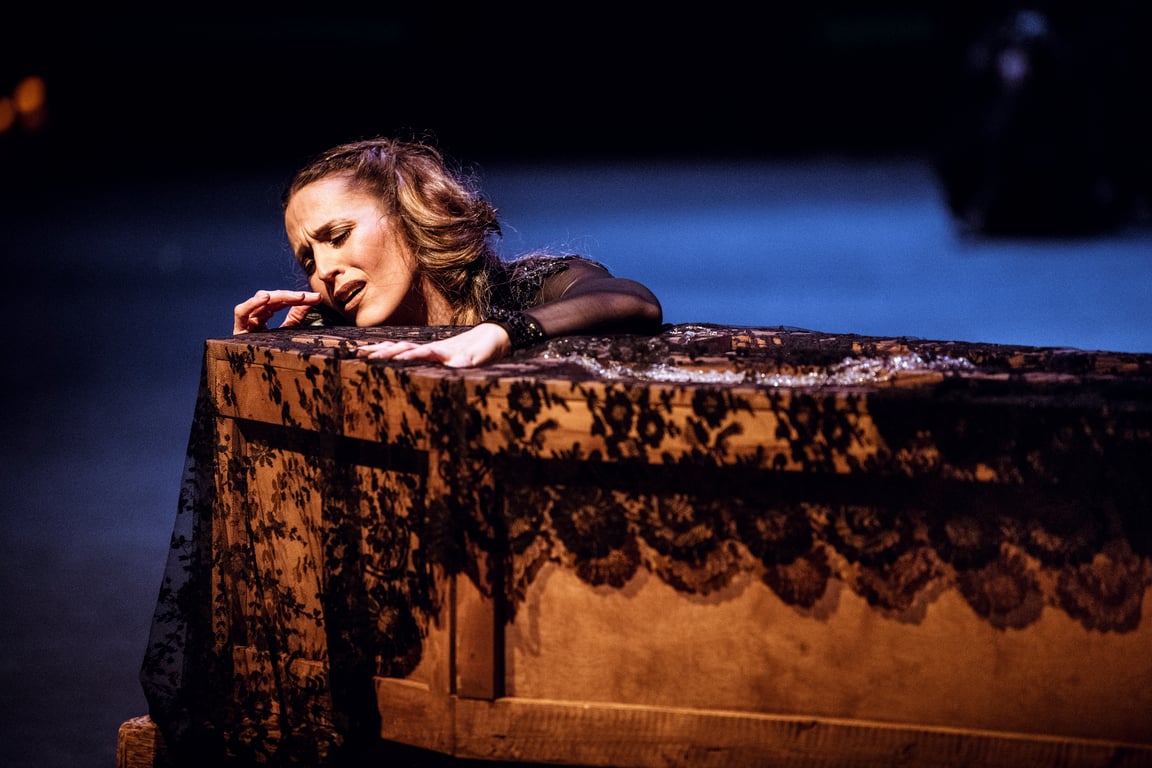
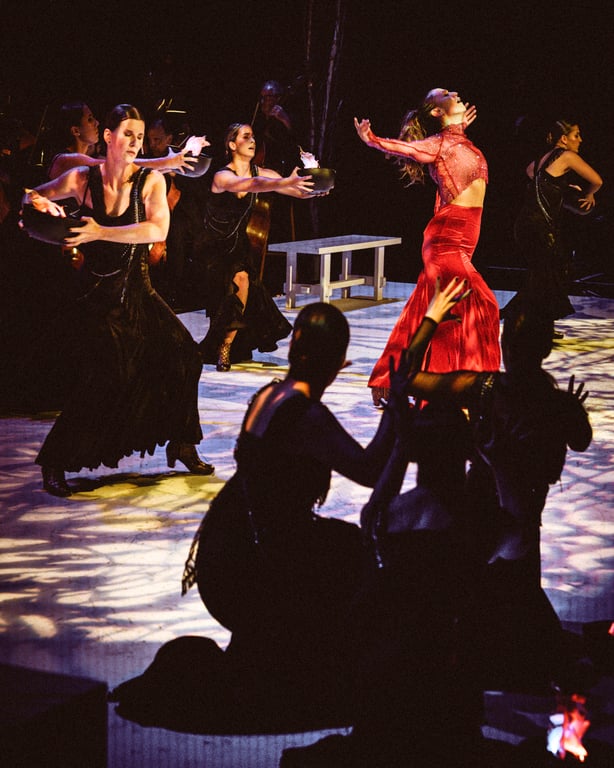
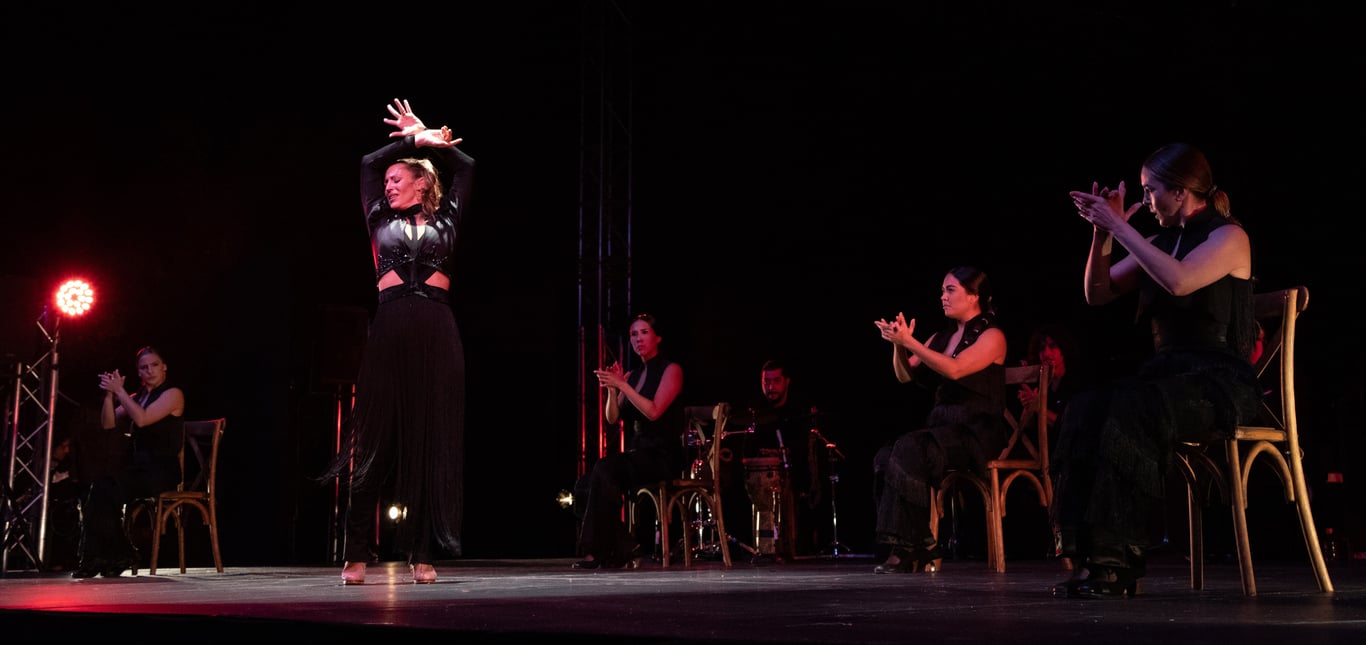
The origins of flamenco are not merely historical trivia; you can still hear and see them in a performance today. The ornamental, winding melodies of the cante, the flamenco song, carry echoes of Moorish and Arabic influence. The driving, insistent rhythm and the emotional rawness owe much to the Gitano contribution. The festive dances and celebratory spirit reach back into older Andalusian folklore. When these elements meet on a stage, the whole layered history of the art speaks at once.
This is what makes flamenco so unusual among the world's art forms. To watch it is to witness the meeting of peoples who once shared a corner of southern Spain, distilled into song, dance, and guitar. When a bailaora stamps out a rhythm, when a cantaor lets a phrase break with feeling, the fusion that answers the question of where flamenco came from is happening in real time, right in front of you.
Experiencing Flamenco's Roots for Yourself
Knowing where flamenco came from changes how you experience it. The next time you watch a performance, you are witnessing centuries of Andalusian, Moorish, Roma, and Sephardic voices meeting in a single art, refined over generations and carried forward by dancers, singers, and guitarists around the world.
If this history moves you to step into the art yourself, the best way to honor a living tradition is to keep it alive in your own body. Explore Siudy Garrido's on-demand flamenco classes to begin learning from anywhere, and browse more history, culture, and technique guides on our flamenco blog. The tradition that came from Andalusia continues with you.
Frequently asked questions
Where did flamenco come from?
What cultures created flamenco?
When did the Roma reach Spain?
Was flamenco invented by one person?
Start dancing flamenco with Siudy Garrido
On-Demand Flamenco Courses — professional instruction, at your pace.
Explore Courses →